Decades of water hauling show drought’s toll on Navajo Nation homes
Nearly 50 years of hauling water has outlasted Utah’s emergency declaration for Lewis G. Bedonie and many Diné families living with empty pipes and distant standpipes.

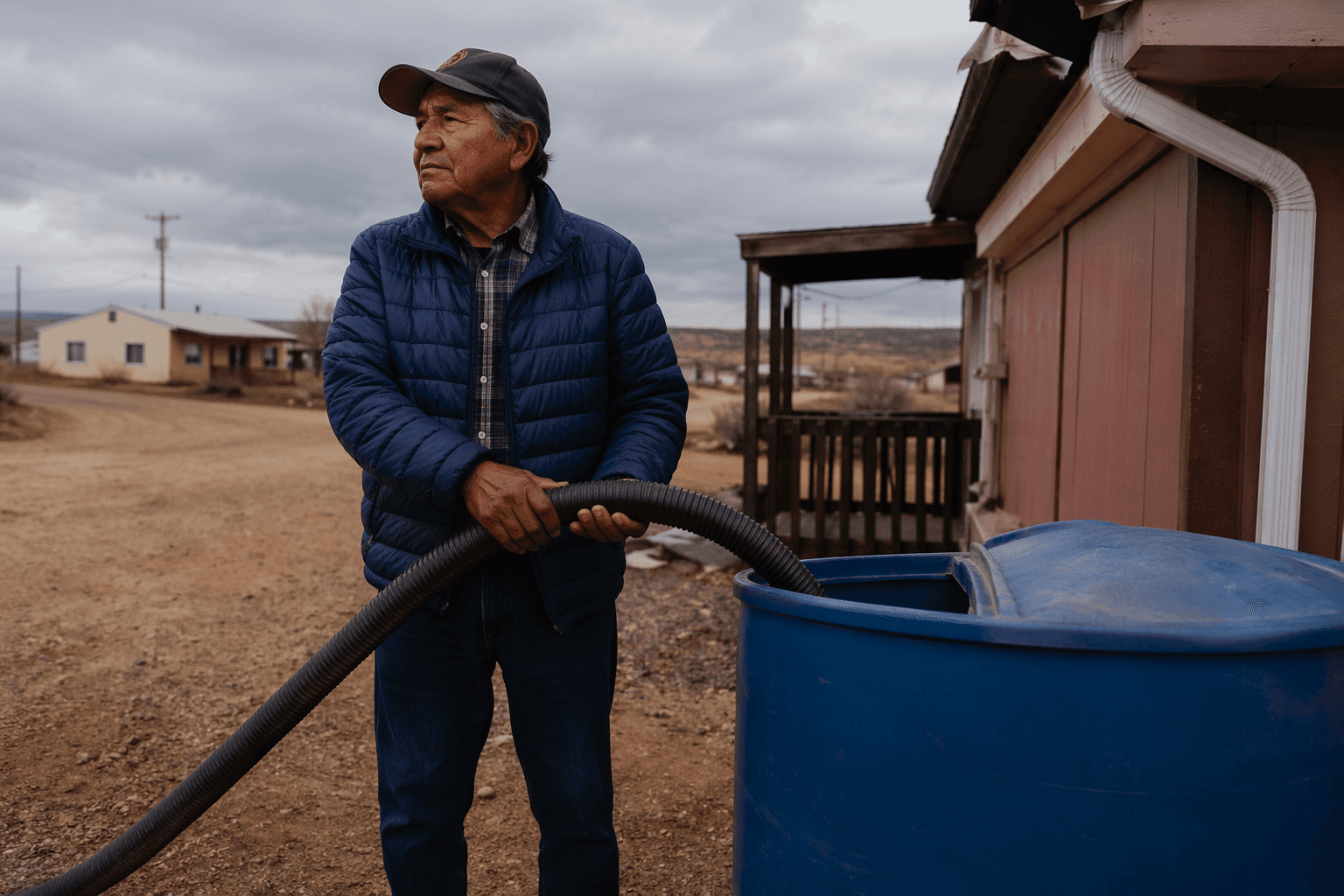
Lewis G. Bedonie has been hauling water from a standpipe near Oljato, Utah, for nearly five decades, a routine that still defines life for many Diné households long after officials declare emergencies. At 71, Bedonie was shown handling a hose while a pickup with an IBC tote waited in the bed, headed back toward his home near Paiute Farm.
Utah Gov. Spencer Cox issued a statewide drought emergency on May 21, saying all 29 counties were in severe drought and 22 were in extreme drought. State officials said the 2025-26 snowpack peaked about three weeks early and was the lowest recorded since 1930. Cox also said snowpack provides 95% of Utah’s water supply, a stark reminder of how quickly the crisis has spread beyond one season or one watershed.
For Navajo communities on the Utah side, the shortage has been building for years. The drying of windmills and natural springs around Oljato, Douglas Mesa and the country toward Paiute Farm has left families dependent on hauling water for drinking, cooking and basic survival. The issue is not only weather. It is distance, aging or missing infrastructure, and the long delay between legal recognition and water reaching a kitchen tap.
Utah finalized and quantified Navajo water rights on Jan. 31, 2025, and the Utah Department of Natural Resources later said those rights total 81,500 acre-feet a year. But rights on paper do not fill tanks at home. Along the San Juan River and in communities tied to it, families still measure progress by whether they can haul less water, not by whether a decree has been signed.
The scale of the need is still enormous across the Navajo Nation, which spans more than 27,000 square miles across Arizona, New Mexico and Utah. Johns Hopkins Center for Indigenous Health’s Diné Household Water Work says water hauling is practiced by 41% of Navajo households. Among those hauling for household use, 73% are using the minimum amount of water needed for health and well-being, and more than a third are using less than 4 gallons per person per day.
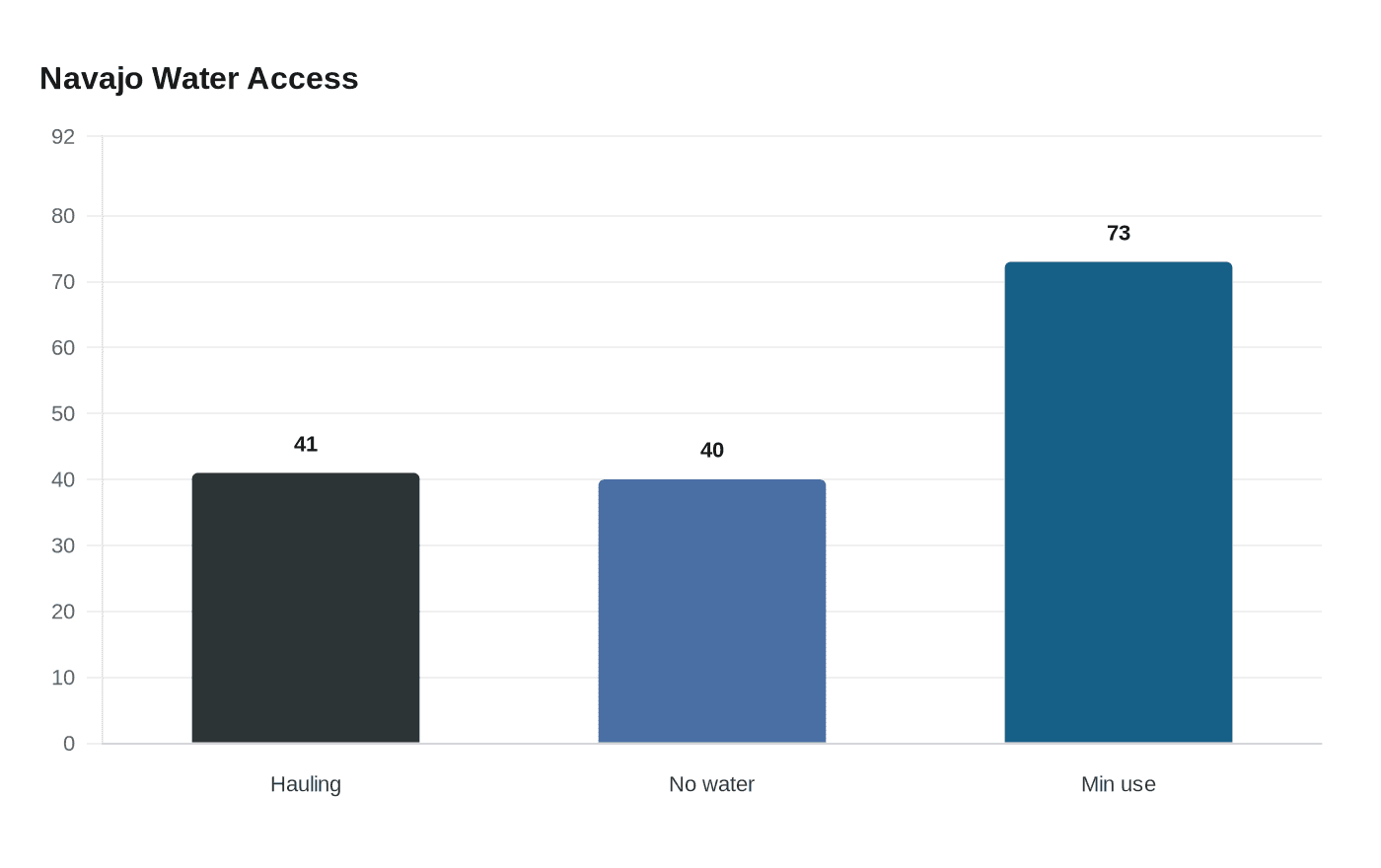
A CDC-linked scoping review has cited research estimating that about 40% of households on the Navajo Nation do not have running water. The Bureau of Reclamation describes the Navajo-Gallup Water Supply Project as a roughly 300-mile pipeline meant to provide a reliable municipal and industrial supply to parts of the Navajo Nation, the Jicarilla Apache Nation and Gallup, New Mexico. For Apache County, where Diné families still live with long drives, scarce spigots and dry summers, the gap between emergency declarations and daily life remains the central public health test.
This article was produced by Prism’s automated news system from verified source data, official records, and press releases, then run through automated quality and moderation checks before publishing. The system is built and supervised by the people who set the standards it runs under. Read our full AI policy.
Did this article answer your question?