Heavy equipment arrives in Chinle near Canyon de Chelly to build berms
Heavy equipment arrived in Chinle to build berms near the mouth of Canyon de Chelly, aiming to redirect floodwaters and protect homes from rising washes.
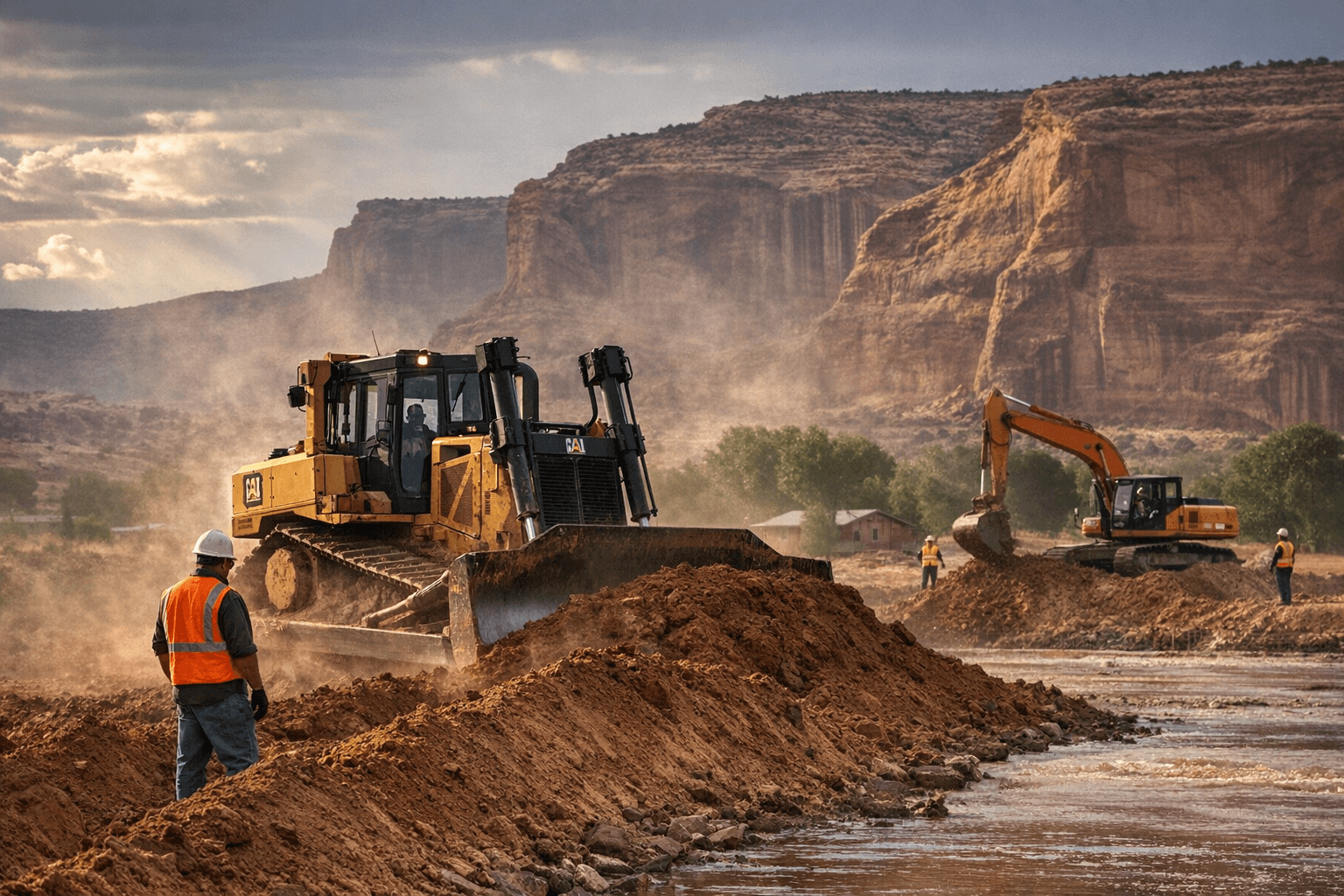
Heavy machinery from across the Navajo Nation moved into Chinle to shore up defenses after flooding forced emergency measures, with crews racing to keep water away from homes near the mouth of Canyon de Chelly. Work began at 9 a.m. Sunday, April 23, the morning of the third day since the flooding in Chinle was declared an emergency.
A dozer and an excavator from the Navajo Engineering and Construction Authority (NECA) were among the first heavy vehicles on site. In nearly two hours, crews had almost completed a berm, with an excavator digging up earth and a dozer pushing it into the waterway. Another pair - a smaller bobcat dozer and an excavator - worked a few yards away building a second berm to reinforce the first.
Chinle Chapter volunteers had spent the previous two days working by hand with smaller tractors to form an initial barrier near the mouth of Canyon de Chelly, trying to re-direct the water flow from affecting homes and back onto the water’s original path. Garrett Silversmith, division director for the Navajo Division of Transportation, oversaw the construction activity on site.
The work focused on dry patches and the active wash where floodwaters had started to change course. The berms do not cut across the full width of the waterway, and officials acknowledged the structures are intended to divert, not stop, the surge. The short-term objective was clear: push water back into its earlier channel and keep it away from residential areas while emergency responders assess longer-term needs.
For local residents, the immediate effect was visible: heavier equipment where two days earlier only hand tools and small tractors had been deployed. The scale of the response - equipment arriving from across the Navajo Nation and a quick shift from volunteer labor to mechanized work - underlined the urgency of stabilizing vulnerable areas before further flows arrive.
The report on the ground did not include a tally of homes affected, numbers of displaced residents, or a schedule for additional mitigation beyond the berms. It also did not list other agencies by name beyond NECA or provide technical specifications for the berms. Those details will determine whether the temporary barriers hold through additional runoff or if more extensive repairs will be required.
For readers in Apache County, the arrival of heavy equipment signals an escalation from volunteer containment to organized, mechanized response. Officials hope the berms will be enough to divert flooding away from the Chinle community; how well that holds up will depend on upcoming water levels and any further emergency measures the division of transportation and tribal crews undertake.
This article was produced by Prism’s automated news system from verified source data, official records, and press releases, then run through automated quality and moderation checks before publishing. The system is built and supervised by the people who set the standards it runs under. Read our full AI policy.
Did this article answer your question?