Hubbell Trading Post keeps Navajo traditions alive in Ganado
Hubbell Trading Post still sells groceries, rugs, and jewelry in Ganado, where artists, traders, and families keep a century-old Navajo marketplace active.
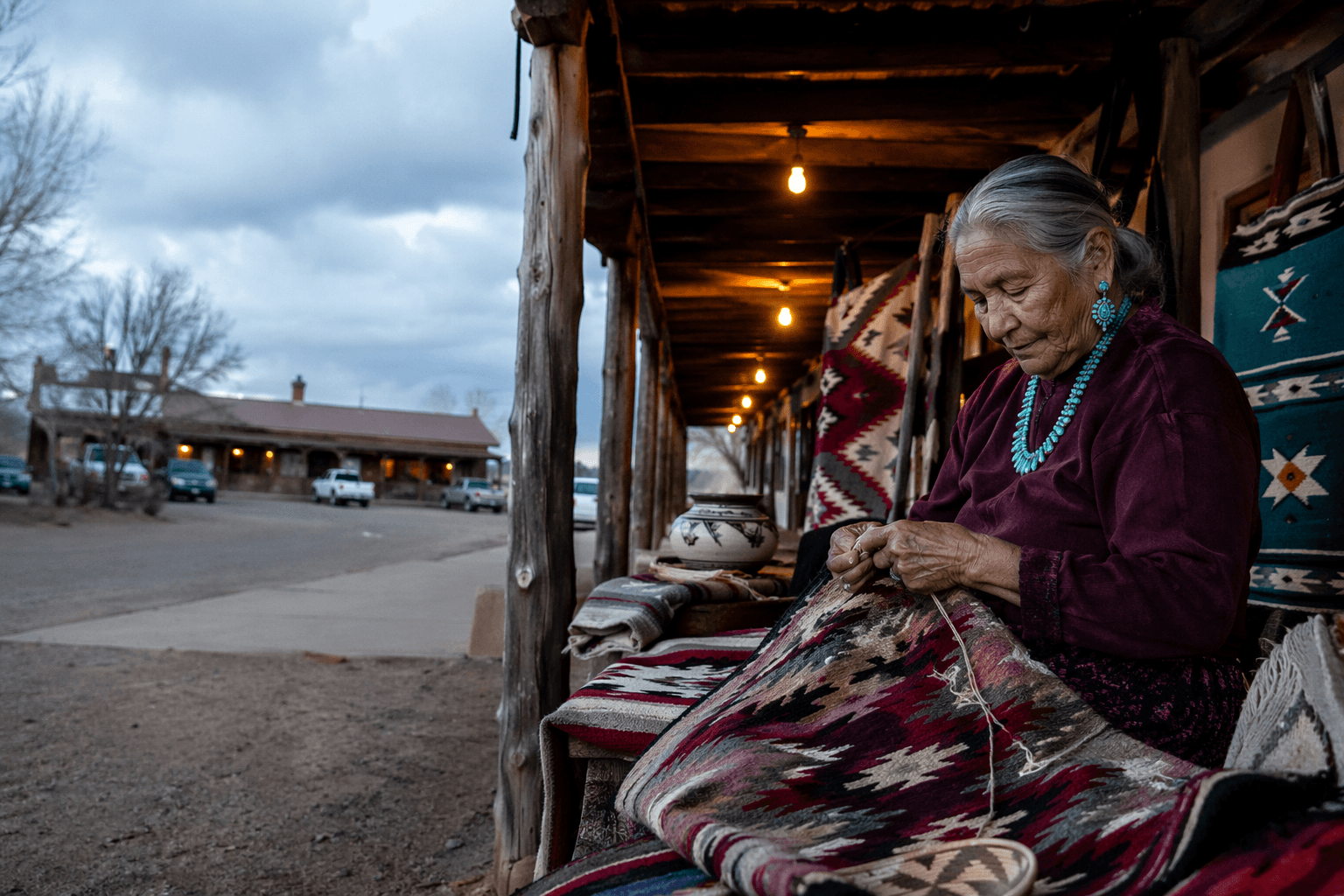
The trading post in Ganado is still a place to buy groceries, dry goods, rugs, jewelry, and crafts, and that daily commerce is what separates Hubbell Trading Post from a museum. In Apache County, it functions as a working institution where Navajo artistic traditions, family trade, and living community life still overlap on the same grounds.
A living trading post, not a frozen exhibit
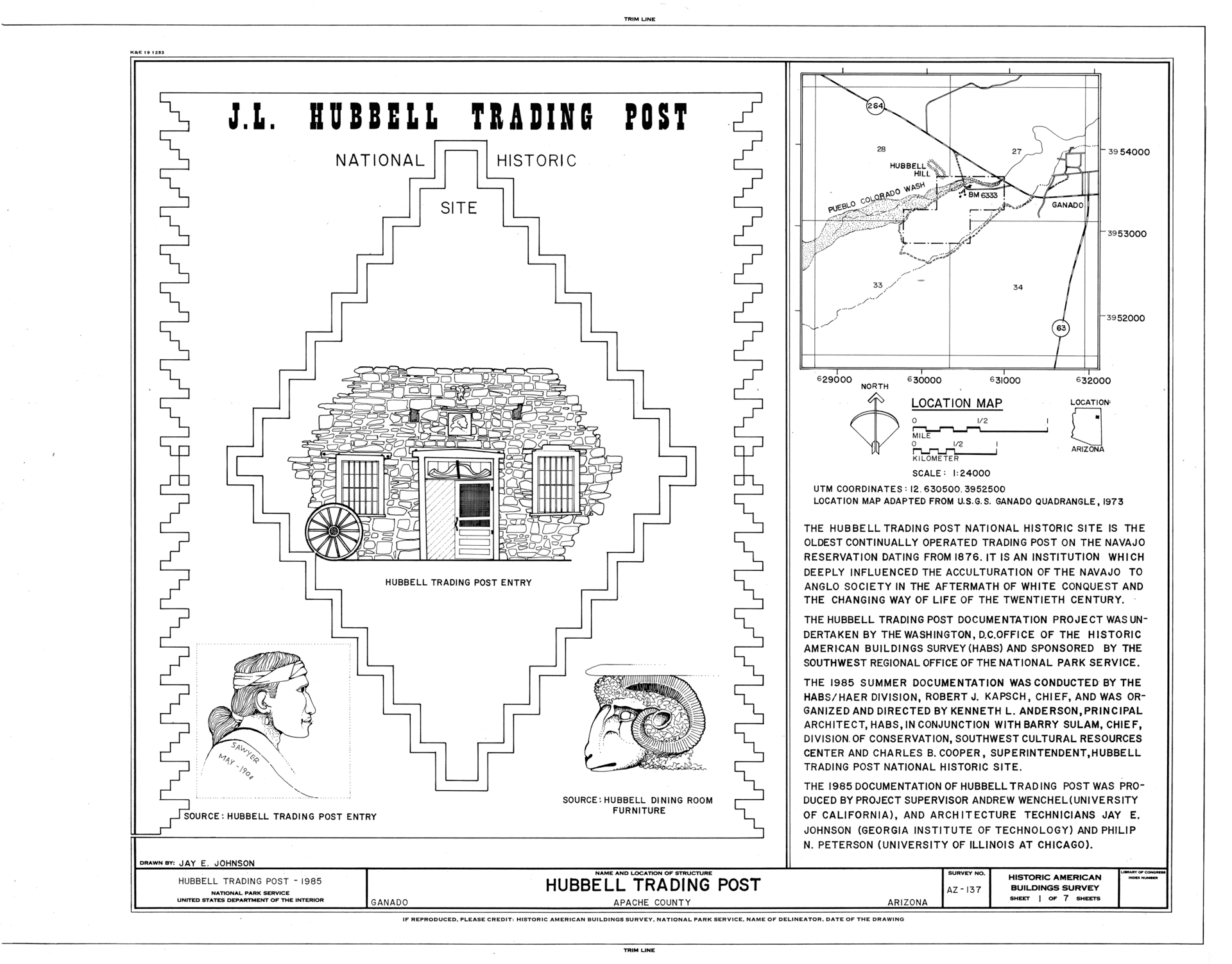
Hubbell Trading Post National Historic Site is the oldest operating trading post on the Navajo Nation, and it has been selling goods and trading Native American art since 1878. John Lorenzo Hubbell bought the post that year, only ten years after Navajos were allowed to return to their homeland from Bosque Redondo, and the site quickly became part of the region’s recovery and exchange economy.
The National Park Service says Hubbell’s influence reached beyond a single storefront. He built a broader trading empire that included stage and freight lines as well as several trading posts, and he had an enduring influence on Navajo rugweaving and silversmithing. That history still shapes how the site is understood in Ganado: not as a relic, but as a place where trade remains tied to identity.
How Hubbell became a national historic site
The push to bring Hubbell Trading Post into the National Park System began in 1957, long before the site was formally protected. Congress established Hubbell Trading Post National Historic Site on August 28, 1965, and Public Law 89-148 authorized the purchase of the site and remaining structures to preserve and protect the post and its environs for the public.
That legislative decision mattered because the goal was never to turn Hubbell’s into a sealed-off display. The site was preserved to reflect ongoing traditional trading relationships, and Hubbell family members continued operating the trading post until it was sold to the National Park Service in 1967. Today, Western National Parks Association operates the trading post in partnership with the National Park Service, keeping the business side of the site active.
What you can see on a visit
A visit to Hubbell Trading Post gives you more than a quick look at a historic storefront. Visitors can explore the trading post, hogan, farm, and the Hubbell family home, with the landscape itself adding to the experience through sheep, rugs, jewelry, wagons, corrals, and a barn. Seasonal Navajo-Churro ewes and lambs are part of what makes the site feel inhabited rather than staged.
The site is set up as an easy one- to two-hour stop in Ganado, which makes it practical for travelers moving through Apache County. That short visit still carries a lot of weight, because the setting shows how trade, family space, and cultural continuity have stayed connected in one place for more than a century.
The traders and artists who keep it active
Wallace James Jr. is the current trader at Hubbell Trading Post, and his role extends well beyond the counter. Western National Parks Association says he leads “Hubbell on the Road,” a traveling series that brings Navajo rugs, jewelry, and weaving talks to places including Bandelier National Monument, White Sands National Park, Lake Mead National Recreation Area, Petroglyph National Monument, and the Tucson Festival of Books.
Wallace James Jr. says his knowledge of Navajo weaving was passed down through his family, and his family history at Hubbell’s reaches back to Chief Ganado Mucho. That connection gives the trading post a present-day voice rooted in generations of Navajo trade, not just in archival memory.
The site’s archives underline how long the place has been part of local survival and exchange. Hubbell came to Ganado during the Navajo transition to reservation life after the 1864 Long Walk to Bosque Redondo, and when the community returned home in 1868, many homesteads, herds, and crops had been destroyed. In that setting, trade for goods was essential, and Hubbell’s became one of the places where that need was met.
A history tied to crisis and care
The trading post’s story also includes moments that go beyond commerce. In 1886, during a smallpox epidemic, Hubbell opened his home as a hospital, which shows how closely the site was tied to the lives of the people around it. That detail matters in Ganado because it reinforces the way the post functioned as part store, part meeting place, and part support system.
The site’s museum collection now contains more than 350,000 individual items, along with a family archive of 264,000 business records. Those records make Hubbell Trading Post a major research resource as well as a public site, offering a deep record of Navajo trade, family enterprise, and the economic relationships that shaped this corner of Arizona.
Auctions, scholarships, and money going back to artists
The Native American Art Auctions remain one of the most important ways the site supports artists directly. The National Park Service says the auctions are held each year in the spring and fall, and over the last twenty years close to $2 million has been returned to artisans through that program.
Friends of Hubbell Trading Post NHS, the nonprofit incorporated in 1990 to support the site, says its auctions have returned nearly $4 million to Native American artists over 36 years. The group also says its scholarship program has awarded more than $500,000 to Native American students in the Four Corners area. Those numbers show that Hubbell’s still functions as an economic channel for artists and students, not only as a place where visitors come to look around.
For Ganado and the wider Apache County region, that mix of commerce, cultural continuity, and public access is the point. Hubbell Trading Post remains a working place where Navajo traditions are sold, taught, preserved, and used, and that living role is what keeps it central to the community it still serves.
This article was produced by Prism’s automated news system from verified source data, official records, and press releases, then run through automated quality and moderation checks before publishing. The system is built and supervised by the people who set the standards it runs under. Read our full AI policy.
Did this article answer your question?