Navajo Nation Council considers bills shifting powers between branches at Winter Session
Navajo Nation Council opened its 25th Winter Session in Window Rock and placed several governance bills on the agenda that could change Council rules and executive oversight, affecting local representation.
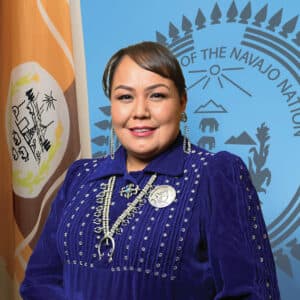
The Navajo Nation Council convened its 25th Winter Session in Window Rock with an agenda that included governance bills affecting Council rules, committee jurisdiction, and a veto-override tied to virtual attendance for delegates. Speaker Crystalyne Curley presided as delegates adopted the agenda and moved into recognitions and public awareness items before legislative debate.
The approved revised agenda lists the session dates as January 26-30, 2026, with the agenda document updated January 28, 2026 at 3:45 p.m. Council action to adopt the agenda was recorded as (m) G. Tolth (s) R. Nez (v) 19-00-03. The Council recorded motions to receive the president’s State of the Nation address and the financial report from the Controller as (m) A. Mitchell (s) B. Jesus (v) 16-02-05 and (m) V. James (s) E. Charles-Newton (v) 17-00-06, respectively.
Public safety and victim advocacy framed the opening. The Missing and Murdered Diné Relatives Task Force hosted a presentation on human trafficking prevention by Patrick Gallegos of the Coalition to Stop Violence Against Native Women, who reviewed the four “P’s” of prevention: prevention, protection, prosecution and partnership. Former 23rd Council Delegate Leonard Pete of Chinle delivered the invocation. Speaker Curley led a moment of silence honoring Maleeka “Mollie” Boone, Carson Apodaka, veterans Anderson Six and Clayton Curley, and the late Gallup High School coach Arik Henry, and said, “It is our shared responsibility to raise awareness in our communities and to honor the lives of those who brought positive change to the Navajo Nation.”
Several measures on the agenda raise institutional and procedural questions for local governance. Bill 0006-26 is titled, verbatim, “An Action Relating to the Law and Order Committee, the Naabik’íyáti’ Committee, and the Navajo Nation Council; Amending the Rules of Order for the Navajo Nation Council 2/3 (Does Not Require the 2/3 Vote And is Tabled to the End of the Winter Session Agenda)” and lists Honorable Geroge H. Tolth as sponsor with Honorable Shawna Ann Claw and Honorable Amber Kanazbah Crotty as co-sponsors. The agenda records a related motion as (m) R. Nez (s) B. Jesus (v). Bill 0008-26 appears on New Business - Consent Agenda #1 as “An Action Relating to Law and Order and Naabik’íyáti’ Committees, and the Navajo Nation Council; Overriding the Navajo Nation President’s Veto of Navajo Nation Council Resolution No. CO-52-25 (Amending Title 2 of the Navajo Nation Code to Codify Virtual Attendance by Council Delegates at Standing Committee Meetings and Navajo Nation Council Sessions; Amending the Navajo Nation Council Rules” and is marked 2/3. Bill 0009-26 appears as a cross-committee item involving Law and Order, Resources and Development, Budget and Finance, and Naabik’íyáti’ Committees; its text in the agenda excerpt is truncated.
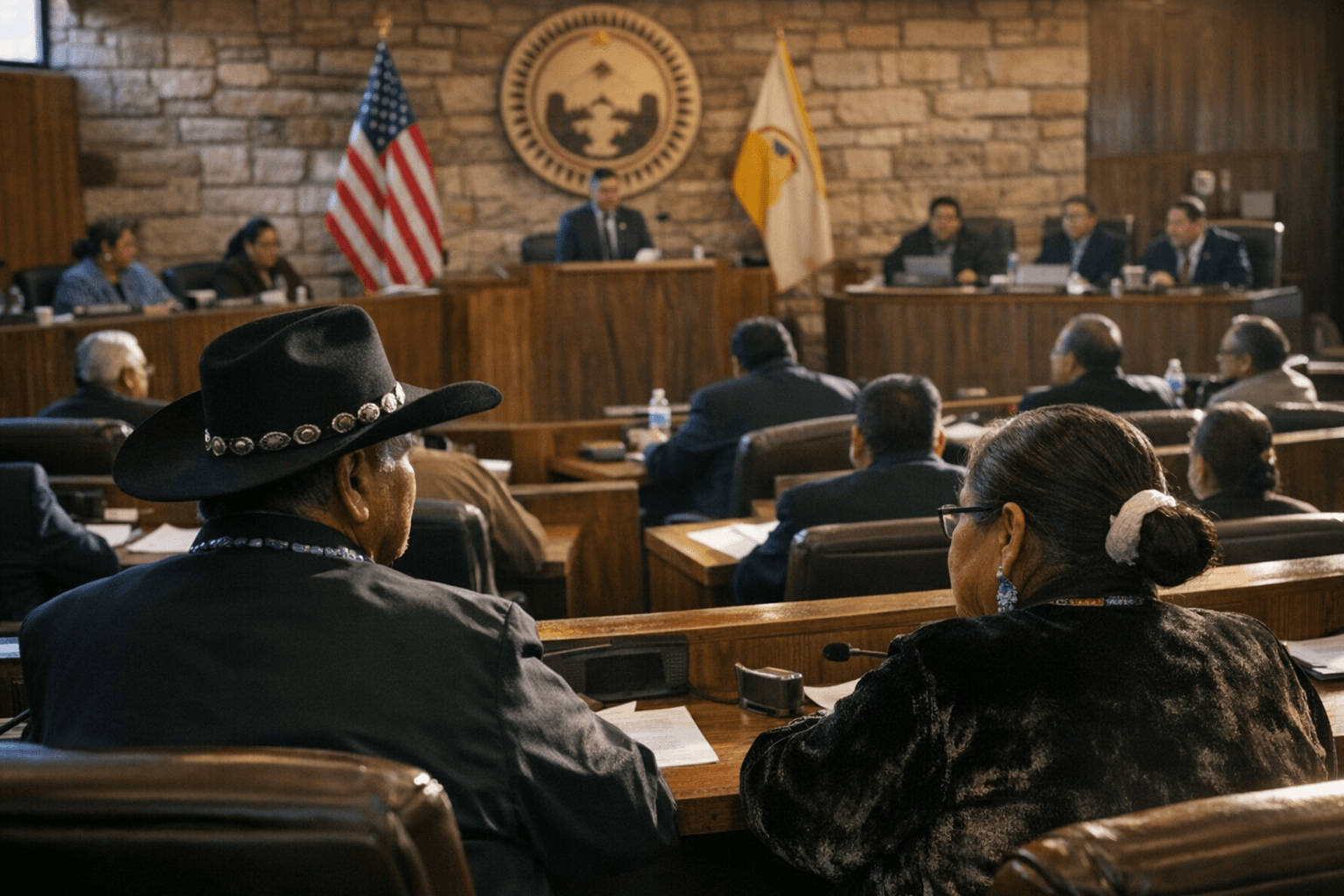
These items collectively touch on how the Council conducts business, how delegates may participate remotely, and how committee authority is structured. For Apache County residents and chapter leaders, changes to Council rules and virtual attendance policy affect how local voices are represented in standing committee work and floor action, and could alter oversight dynamics between the legislative and executive branches.
Special guests included Navajo Nation President Buu Nygren, Vice President Richelle Montoya, visiting students from the University of New Mexico, and federal staff representatives Brian Lee and Luther Lee, and Coconino County Supervisor Lena Fowler. Delegates used the opening to recognize first responders and community members; Resources and Development Committee Chair Brenda Jesus acknowledged veterans Anderson Six and Clayton Curley and the late coach Arik Henry, while a delegate listed as Parrish recognized Kayenta first responders for their response to a 2025 parade crash.
What comes next for readers: delegates have tabled at least one rules bill to the end of the session and placed a veto-override measure on the consent calendar, so final outcomes will depend on committee work and votes scheduled later in the week. Monitor the Council’s posted minutes and final roll-call votes for bill texts, sponsor floor statements, and recorded votes to understand how any rule changes or overrides will affect representation and governance at the chapter level.
This article was produced by Prism’s automated news system from verified source data, official records, and press releases, then run through automated quality and moderation checks before publishing. The system is built and supervised by the people who set the standards it runs under. Read our full AI policy.
Did this article answer your question?