Ninth Circuit Clears Path for Resolution Copper Mine Land Exchange
The Ninth Circuit's final ruling cements Resolution Copper's hold on Oak Flat, an Apache ceremonial site, after the land already transferred to Rio Tinto and BHP's mining venture in March.
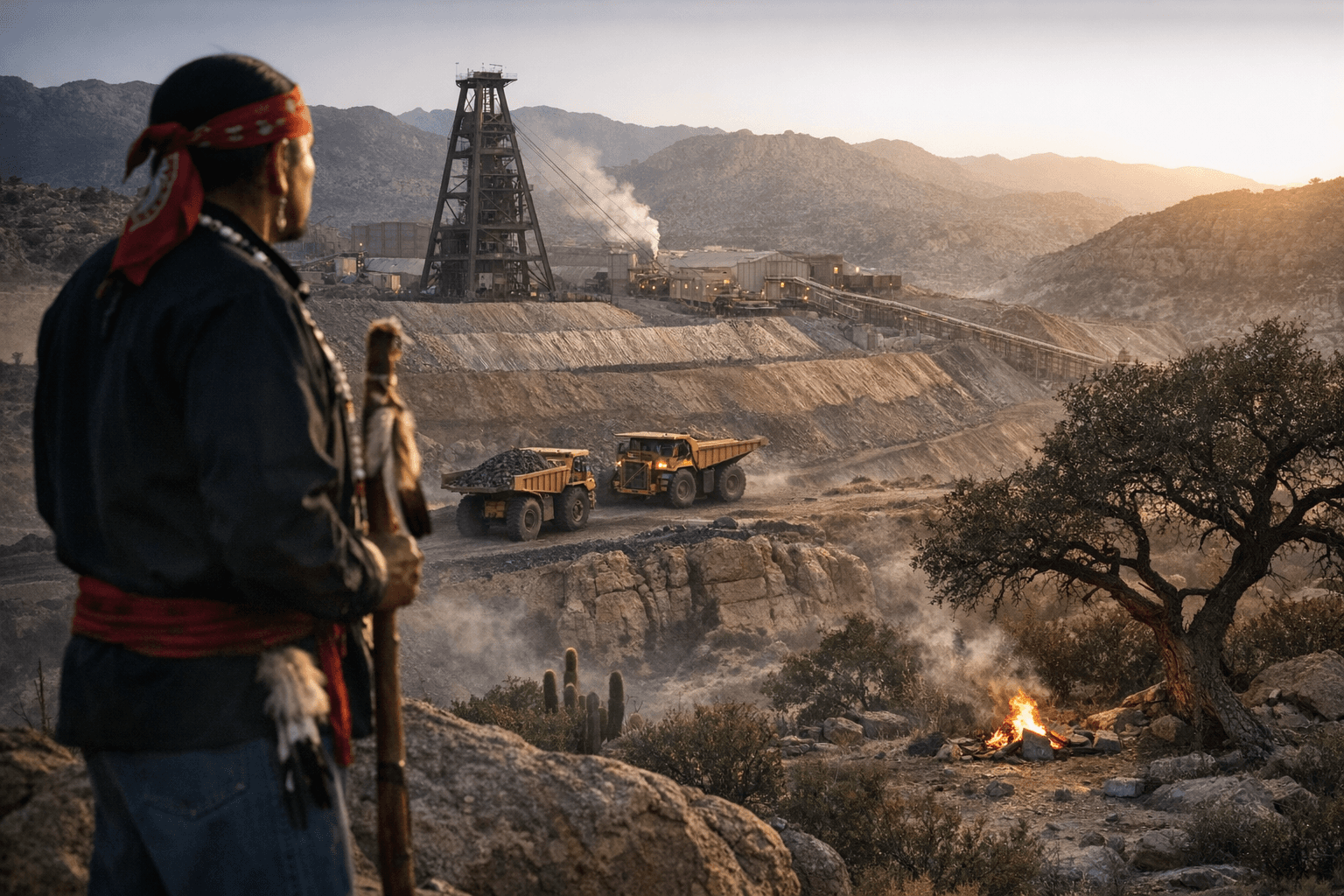
Three weeks after the U.S. Forest Service transferred Oak Flat to a multinational mining company, the Ninth Circuit locked in the legal framework that made it possible, issuing an amended opinion on April 8 that adds Circuit Judge Johnnie B. Rawlinson's partial dissent to a March ruling that the San Carlos Apache Tribe and allied plaintiffs had no grounds for emergency court relief.
The March 16 transfer placed roughly 2,500 acres of Apache ceremonial ground inside the Tonto National Forest under the ownership of Resolution Copper, a subsidiary of Rio Tinto and BHP, ending nearly six decades of federal protection that dated to an executive order signed by President Dwight Eisenhower. The amended opinion in Case No. 25-5197, written by Circuit Judge Milan D. Smith Jr. and joined by Judge Daniel A. Bress, affirmed U.S. District Judge Dominic Lanza's denial of preliminary injunction motions filed by the Arizona Mining Reform Coalition, the San Carlos Apache Tribe, Earthworks and the Center for Biological Diversity.
The panel found that plaintiffs had demonstrated Article III standing, documenting genuine potential harms to cultural places and sacred sites in the final environmental impact statement. But the majority concluded the groups had not shown the irreparable harm required for an emergency order, given that no physical alteration of the land had occurred when the motions were heard. Rawlinson's dissent, formally added in the April 8 amendment, breaks with that reasoning on at least part of the analysis.
Russ McSpadden, Southwest conservation advocate at the Center for Biological Diversity, called the ruling "devastating news for Oak Flat and everyone who loves this sacred place," but added the litigation is not over. The plaintiffs retain live claims under the National Environmental Policy Act, the National Historic Preservation Act and the Religious Freedom Restoration Act, all of which can now proceed on the merits. The Arizona Mining Reform Coalition separately argued that mining claims beneath Oak Flat are legally nullified once the federal land transfers to private ownership, a question the majority rejected.
For tribal communities across Apache County, the dispute carries implications that reach beyond the ceremonial significance of Oak Flat itself. Tribal leaders have raised sustained concerns about groundwater impacts and the downstream water resources that Indigenous communities across Northeast Arizona depend on. Resolution Copper estimates the site could yield up to 40 billion pounds of copper over 40 years, sitting atop an estimated $150 billion in reserves, a scale of extraction that opponents argue will produce irreversible consequences for surrounding ecosystems and water tables.
The land's legal vulnerability traces to 2014, when the Southeast Arizona Land Exchange and Conservation Act was attached as a rider to a must-pass defense authorization bill. If ground-disturbing activity begins, tribal attorneys have signaled they may seek emergency relief on the remaining merits claims, which would put a decade-long fight, one that has already outlasted multiple administrations and congressional sessions, back before the federal courts.
This article was produced by Prism’s automated news system from verified source data, official records, and press releases, then run through automated quality and moderation checks before publishing. The system is built and supervised by the people who set the standards it runs under. Read our full AI policy.
Did this article answer your question?