Springerville Heritage Center Announces Rock Art Talk, Casa Malpais Open House
Robert Frutos spoke on Indigenous rock art along the Little Colorado River on March 7, with an all-day Casa Malpais open house also on the 2026 calendar.
The Little Colorado River Chapter of the Arizona Archaeological Society has rolled out its 2026 programming lineup, anchored by a public talk that took place Saturday and a separate all-day open house at one of eastern Arizona's most significant prehistoric sites still to come.
Robert Frutos delivered a presentation titled "Indigenous Rock Art in the Little Colorado River Region" on March 7, 2026, drawing on the deep petroglyphic and pictographic record left across the landscape surrounding Springerville. The exact venue and attendance figures were not confirmed in the chapter's posted announcement, and details on speaker affiliation were not provided. The Little Colorado River Chapter has not yet released start times, admission information, or registration requirements for the event.
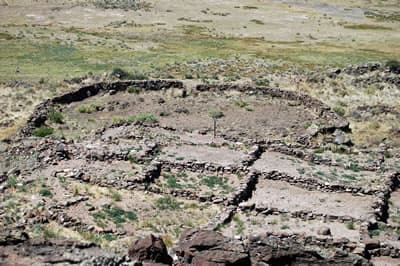
The same 2026 listing references an all-day Casa Malpais Open House, though the chapter's posted excerpt does not specify a date, program schedule, or logistical details for that event. Casa Malpais Archaeological Park, situated just outside Springerville, preserves a site with features that have drawn archaeological society members in the past: an astronomical calendar, a great kiva, ancient stairways, and rock art. A prior Arizona Archaeological Society field trip to Springerville, conducted on a September 18 and 19, also brought participants to the Sipe White Mountain Wildlife Area to view petroglyphs and wildlife, and concluded Sunday morning with a guided tour of the sixty-room Amity Pueblo, an Archaeological Conservancy site led by a local AAS Little Colorado Chapter member.
The chapter's programming reflects a broader regional focus on Indigenous history that runs through Arizona Archaeological Society events. Archaeologist Scott Wood presented "One N'de at a Time; Apache History and Archaeology on the Tonto National Forest" on March 15, tracing the presence of the Dilzhé'e, known today as the Tonto Apache, across what became the Tonto National Forest. "From the 1500s to the 1870s, most of the area that later became the Tonto National Forest was occupied by the Dilzhé'e, the people known today as the Tonto Apache after the ancient Uto-Aztecan name for the area," according to the Arizona Archaeological Society's summary of the presentation. "Related groups who would become known as the White Mountain and San Carlos Apache occupied the easternmost portions." Wood's talk covered the Tonto Apache from their arrival in central Arizona through the present day and examined Apache archaeological sites and rock art.

The Springerville area's deep rock-art record has attracted sustained scholarly attention. In March 2020, Janine Hernbrode presented "Patterns in Petroglyphs: Hints of the Hohokam Cosmology on the Landscape" to the Arizona Archaeological Society, drawing on fifteen years of recording work across four major petroglyph sites in Southern Arizona. That effort produced drawings and photographs cataloging more than 16,000 glyphs. Hernbrode's analysis concluded that the images encode belief systems rather than daily routines. "There were no scenes of everyday life, of grinding corn, or plans for constructing pit houses," the Arizona Archaeological Society's summary noted. "The images recording their belief system are interwoven into lines and circles and more complex images carefully placed on the landscape."
Confirmed details on the Casa Malpais Open House date, along with venue and timing for remaining 2026 chapter events, are expected to be posted by the Little Colorado River Chapter of the Arizona Archaeological Society as the season progresses.
This article was produced by Prism’s automated news system from verified source data, official records, and press releases, then run through automated quality and moderation checks before publishing. The system is built and supervised by the people who set the standards it runs under. Read our full AI policy.
Did this article answer your question?