St. Johns courthouse anchors Apache County’s 1879 history and growth
St. Johns’ courthouse is still where Apache County does its daily business, linking 1879 records to a 1918 building that serves a huge rural county today.
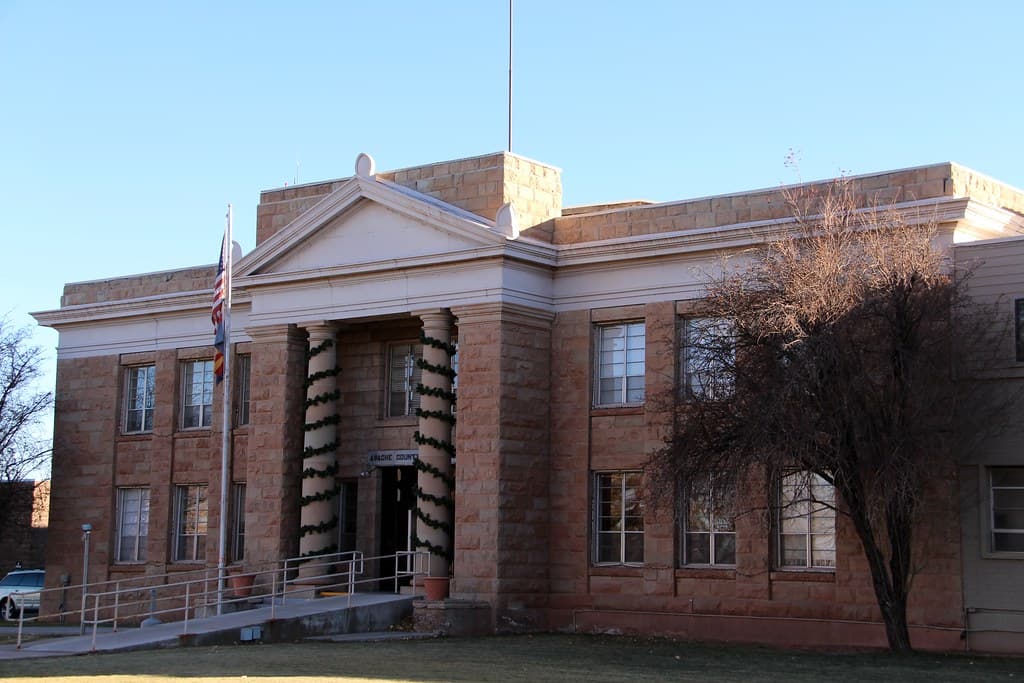
The Apache County Courthouse, built in 1918 at 70 West 3rd Street South in St. Johns, is still part of the county’s active justice system. For a county that spans 11,198.3 square miles and has 66,021 residents, keeping the seat in St. Johns turns a historic building into a daily administrative anchor rather than a museum piece.
Parts of the Navajo Nation and the Fort Apache Indian Reservation lie within Apache County’s borders, and the county seat has long concentrated records, court access, and public-facing government functions in one place. Apache County’s preserved documents date back to 1879, the same year the county was established.
Why St. Johns became the center
Apache County’s shape and seat were set in the late 19th century. In November 1879, after votes from the mining town of Clifton, St. Johns was designated the county seat. At that point Apache County covered a much larger territory, including what is now all of Navajo County and parts of Gila County and Graham County, before shrinking to its present footprint by 1895.
The Arizona Memory Project lists Apache County among the largest counties in the United States by total area, and the U.S. Census Bureau lists it as the third-largest county in Arizona by total area. The county seat in St. Johns remains where the county’s records, court operations, and institutional memory are centered.
A courthouse built to last
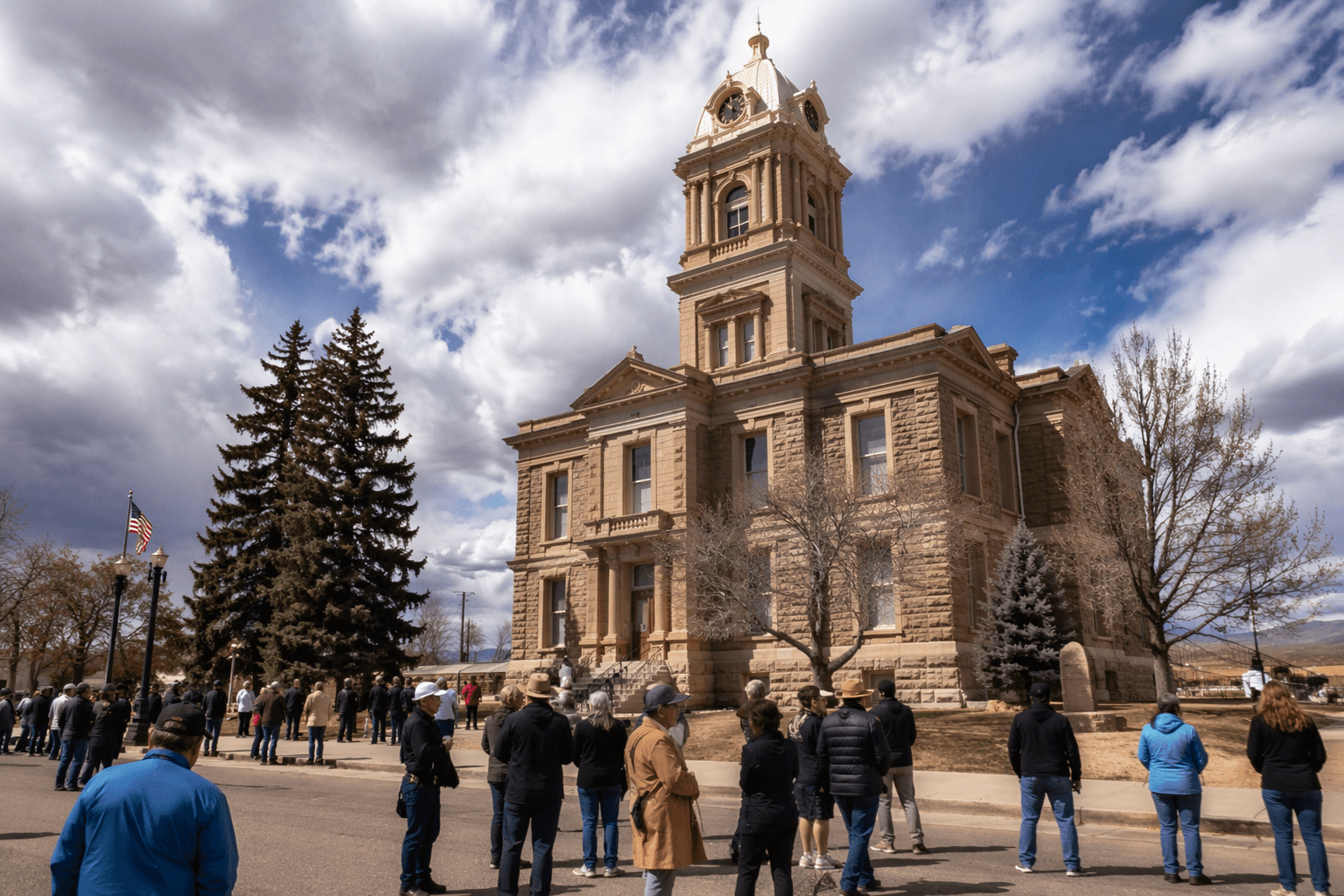
The Apache County Courthouse was designed in Classical Revival style by Trost & Trost. The building was dedicated on April 2, 1918, built with native stone, and cost $45,000. The structure still stands; the Trost Society identifies it as the Apache County Courthouse, and Henry Trost archive materials identify the civic complex as the Apache County Courthouse and Jail at 70 West 3rd Street South, also described as First West and Third South.
The former St. Johns High School building later served as a Court House Annex and an Apache County Treasurer facility, showing how county operations have adapted within the same historic civic area instead of shifting wholesale to a new campus.
How the courthouse serves residents now
The Apache County Clerk of the Superior Court keeps court records and collects fees, fines, bonds, and restitutions. The clerk’s office is at 70 West 3rd South in St. Johns, three blocks south of Main Street, and the Apache County Superior Court Law Library is also at 70 W. 3rd S., St Johns, AZ 85936. Residents still need the courthouse’s name and address when they need to file, search, or follow a case.
Cases since 1995 are available online free of charge through Apache County, and the Arizona Judicial Branch offers public case information through an online access portal. The online access extends courthouse services beyond the building itself, especially in a county where long distances can make a trip to St. Johns costly in time and fuel.
What the court system handles
Apache County’s Superior Court is the state’s general jurisdiction court, and each county elects a superior court judge. The Honorable Michael Latham has served as Presiding Superior Court Judge since 2014. The clerk’s office handles superior-court actions involving child support, civil matters, criminal appeals, probate, mental health, tax, domestic relations, and juvenile filings.
The county also has four justice courts, each presided over by an elected justice of the peace. Those courts handle small claims, traffic offenses, DUIs, protection orders, and other limited-jurisdiction matters.
The records behind the building
Apache County’s recorder is responsible for the preservation and indexing of all recorded documents in the county, and all recorded documents are considered originals. Those preserved and recorded documents date back to 1879, tying the county’s paper trail directly to the year of its establishment.
In a county this large, preserving originals, searching older filings, and keeping court and recorder functions accessible in one seat carries practical value. The county’s institutional history is stored in files and systems that connect residents to land, property, family, and legal history.
A county seat with a wider civic landscape
St. Johns is not only where the courthouse stands. The Apache County Historical Society Museum is also in the county seat, giving the town a visible role in preserving local memory. Apache County Historical Newspapers includes the St. Johns Herald and the St. Johns Observer, two names that show how long the town has served as the county’s public voice as well as its administrative center.
The courthouse sits inside a larger historical cluster. Residents who go to St. Johns for court business are also moving through the same town where the county’s archives, museum collections, and newspaper record have kept Apache County’s story visible.
This article was produced by Prism’s automated news system from verified source data, official records, and press releases, then run through automated quality and moderation checks before publishing. The system is built and supervised by the people who set the standards it runs under. Read our full AI policy.
Know something we missed? Have a correction or additional information?
Submit a Tip