Unpaid ranch worker keeps Padres Mesa cattle operation running, despite delays
Gene Shepherd kept Padres Mesa cattle moving even after months without pay, exposing how a ranch can depend on one worker’s household survival.
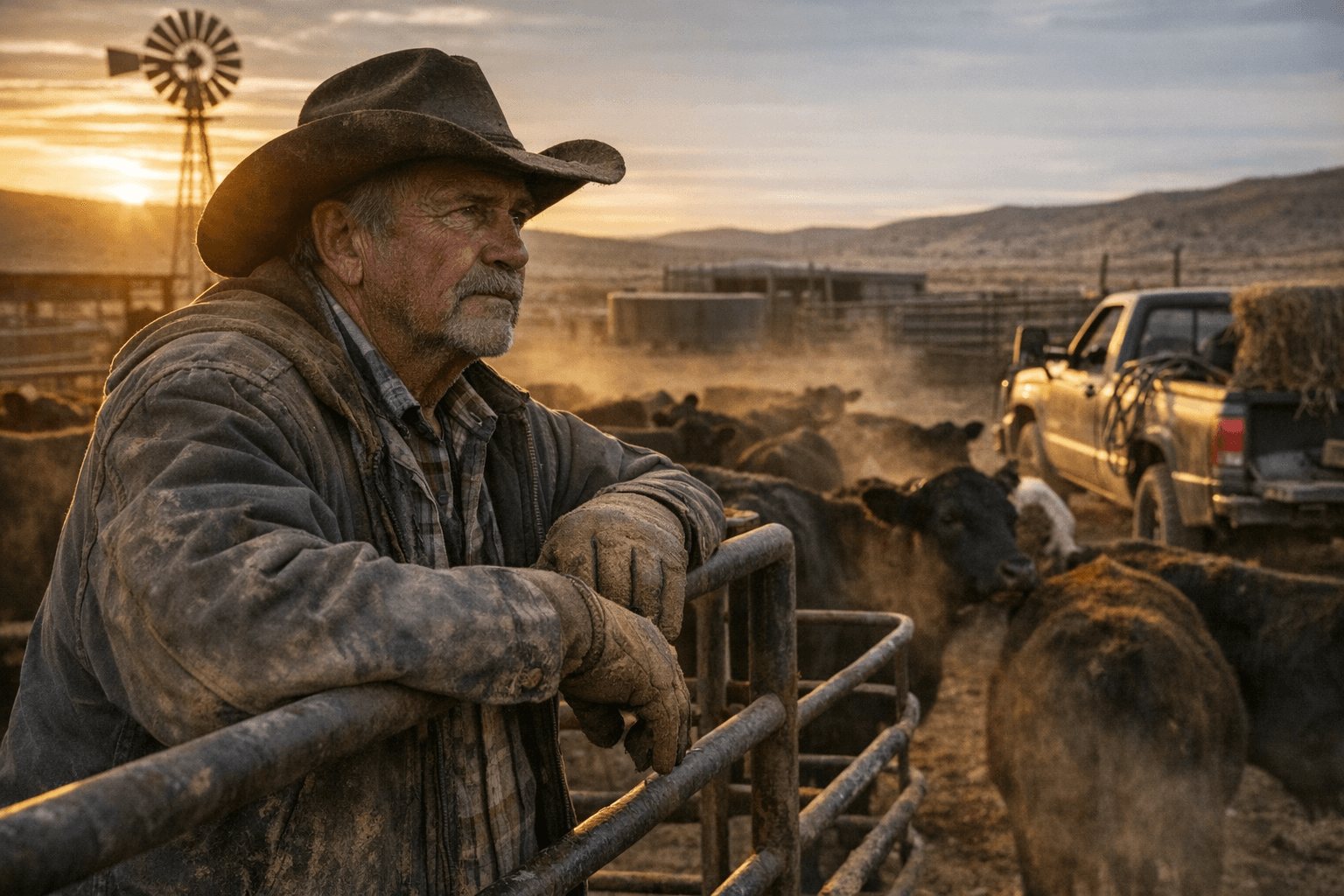
Gene Shepherd has kept the Padres Mesa Demonstration Ranch running in Rocky Ridge even as paychecks stopped arriving in early January. The longtime ranch hand, who said he had worked there since the ranch opened in 2008, continued tending cattle, checking water and carrying out the daily work needed to keep the operation alive.
Shepherd’s situation turned a payroll delay into a direct economic strain on Apache County ranching. He helped build the ranch’s fences and lay its water lines, work that helped shape a 61,000-acre spread at the intersection of U.S. Highway 191 and Interstate 40. Now, as the ranch shifted into tribal control after the federal government’s departure, Shepherd and at least one co-worker were still doing the labor while unpaid for months.
The stakes reach beyond one worker’s household finances. Cattle cannot wait for a funding dispute to end, and the ranch’s basic tasks still had to be done whether or not the money was in place. That makes the gap between management and payroll more than an accounting problem. It shows how quickly a rural operation can become dependent on personal sacrifice when the people doing the work are expected to hold everything together without reliable wages.
The payroll breakdown came after years of uncertainty over who would fund and run the ranch. In a Sept. 17, 2025 letter, President Buu Nygren requested $75,000 in emergency funding to cover three months of ranch costs, describing $25,000 a month as a reasonable operating estimate. Nygren said Padres Mesa and the New Lands livestock program were essential to relocatees and to the long-term benefit envisioned by the settlement framework. He also created a Padres Mesa Demonstration Ranch Team and named Vince Redhouse as team lead, with Sarah Slim, the Navajo Nation Department of Justice, a ranching consultant and Bill Inman involved in coordination.
Padres Mesa was established with Navajo-Hopi relocation funds in 2009 to model ranching practices and help relocatees get back into livestock production. A 2022 ranch feature said spring branding there involved 84 calves, and Shepherd said the ranch had 95 calves ready to sell. The calves were sold as a herd to Billy Hall, who took them to pasture in Oklahoma or Colorado before they moved on to a feed yard. Earlier reports said the ranch’s methods helped inspire the Navajo Beef program, and a 2017 report said the Office of Navajo and Hopi Indian Relocation could still handle land use, permits and the ranch’s operation during the transition. The current pay dispute shows what happens when that support system falters: the livestock still need care, but the workers keeping them alive are left to absorb the cost.
This article was produced by Prism’s automated news system from verified source data, official records, and press releases, then run through automated quality and moderation checks before publishing. The system is built and supervised by the people who set the standards it runs under. Read our full AI policy.
Did this article answer your question?