White Mountain Apache Reservation manages outdoor access with permits and rules
The White Mountain Apache Reservation runs access through permits, not guesswork. Fishing, camping, and special-use visits all follow rules built to protect Apache trout and sacred places.
WMAT Outdoor is the operating hub for permits, regulations, seasonal updates, and visitor guidance across about 1.6 million acres of the White Mountain Apache Reservation that stretch from roughly 2,600 feet on the southwest side to 11,400 feet at Mt. Baldy. Permits, closures, and activity rules govern access there.
Fishing, camping, rafting, hiking, and special-use visits run through tribal rules before they run through a map. WMAT Outdoor organizes the reservation’s recreation pages around permit vendors, online permits, a weekly fishing report, rent-a-lake options, hunting information, rafting information, and emergency or closure notices. Visitors coming in from outside the reservation need to start with the tribe’s permit framework and plan around it.
Permits come first on a managed landscape
The reservation is not open-access public land, and the rules are built to reflect that. WMAT Outdoor separates recreation into different categories, including permits, camping, special-use areas, rafting, hunting, and closures, which means a day on the water or a night in camp is not one generic pass to everything.
The most common visitor mistake is assuming one payment or one license covers every activity. On this land, the correct permit depends on where you are going and what you want to do, whether that means camping, fishing, or entering a special-use area near a river corridor or waterfall.
Fishing on Apache trout country
The Apache trout is found nowhere else in the world, and the White Mountain Apache Tribe first protected it by closing trout habitat to fishing on tribal lands in 1955. Federal action followed later, with the species listed as endangered in 1967, downlisted to threatened in 1975, and then removed from the federal endangered and threatened list effective October 7, 2024.
Visitors planning a trip should use the weekly fishing report, check current notices, and understand that some waters operate under reservation-specific rules and limits rather than general public-access assumptions.
Christmas Tree Lake shows how tightly that access is managed. WMAT Outdoor lists daily fishing permits there at $30 per person, all ages, before July 4 and $25 per person after July 4. The lake is limited to 20 spots per day by reservation only, which means showing up without planning ahead is a fast way to miss a day on the water.
Scenic lakes on the reservation are not ordinary roadside stops, and the fishing price does not stay the same all season. At Christmas Tree Lake, the reservation-only cap and the seasonal price change both apply.
Camping requires the right permit, even for primitive sites
Camping on the White Mountain Apache Reservation is also controlled through a clear permit system. WMAT Outdoor lists camping permits at $15 per vehicle per day and a 30-day camping permit at $350. The camping regulations are blunt about two points that often trip people up: reservations are non-transferable and non-refundable, and primitive camping still requires the same permit.
That means a tent pitched off the beaten path is not exempt from the rules. It also means a permit bought for one person or one trip cannot simply be passed to someone else after plans change. Visitors should treat camping permits as an advance commitment, not a flexible placeholder.
If you plan to camp on tribal land, secure the correct permit before you arrive, keep it with you, and do not assume a primitive site is free just because it looks undeveloped.
Special-use areas, river access, and Cibecue Falls
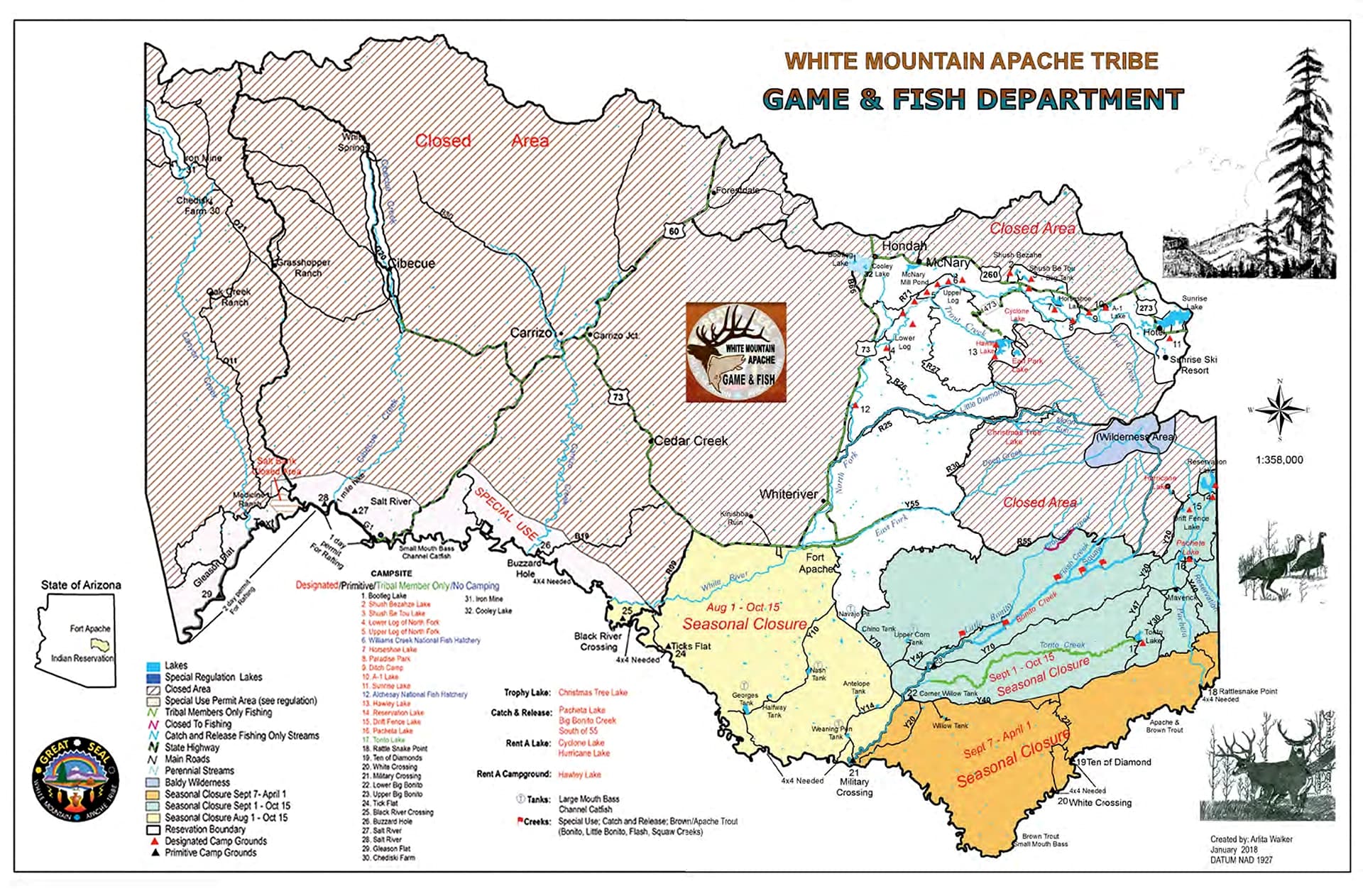
Some of the most sensitive and most visited parts of the reservation fall under special-use rules. WMAT Outdoor defines the Special Use Area as all areas within the canyon corridor and canyon feature of the Black and Salt Rivers, and it lists a special-use daily permit at $15. Cibecue Falls has its own access permit at $30 per person per day, all ages.
This is where many visitors get into trouble. A waterfall stop, a river corridor hike, or a day of rafting may look like a normal outing, but on this reservation those locations can require a separate permit and a separate set of rules. WMAT Outdoor also points visitors to separate regulations for Salt River use, Cibecue Falls, rafting, camping, and other special-use activities, so a quick stop without reading the rules is not a safe bet.
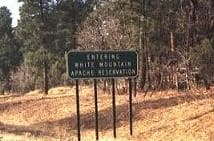
The wider recreation system includes rafting information and emergency or closure notices. Conditions change, access changes, and the tribe uses those notices to keep visitors away from places that are closed, restricted, or unsafe.
Respecting sacred places and community events
WMAT Outdoor directs visitors to tourism information for ceremonial dances and a visitor code of conduct, and it highlights annual gatherings including the Hon-Dah Pow Wow and the White Mountain Apache Tribe Fair & Rodeo.
The tribe identifies Mt. Baldy as sacred and places it in a closed area on the reservation. Visitors who ignore closed-area guidance or treat every visible route as fair game are not just risking a citation, they are crossing into places the tribe has already marked off-limits.
Check the permit page, check the weekly fishing report, review closure notices, and follow the visitor code of conduct before leaving Apache County.
This article was produced by Prism’s automated news system from verified source data, official records, and press releases, then run through automated quality and moderation checks before publishing. The system is built and supervised by the people who set the standards it runs under. Read our full AI policy.
Did this article answer your question?