Winter Storm Forecast Raises Travel and Health Concerns in Apache County
The National Weather Service Flagstaff office updated the Springerville / Little Colorado River Valley forecast on Jan. 7, issuing an advisory valid through Jan. 13 that calls for rain changing to snow, high chances of precipitation and gusty winds. The system could bring light to several inches of snow in higher elevations, creating travel disruptions and public health challenges for Apache County residents and service providers.
The National Weather Service Flagstaff office updated the Springerville / Little Colorado River Valley forecast at 12:16 p.m. MST on Jan. 7, issuing a routine area forecast valid through Jan. 13, 2026. The forecast calls for rain changing to snow with an 80 to 90 percent chance of precipitation in the short term and potential accumulations ranging from less than an inch to a few inches depending on timing and elevation. The forecast also warns of breezy to gusty southwest and south winds and patchy blowing snow at times in the coming days. The NWS page lists current observations for Springerville Municipal Airport and includes links to the zone forecast discussion and local radar.
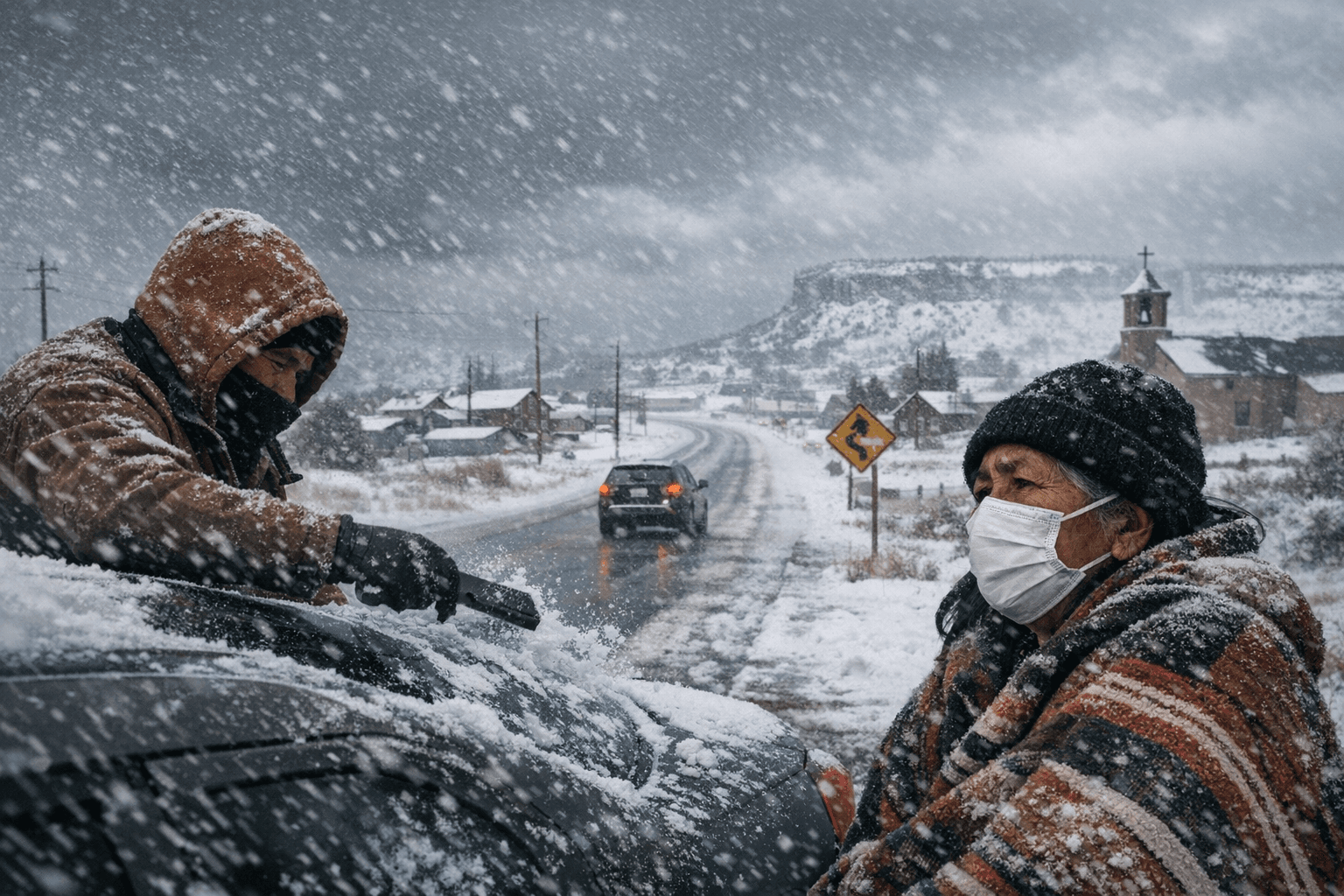
The forecast matters to residents across Apache County, especially in Springerville, Eagar, and along the St. Johns corridor, where mountain passes and smaller county roads can become hazardous quickly. Travel delays can disrupt school schedules, workplace commutes and planned events. For a rural county with long distances between towns and limited public transit, even modest snow and gusty winds raise risks for stranded vehicles and delayed emergency response.
Public health systems and community resilience could be affected. Ambulance and emergency medical services may face longer response times on slick or snow-packed roads, and scheduled outpatient appointments or nonurgent procedures could be postponed. Households that rely on regular medication deliveries, dialysis transport or other continuity-of-care services may face interruptions when roads are poor. Power outages during gusty winds can worsen health risks for older adults, people with chronic illness and families without reliable heating or transportation.
These impacts are not evenly distributed. Low-income households, residents living alone in remote areas and some tribal communities may have fewer resources to cope with sudden weather-related disruptions. Community health centers, county emergency management and tribal health services will need to prioritize outreach to homebound patients, ensure access to heat and medicine, and coordinate transportation alternatives where possible.
Residents should monitor updates from the National Weather Service Flagstaff office and local road condition resources as conditions evolve. Local officials and service providers will be watching how precipitation timing and elevation differences affect accumulations and wind-driven blowing snow. As the system progresses through Jan. 13, planning for travel delays, checking on neighbors who may be vulnerable and confirming appointments with health providers can help reduce the storm s public health toll and keep Apache County communities safer.
This article was produced by Prism’s automated news system from verified source data, official records, and press releases, then run through automated quality and moderation checks before publishing. The system is built and supervised by the people who set the standards it runs under. Read our full AI policy.
Did this article answer your question?