Young Diné Performers Lead Cultural Continuity at Sanostee Benefit
Two young performers, Northern Navajo Baby Princess Grace Kaydence Etsitty and Kacee Yazzie, took part in a Benefit Song and Dance at the Sanostee multipurpose building on Dec. 27, 2025, showcasing how Diné traditions are passed to the next generation. The event illustrates the central role of family, elders, and community gatherings in sustaining cultural practice across communities served in and around Apache County.
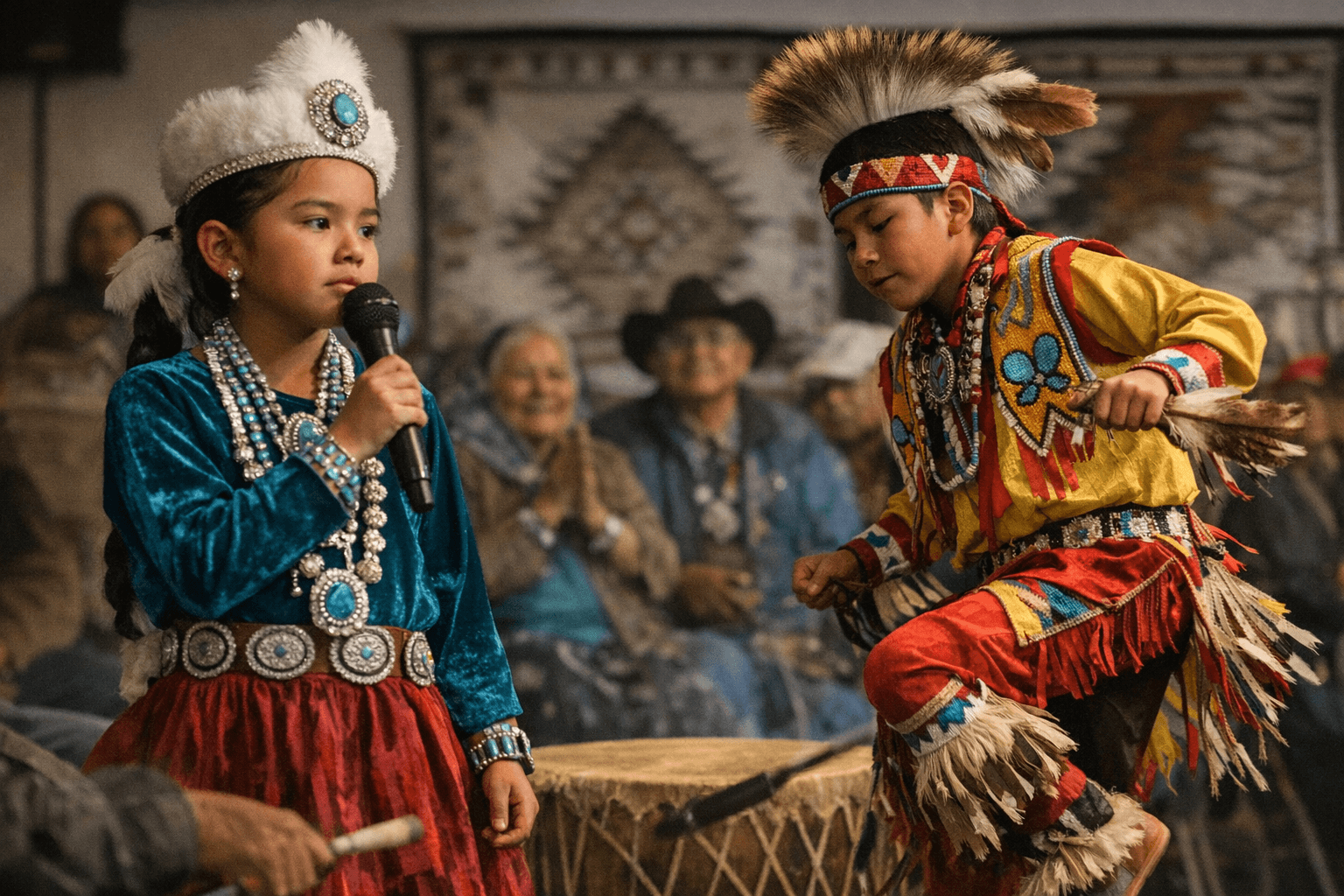
On Dec. 27, 2025, the Sanostee multipurpose building hosted a Benefit Song and Dance that brought families, elders, and community members together to witness youth performance and cultural transmission. Central participants included Grace Kaydence Etsitty, who holds the title Northern Navajo Baby Princess 2025–26, and fellow young performer Kacee Yazzie. The event highlighted how song-and-dance tradition is taught not only in formal settings but through everyday practice and close family instruction.
Attendance at the benefit underscored the multipurpose building’s role as an institutional hub for cultural life. Public gatherings such as this serve multiple functions: they provide an opportunity for elders and family teachers to mentor younger generations, create informal settings for learning ceremonial songs and dance steps, and sustain a visible link between community identity and daily civic life. For residents of Sanostee and neighboring communities in and around Apache County, these events reinforce communal bonds and offer a practical setting for intergenerational exchange.
The event also illuminates broader implications for local institutions and policy. Community centers and multipurpose facilities function as critical infrastructure for cultural continuity; their availability, maintenance, and programming responsiveness directly affect a community’s capacity to preserve traditions. Supporting these venues through stable funding, coordination with schools and tribal programs, and recognition of cultural training as part of youth development could strengthen long-term engagement. Local leaders and civic institutions that prioritize accessible spaces for cultural practice help ensure that young people have consistent opportunities to learn from elders and family teachers.
Beyond cultural preservation, regular public gatherings contribute to civic cohesion by fostering relationships among families, tribal representatives, and community organizations. When the practices of song and dance are visible and communal, they create entry points for civic participation and collective decision-making. Sustaining these entry points requires attention to logistical needs, scheduling, transportation, and outreach, that make events accessible to children and elders alike.
The Benefit Song and Dance at Sanostee was a compact but revealing example of how cultural knowledge is actively transmitted. The performances by Grace Kaydence Etsitty and Kacee Yazzie illustrated continuity through practice, while the presence of elders and family teachers reinforced that culture is lived and taught within communities. For Apache County residents, preserving such local venues and programming remains central to keeping Diné traditions vibrant for future generations.
This article was produced by Prism’s automated news system from verified source data, official records, and press releases, then run through automated quality and moderation checks before publishing. The system is built and supervised by the people who set the standards it runs under. Read our full AI policy.
Did this article answer your question?