Amelia Earhart Memorial Airport draws pilots, supports local businesses
A quick stop at K59 can mean more than a landing. Atchison says the airport brings visitors, local spending and about $500,000 in annual community impact.
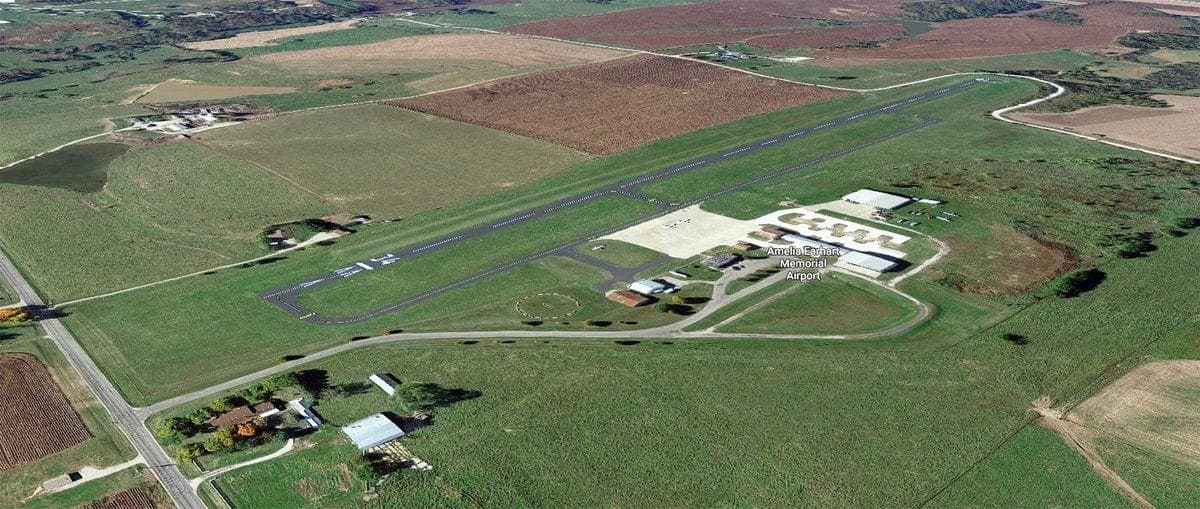
A pilot landing at Amelia Earhart Memorial Airport can do more than refuel a plane. The airport’s location, just one mile west of Atchison’s city limits and less than a five-minute drive from downtown, gives the city a small but steady stream of visitors who eat, shop and buy services in town. City figures say each annual visitor spends an average of $45 with local merchants, and the airport’s conservative annual economic impact is put at $500,000.
Why K59 matters to Atchison
K59 is built for general aviation, but its value reaches well beyond the cockpit. The City of Atchison describes the field as a mid-continent airport that helps pilots avoid the Class B airspace around Kansas City International Airport, a practical advantage for traffic moving through northeast Kansas and the broader region. That convenience helps explain why the airport has become a familiar stop for business flights, training runs and visiting aircraft that need a straightforward place to land.
The airport is also close enough to downtown to matter to the rest of the city economy. A pilot who taxis in, takes advantage of the courtesy car, or uses the pilot lounge is still only minutes from Atchison’s restaurants, stores and other services. City descriptions of the airport consistently frame it as a piece of working infrastructure, not a scenic add-on, and that is the right lens for understanding its local impact.
What visitors find when they get there
Amelia Earhart Memorial Airport is set up like a practical service stop. The airport offers self-service convenience, an FBO, fuel, maintenance, aircraft rental, flight instruction, flight-planning stations with free wifi, a courtesy car, a pilot lounge and public restrooms. That mix gives it the feel of a small regional node rather than a bare strip of pavement.
The runway layout also matters. The airport has a 3,000-foot primary runway with non-precision approaches to one end, which is part of what makes it usable for general aviation traffic while remaining manageable for a city-owned field. The Amelia Earhart Hangar Museum describes the airport in the same practical terms, pointing to fuel service, aircraft maintenance and rental, and flight instruction as part of its everyday role.
Who runs the airport
The airport is publicly owned by the City of Atchison, managed by Public Works, operated by Heartland Aviation LLC and advised by a volunteer board. That structure matters because it shows the airport is not simply a standalone aviation business. It is a city asset, maintained through local government, outside operation and community oversight.
AirNav lists Clinton McNemee as the manager, reinforcing the airport’s role as an active, staffed facility rather than an unattended field. The Kansas Department of Transportation Aviation Division has described Amelia Earhart Airport as an integral part of the state airport system, one that provides access to the national air transportation network while generating economic activity. In a county seat like Atchison, that combination of public ownership and practical use is a large part of the airport’s staying power.
A place for more than landings
K59 regularly serves as a gathering point for community events. The airport hosts Young Eagle Rallies through the local Experimental Aircraft Association chapter, along with Boy Scout Aviation Day, the Vintage Fly-In and the Amelia Earhart Festival. Those events turn the airport into a visible civic space, giving families and visitors a reason to spend time there even if they never board a plane.
That local role helps explain why the airport shows up in public life beyond aviation circles. It is one of the city’s most recognizable names, and the museum connection strengthens that identity by linking the airfield directly to Atchison’s most famous native daughter. For visitors coming to see the Amelia Earhart Hangar Museum, the airport becomes part of the experience rather than just a point of arrival.
Why the master plan is a money issue
Atchison is also treating the airport as a long-term planning problem, not just an operating expense. The city says it is updating its Airport Master Plan because an FAA-compliant plan is needed to keep support for improvements and maintenance. City materials add a sharper warning: without an up-to-date master plan, Atchison can lose access to 90 percent matching FAA dollars.
That matters because the city says an earlier update effort ran from 1999 to 2003 but was never adopted. In other words, the airport’s future depends not only on aircraft traffic and local use, but on whether the city can stay aligned with federal planning requirements. The FAA’s Airport Improvement Program provides grants for planning and development at public-use airports in the National Plan of Integrated Airport Systems, while the Airport Infrastructure Grant program set aside $14.5 billion over five years beginning in fiscal 2022.
The runway project kept the airport in the funding cycle
The runway project has been a major part of that planning conversation. In October 2021, the city said the airport received a 100 percent federally funded $6.1 million FAA grant for a new runway that would measure 4,000 feet long and 75 feet wide, replacing the existing 3,000-by-48-foot runway layout. That same project remained active in August 2022, when Jerry Moran, Roger Marshall and Jake LaTurner announced two FAA grants totaling $1,454,770 for design and land-acquisition reimbursement tied to the planned Runway 9/27.
The federal permitting record says a supplemental environmental assessment for the land acquisition, the new primary runway 9/27 and the closure of the existing primary runway 16/34 was completed on October 19, 2020. City and engineering materials say the runway work addressed issues such as runway-protection-zone control and obstructions to approach surfaces. Those are the kinds of technical details that usually stay hidden from casual visitors, but they shape whether a small airport can keep serving the community safely and efficiently.
Aviation, tourism and Atchison’s identity
Amelia Earhart Memorial Airport carries a name that already gives it public recognition, but its value is broader than symbolism. It brings pilots into town, supports local merchants, hosts civic events and helps keep Atchison connected to regional aviation routes. The city’s own visitor figures, combined with the $500,000 annual economic impact estimate, show that the airport is not just a place where planes land. It is part of how Atchison moves people, money and attention through town.
This article was produced by Prism’s automated news system from verified source data, official records, and press releases, then run through automated quality and moderation checks before publishing. The system is built and supervised by the people who set the standards it runs under. Read our full AI policy.
Did this article answer your question?