Investigation questions haunting claims at Atchison’s McInteer Villa
A skeptical review is testing McInteer Villa’s haunted brand as new owners expand tours and overnight stays at the Atchison landmark.
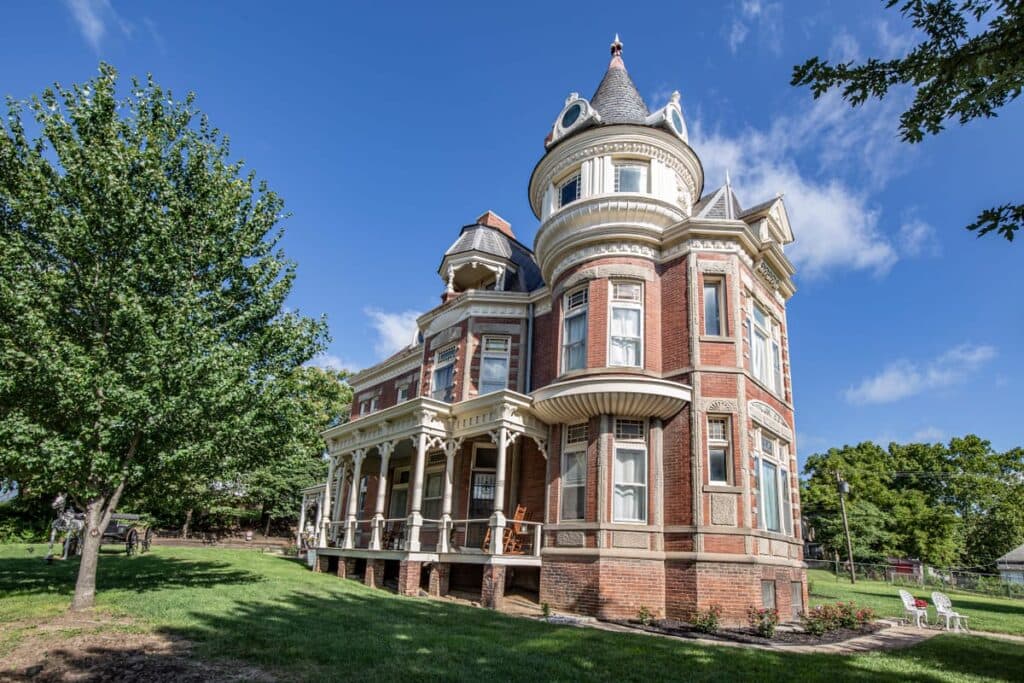
Atchison’s McInteer Villa is being pulled in two directions at once: a skeptical investigation is testing the mansion’s long-haunted reputation just as new owners promise more tours, overnight stays and restoration work at 1301 Kansas Avenue. Built in 1889-1890 for Irish immigrant businessman John McInteer and listed on the National Register of Historic Places on March 26, 1975, the Queen Anne brick house has long sat at the intersection of history, folklore and tourism. What changes now is not the building’s age but the way its story is being packaged for visitors, neighbors and businesses along Kansas Avenue.
A landmark built from Atchison’s boom years
McInteer Villa was not an accidental showpiece. The Kansas Historical Society places its construction in the city’s boom years from about 1870 to 1900, when railroads, industry and wholesale commerce pushed Atchison to its peak. The society’s nomination materials say McInteer invested the wealth from his saddle and harness business in real estate in Atchison and nearby St. Joseph, Missouri, and that the house cost about $14,000 when it was completed.
The National Park Service calls the villa one of Atchison’s most unique residences, and the state register listing describes it as a two-and-a-half-story red-brick Queen Anne house with a dominant corner tower. Local contractor Owen E. Seip built it for real-estate magnate John McInteer, which matters because the villa is not just a haunted-house stop but a record of the city’s late-19th-century prosperity.
How the haunted story became part of the draw
The paranormal reputation around the villa has been built from a repeatable set of claims that are easy to market because they are so concrete. Kansas tourism materials and ghost-tour listings have long circulated stories about lights turning on and off in the tower, figures seen in windows, a speaker thrown off a counter, boxes moving and the rocking chair tied to “Goldie.” One tourism write-up also says there have been nine documented deaths in the house, a detail that helps turn a single mansion into a layered local legend.
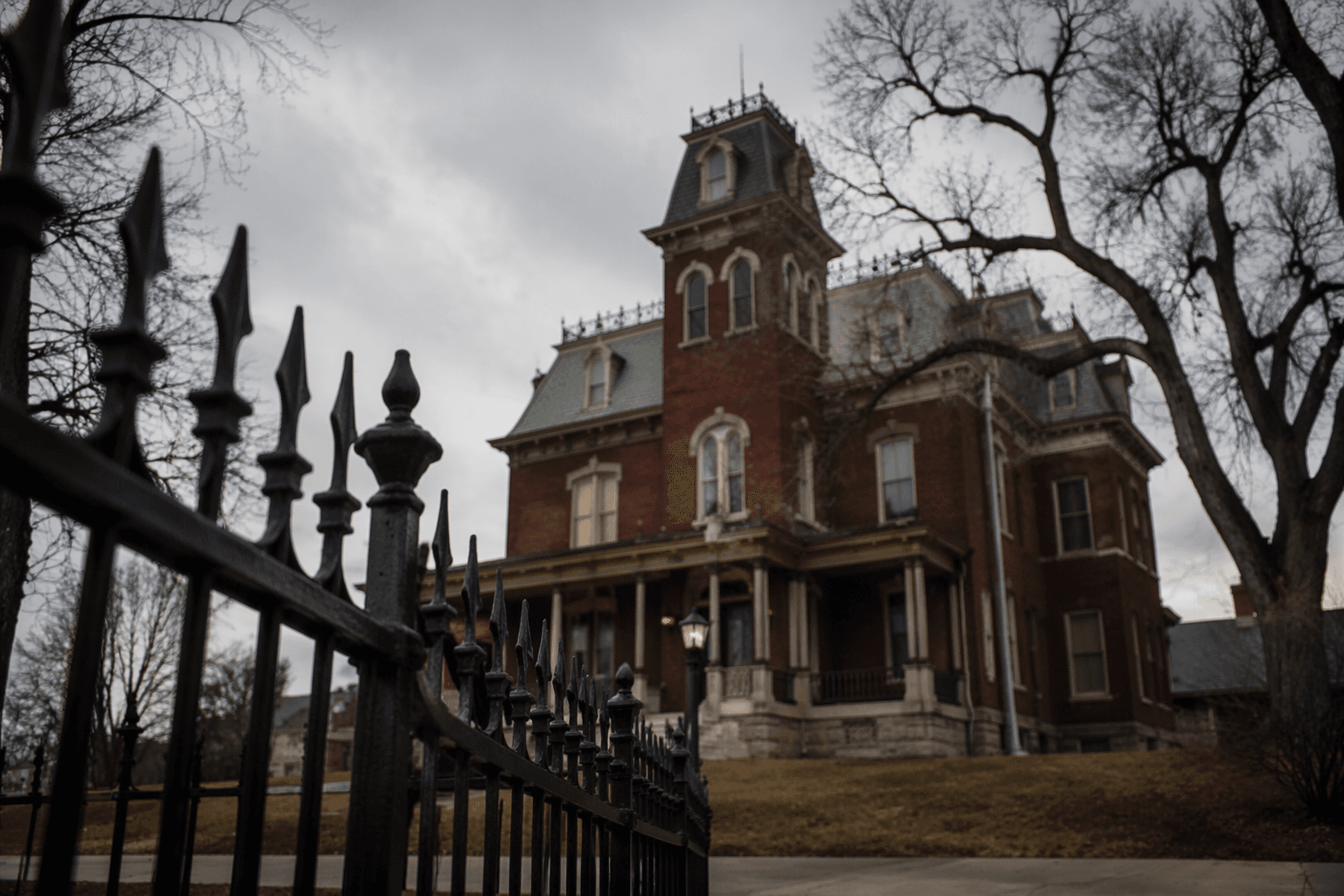
That folklore has become part of Atchison’s identity story, not just a side attraction. Visit Atchison already promotes haunted tours in a city branded as a paranormal destination, and the McInteer Villa has sat beside the Sallie House and other ghost sites as part of the same visitor circuit. In practical terms, that means the villa has functioned as both a preserved house and a tourism anchor, pulling in people who want architecture, local lore or both.
Why Kenny Biddle’s investigation matters
Kenny Biddle is not entering the story as a casual doubter. CSI identifies him as its Chief Investigator of Paranormal Claims, and his background as a former ghost hunter turned skeptic gives the inquiry an unusual edge because he knows how hauntings are promoted from the inside. That makes his work more than a debunking exercise. It is a test of how much of the McInteer Villa’s public meaning rests on evidence and how much rests on a story Atchison has repeated for years.
For a place like Atchison, that distinction matters. The mansion is part of the city’s civic image because it reflects the wealth, ambition and architectural confidence of the boom era, but the ghost narrative has given it a second life in the tourist economy. When a skeptic questions those claims, the result is not just an argument about the supernatural. It is a challenge to one of the city’s best-known marketing tools.
What the new ownership changes
In June 2026, US Ghost Adventures said it bought McInteer Villa and plans to restore its original Gilded Age appearance while expanding public access through tours and overnight stays. The company said the property will operate as a historic landmark, museum and luxury bed and breakfast, with daily historical tours and second-floor bedrooms eventually available to guests. Existing paranormal programming is expected to continue during the transition, which means the house is not moving away from its haunted reputation so much as folding it into a broader preservation-and-lodging model.
That shift creates a clear tradeoff for Atchison County. A harder skeptical line could weaken the supernatural gloss that sells some visits, but it can also push the house toward a wider audience that cares about architecture, Gilded Age wealth and historic preservation. Because the villa already sits inside a haunted-tour economy, the real question is whether residents and businesses do better with a story built on shock or with one built on access, interpretation and a restored landmark at 13th Street and Kansas Avenue.
What Atchison stands to gain or lose
If the haunting claims lose force, Atchison does not lose the building. It loses one of the easiest ways to sell the building. That matters in a town where tourism has long leaned on a compact, recognizable set of sites, and where McInteer Villa’s tower, brickwork and corner placement make it one of the city’s most visible historic houses. The upside is that preservation can broaden the property’s appeal beyond paranormal fans and turn the villa into a steadier downtown draw for history travelers, overnight guests and anyone tracing the city’s boom-era past.
The McInteer Villa’s next chapter will be judged less by whether every flicker has a supernatural explanation than by whether Atchison can keep the house economically useful, historically legible and locally meaningful while the legend around it is questioned. That is the real stakes story now.
This article was produced by Prism’s automated news system from verified source data, official records, and press releases, then run through automated quality and moderation checks before publishing. The system is built and supervised by the people who set the standards it runs under. Read our full AI policy.
Did this article answer your question?