Atchison County commissioners oversee budget, policy and county government
Need help with county taxes, records or local policy? Atchison County’s board, clerk and appraiser each handle a different piece of daily life.
Who do you call when something goes wrong in Atchison County? If the issue is county policy, the budget, or a road of government business, start with the three-person Board of County Commissioners. If it is an election filing, a budget for a district, or an old birth or death record, the county clerk is the right stop. If the question is about property value, the appraiser’s office is the one that matters, not the office that sets the tax bill.
The commissioners are the county’s main governing board
Atchison County is run by a three-person Board of County Commissioners, and the board is the only elected body that represents county residents whether they live inside or outside city limits. That makes the commission the place where countywide policy gets set and where budget decisions move from idea to action. The board also handles executive functions for county government, so its work reaches far beyond the meeting room.
The current commissioners listed by the county are Casey Quinn, James Campbell and John Calhoon. County records identify Quinn as chairwoman, Campbell as the 1st District commissioner and Calhoon as the 2nd District commissioner. Commissioners serve four-year terms, and those terms begin the second Monday in January after the election, a detail that helps explain the county’s operating calendar from one year to the next.
Board meetings are held on Tuesdays from 10:00 a.m. to 1:00 p.m., or until no further business is pending. That schedule makes the commission easy to follow for residents watching road projects, budget choices or other county action. The county notes that meeting times and agendas are subject to change, and Susan Carrigan, the county clerk, is listed as the contact for scheduling or changes.
A January 27, 2026, commission meeting was held in regular session at 10:00 a.m. at the Atchison County Courthouse, 423 N. 5th St. in Atchison. A public link was made available before the meeting, showing how the county has made its proceedings easier to track even when people cannot be there in person.
What the clerk’s office handles every day
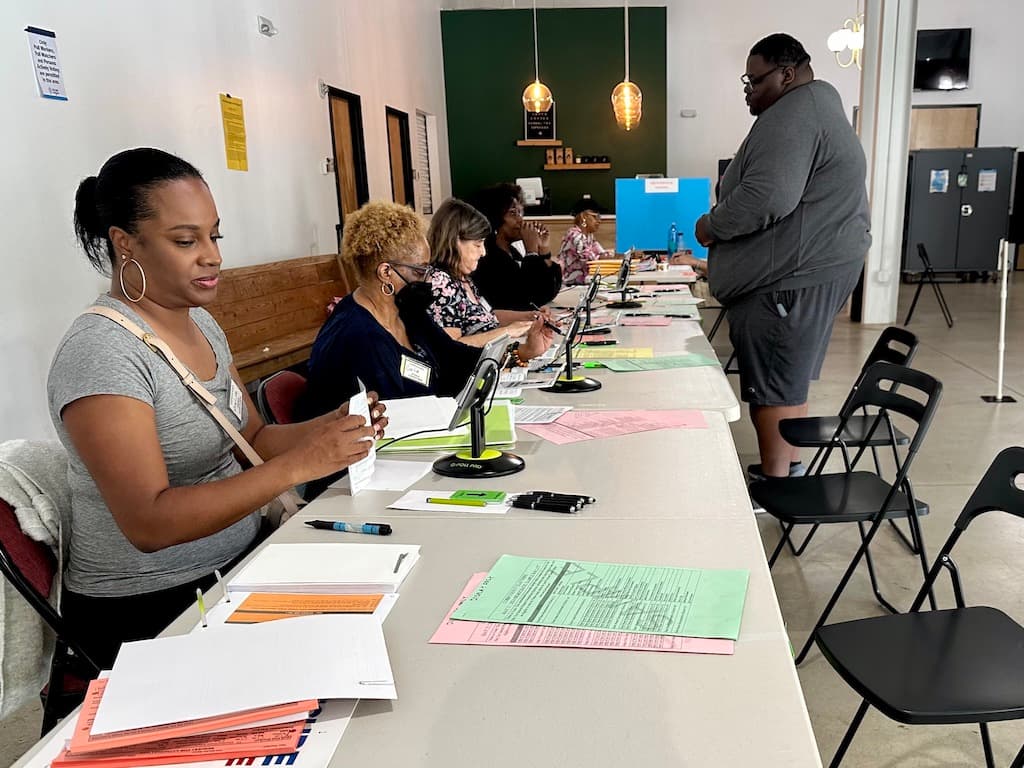
The county clerk’s office is one of the most useful places in county government because it sits at the intersection of elections, records and local budgets. In Kansas counties outside the four largest counties, the clerk serves as the county election officer. That means voter registrations and candidate filings for county offices, school board seats, township offices and certain city offices move through the clerk’s office.
The clerk’s office also processes budgets for schools, fire districts, cemetery districts, drainage districts, watershed districts, cities and special districts. That matters because much of local government runs through smaller taxing bodies that never get much attention until a bill arrives or a service changes. If you are trying to understand where a local district budget goes, or who keeps the paperwork moving, the clerk’s office is often the starting point.
The office also keeps old birth and death records, which can be important for genealogical research. For families tracing Atchison County roots, those records can turn the clerk’s office into a quiet archive as well as an elections desk. The Kansas Secretary of State’s structure for county election officers explains why this office carries so much weight in daily county life: election administration is local, and in Atchison County that local responsibility sits with the clerk.
Why the appraiser is not the tax setter
Property taxes confuse a lot of people because the bill comes from several parts of government, but the appraiser’s job is narrower than many residents realize. The Atchison County Appraiser’s Office inventories property and determines fair market value as of January 1 each year. It does not set the tax rate or decide how much revenue the county or other districts need.
That distinction matters for homeowners, business owners and anyone who has just moved into the county. Kansas law requires county appraisers to maintain property records and, annually as of January 1, supervise the listing and appraisal of real and personal property subject to taxation, except state-appraised property. In other words, the office determines value and applies the state’s assessment rules, while the various taxing agencies decide what they need to fund services.
Atchison County’s property tax calendar gives residents a plain timetable to follow. March 1 is the notice date for real property valuation. March 15 is the listing deadline for tangible personal property. Property owners generally have 30 days from mailing to appeal real estate notices. May 1 brings notices for personal property, May 15 is the appeal deadline for personal property, and December 20 is the deadline to pay full or first-half taxes without penalty. Those dates are the practical backbone of the county’s property-tax cycle.
The appraiser is appointed by the Board of County Commissioners for a four-year term, which reinforces the office’s administrative role. It is part of the county’s machinery, not a separate political branch, and it exists to apply valuation rules consistently across the county.
Where county government sits and how to reach it
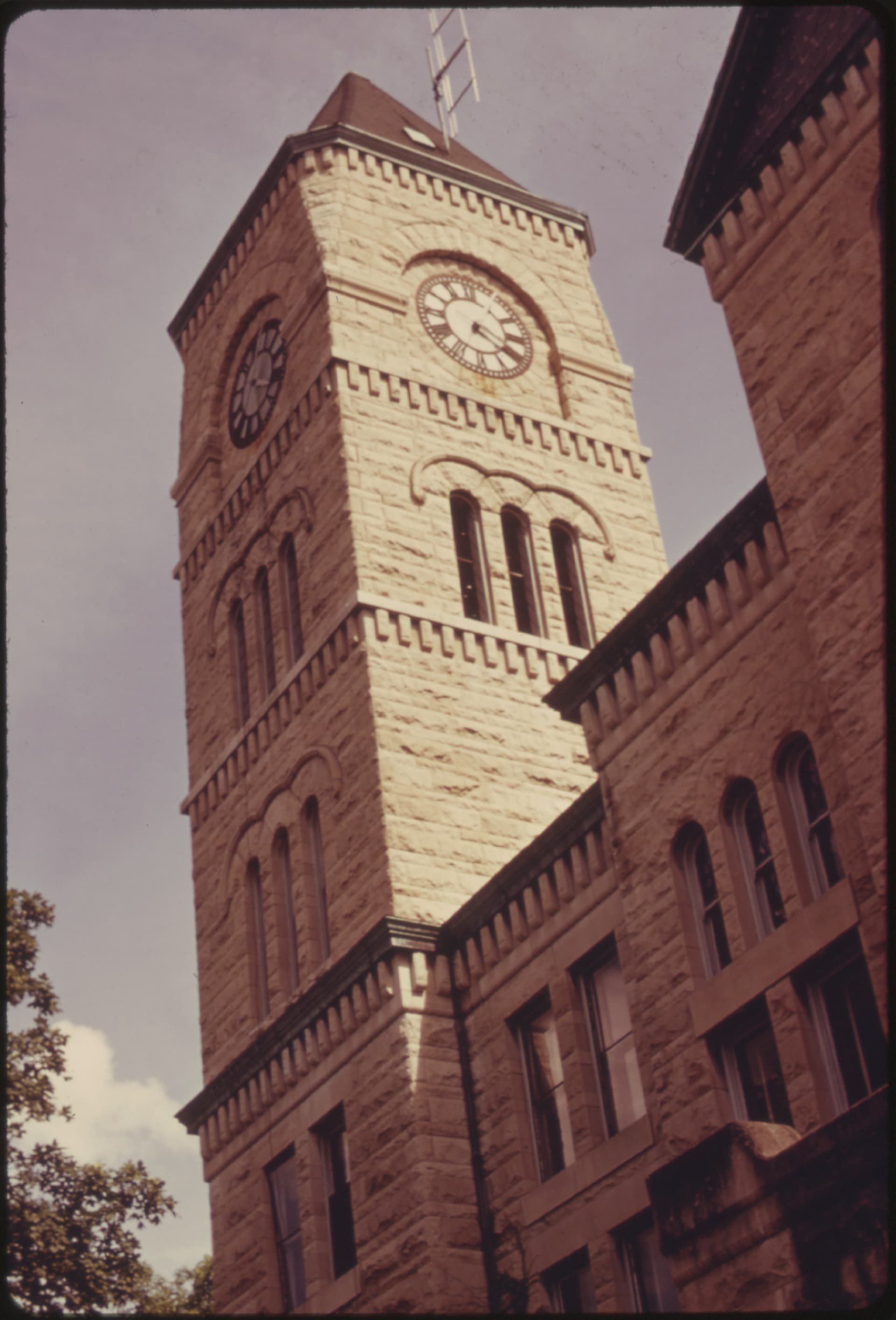
The center of county government remains the Atchison County Courthouse at 423 N. 5th Street, Atchison, Kansas 66002. County business hours are listed as Monday through Friday, 8:00 a.m. to 5:00 p.m. That makes the courthouse not only the symbolic seat of county authority, but also the place where residents can handle many of the most common local government tasks.
The county’s government site highlights services that matter in everyday life, including online tag renewals, driver’s license information, tax sale information, archive documents and notification tools. Those services show how county government reaches into routine errands as well as formal decisions. For many residents, the county is not an abstract layer of government at all. It is the office that handles a renewal, a record search or a tax question.
How Atchison County got here
Atchison County was established on August 25, 1855, and organized on September 17, 1855. The county seat is the city of Atchison, and the county is named for David Rice Atchison, a U.S. senator from Missouri. The Kansas Historical Society notes that Atchison was founded when Kansas Territory opened to settlement in 1854, and that a 1858 attempt by Sumner to move the county seat was strongly defeated.
That history still matters because it explains why county government is centered where it is and why the courthouse remains the county’s focal point. The board, clerk and appraiser each occupy a different piece of that structure, but together they shape how county residents experience government most directly: through budgets, records, property values and the decisions made in a Tuesday morning meeting room on North 5th Street.
This article was produced by Prism’s automated news system from verified source data, official records, and press releases, then run through automated quality and moderation checks before publishing. The system is built and supervised by the people who set the standards it runs under. Read our full AI policy.
Know something we missed? Have a correction or additional information?
Submit a Tip