Atchison County emergency management coordinates disaster preparedness and response
Atchison County’s emergency office ties together alerts, sirens, dispatch, and regional planning so residents know how to prepare before the next storm hits.
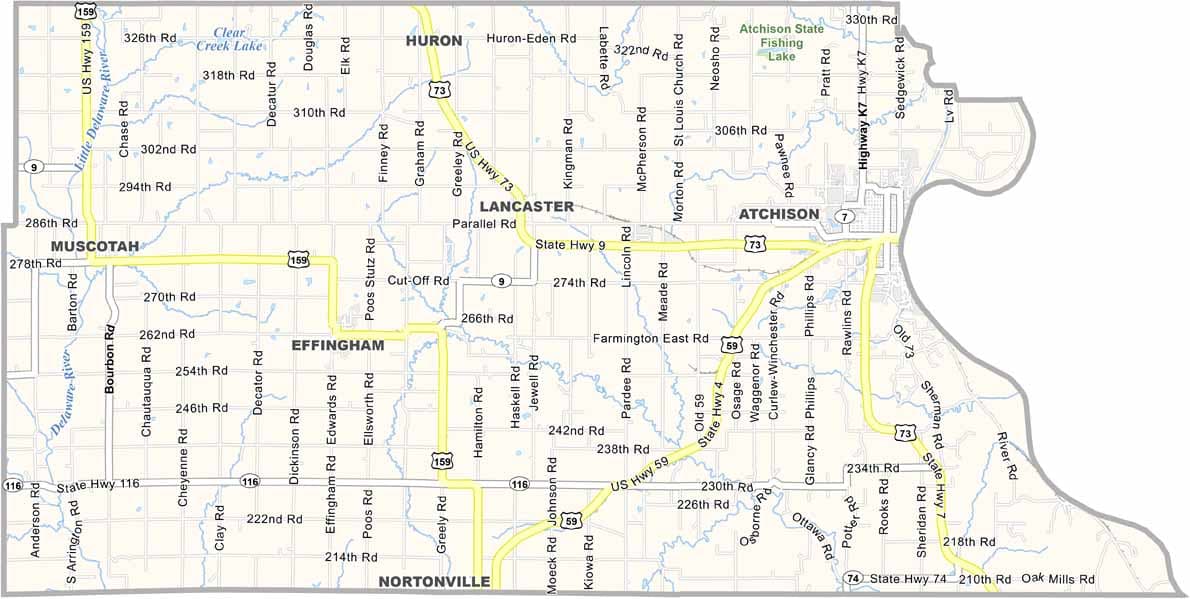
In Atchison County, severe-weather warnings reach Atchison, Effingham, Muscotah, Huron, Lancaster, and the rural townships through a countywide network. It connects emergency management, dispatch, warning tools, and household readiness so people can act fast.
How Atchison County emergency management works
Atchison County defines emergency management as a coordinated effort involving local, state, and federal agencies, volunteer organizations, and businesses to help communities prepare for, respond to, recover from, and reduce the effects of natural, man-made, and technological emergencies and disasters. It is the coordination point that helps public agencies and private partners function together before, during, and after a crisis.
In a county with both city neighborhoods and wide rural stretches, a tornado warning, flash flood, hazardous-material incident, ice storm, or road closure can look very different in the city of Atchison than it does in a small town or on a farm road. Emergency management keeps those separate realities connected when one event affects the whole county at once.
The county places the Emergency Management Division under the Sheriff’s Office as part of day-to-day public safety work, not a separate function that only appears during bad weather. Atchison County also maintains a separate Dispatch page for its Communications Center, showing that emergency management works alongside dispatch rather than replacing it. Preparedness is a year-round county responsibility.
Where alerts come from
Atchison County has used CodeRed and was transitioning to Everbridge for emergency alerts, weather warnings, and community notifications. Those alerts can reach residents quickly after a severe thunderstorm warning, tornado warning, or flash flood warning is issued. The county requires residents to register, making sign-up part of the preparation process rather than an optional extra.
Do not depend on a single channel. Phone notifications are useful, but they work best when paired with other warning methods so an outage, a dead battery, or a missed message does not leave a household uninformed. In a county where weather can develop quickly, layered alerts give families more time to move to shelter, protect vehicles, and check on neighbors.
What the sirens do, and what they do not do
Atchison County has a dedicated Storm Sirens page, and the sirens are intended to warn people outdoors of severe weather. They should not be the only warning device. Families may hear a siren while working outside, driving through town, or standing near the riverfront, but the siren is only one layer in the system.
County guidance pairs sirens with other tools such as weather radios and phone alerts. A siren may tell people that danger is nearby, but it does not tell them the exact threat or how long it will last. Residents who build their response around more than one warning source are better positioned to act before a storm arrives overhead.
What to do before the next disaster
The City of Atchison’s preparedness guidance says citizens may need to be on their own for two to five days in a major disaster like a tornado. A household should be ready to function without outside help for several days while roads are cleared, power is restored, and county and city crews move from immediate response to recovery.
- enough water, food, and medications for several days
- a weather radio and fully charged phones or backup charging options
- a way to receive county alerts through Everbridge or another reliable notification source
- a safe room or shelter plan for tornado warnings
- contact information for relatives, caregivers, and neighbors
A practical family plan in Atchison County should include:
Emergency management can coordinate aid and information, but it cannot put every household on its feet instantly after a major event. The county’s own framework is built around reducing effects as well as responding to them.
Why regional planning matters here
Atchison County is part of Kansas Homeland Security Region K’s Hazard Mitigation Plan dated July 2019. That regional framework includes Brown, Doniphan, Douglas, Jackson, Jefferson, Marshall, Nemaha, and Washington counties, along with the Iowa Tribe of Kansas and Nebraska and the Kickapoo Tribe. Disaster readiness is also regional and intergovernmental, with counties and tribal partners working from a shared hazard-mitigation structure.
Floodplain planning also crosses jurisdiction lines. A Federal Emergency Management Agency flood-insurance document for Atchison County includes the city of Atchison, Effingham, Huron, Lancaster, Muscotah, and unincorporated areas in its planning context. Flooding touches multiple communities and requires countywide attention.
What past storms show
The National Weather Service has a page on the May 21, 2019 Atchison County tornado and said an EF-1 tornado damaged structures near Effingham with no injuries reported.
NOAA National Centers for Environmental Information says Kansas had 102 confirmed weather and climate disaster events with losses exceeding $1 billion each from 1980 through 2024, including 71 severe storm events, 20 drought events, 6 flooding events, 3 winter storm events, and 2 freeze events.
Where residents can reach the office
The Atchison County Emergency Management office is listed at 518 Parallel St., Atchison, KS 66002, and the county staff directory lists the office phone number as 913-804-6131. The office listing, along with the county’s Dispatch and Storm Sirens pages, gives residents a direct path to the county’s warning and coordination structure.
This article was produced by Prism’s automated news system from verified source data, official records, and press releases, then run through automated quality and moderation checks before publishing. The system is built and supervised by the people who set the standards it runs under. Read our full AI policy.
Did this article answer your question?