Atchison County museum displays 200-piece military collection spanning wars
Inside Atchison's old freight depot, a 200-plus piece military collection connects local families to wars from the Revolution through World War II.
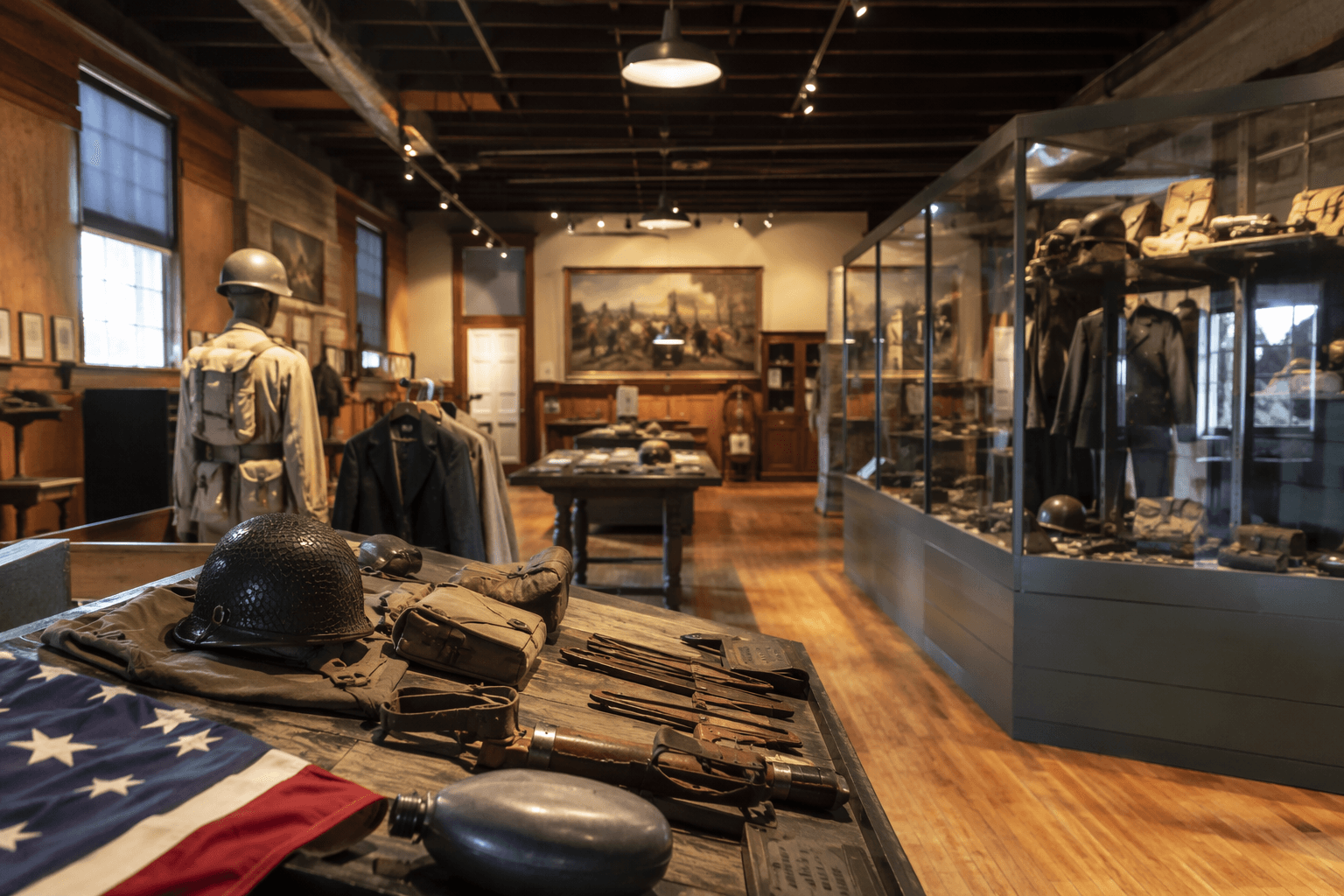
At the Santa Fe Freight Depot on South 10th Street, the Atchison County Historical Society Museum holds one of the county’s most overlooked memories: a military collection with more than 200 weapons spanning the Revolutionary War, the Civil War, World War I and World War II. The railroad setting draws many visitors first, but the military display reaches into a much wider story of service, sacrifice and the way national conflicts touched Atchison County households across generations.
Inside the 1880 freight depot
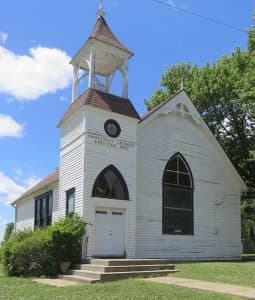
The museum is housed at 200 South 10th St. in the historic Santa Fe Freight Depot, a building constructed in 1880 that once served as a major shipping and receiving center for the local and regional economy. That setting matters because it gives the museum a dual identity: it is both a railroad site and a place where Atchison’s broader history is preserved under one roof.
The society’s own description of the Santa Fe Depot Museum as offering “a sampling of what you will see” is a useful reminder that the military collection is part of a larger interpretive space. Visitors come for the depot, but they stay for the range of stories packed into the building, from transportation and commerce to the county’s wartime heritage.
What the military collection shows
The military display is the clearest example of how the museum turns a local institution into a window on American history. More than 200 weapons are arranged across four major conflicts, giving visitors a tangible way to see how warfare changed from the Revolutionary era to the industrial battles of the 20th century. That sweep gives the collection unusual breadth for a county museum and makes it useful for anyone trying to understand how military technology and service evolved over time.
The Revolutionary War pieces point to the nation’s earliest armed conflict, while the Civil War material connects directly to Kansas’s hard border-state era and the political tensions that shaped the region. World War I and World War II expand the story again, showing the move into mass mobilization, modern industry and global conflict. Taken together, the collection offers a compact timeline of American military history that can be traced through objects rather than textbooks.
A local history museum with a wider reach
The museum’s mission is tied to the county’s self-image as the “gateway to the West,” and that helps explain why a military collection belongs here. Atchison County sits on the Missouri River, where families have long lived with the movement of soldiers, travelers, freight and ideas passing through the region. The society has said it has been dedicated to preserving, promoting, recording and sharing the history of Atchison County, Kansas since 1967, a date that marks nearly six decades of local historical work.
That mission extends beyond the depot itself. The society lists a Downtown Walking Tour, Independence Creek, the Black Business District and Farmington Christian Church as part of a broader local-history network. The museum also includes the David Rice Atchison World's Smallest “unofficial” Presidential Library, which adds another distinctly local exhibit to a building already dense with county history.
Why the collection matters to local families
What makes the military display especially meaningful is the way it connects national wars to local memory. Atchison County families sent sons, brothers, fathers and later daughters into conflicts that shaped the country, and the objects in the collection help keep that service visible. A museum like this does more than store artifacts; it preserves the physical evidence of lives shaped by enlistment, wartime labor, loss and homecoming.
That is part of why a weapons collection in an old freight depot can feel so personal. The objects are not abstract illustrations of war. They are part of a county archive that sits alongside railroad history, river history and the everyday stories that built Atchison County’s identity.
Plan a visit
The museum is open to the public 350 days a year, with seasonal hours listed through the Lewis and Clark Trail site. Summer hours run 9 a.m. to 5 p.m. Monday through Saturday and noon to 5 p.m. Sundays. Winter hours, from November through March, are 9 a.m. to 5 p.m. Monday through Friday, 10 a.m. to 4 p.m. Saturdays and noon to 4 p.m. Sundays, with January and February closed.
Those hours make the museum easy to fit into a day in Atchison, especially for visitors who want to see the depot, the museum collections and nearby historic sites in one trip. The site’s location at 200 South 10th St. also places it squarely in town, making it accessible for residents who want to revisit familiar history and for visitors who are tracing the county’s past for the first time.
How the museum stays alive
The society is not just preserving objects behind glass. Its contact pages say volunteers are needed to help with collection organization and scanning photos and negatives, and the broader volunteer list also includes presenting programs and acting as visitor guides. That work matters because a museum of this size depends on careful cataloging and community labor to keep its collections accessible.
Those volunteer roles also show how much of Atchison County’s history still lives in personal photographs, family records and donated items that have to be sorted, digitized and interpreted. The military collection may be the most immediate draw, but it is supported by the quieter work of people who help preserve the county’s memory one box, one photograph and one artifact at a time.
This article was produced by Prism’s automated news system from verified source data, official records, and press releases, then run through automated quality and moderation checks before publishing. The system is built and supervised by the people who set the standards it runs under. Read our full AI policy.
Did this article answer your question?