Atchison County outlines city government structure across five municipalities
Five local governments shape everyday decisions in Atchison County, from commissioners and council seats to who handles city services. The county’s split between one first-class city and four third-class cities is more than a label.
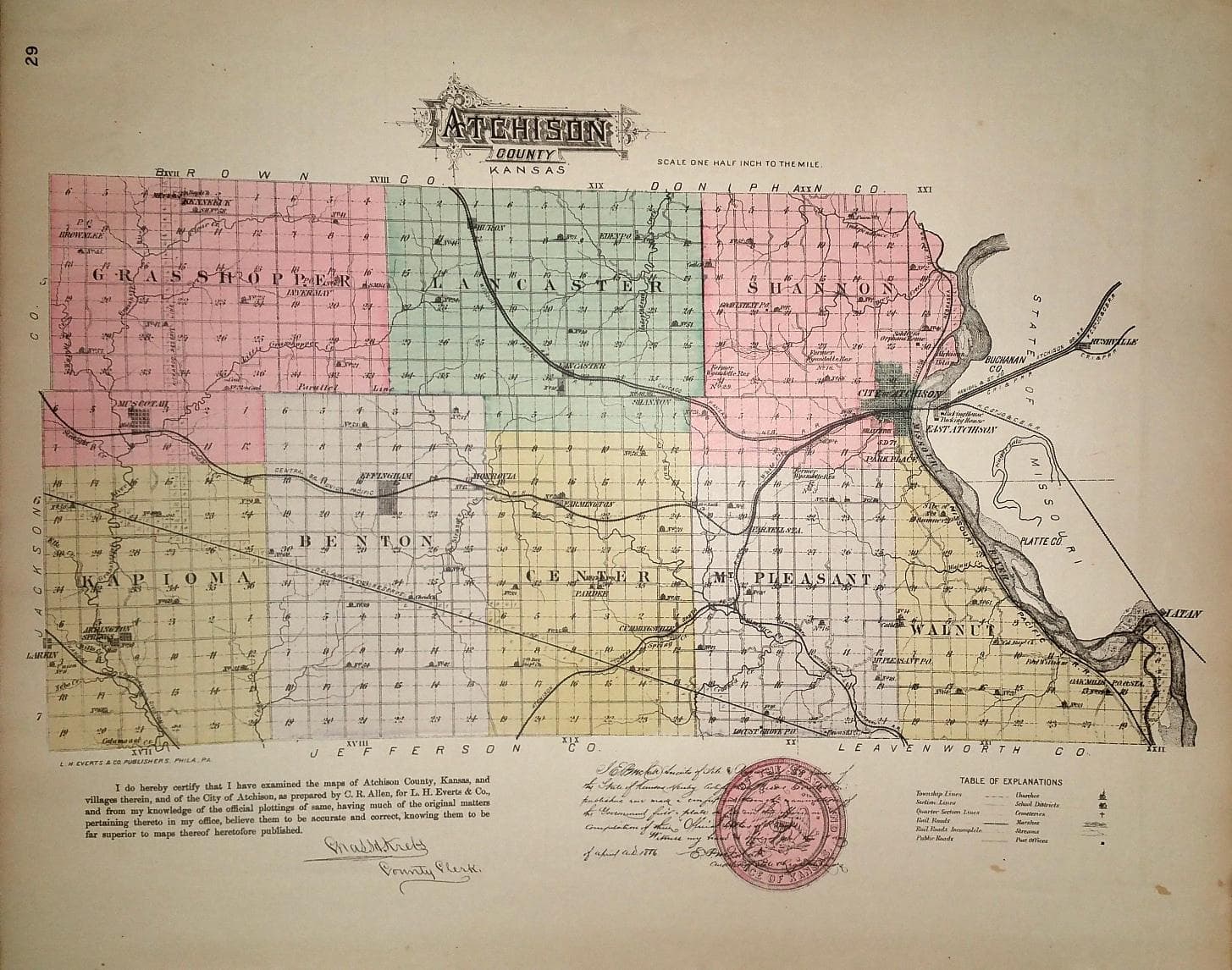
Atchison County’s government map is compact, but it reaches into the everyday questions residents run into most often: who fixes the streets, who oversees city budgets, who handles local services, and who sits at the table when those decisions are made. The county is split between one first-class city, Atchison City, and four third-class cities, Effingham, Huron, Lancaster, and Muscotah, each with its own elected leadership and its own local responsibilities.
How the five-city system works
The biggest practical difference starts with how each city is governed. Atchison City elects five city commissioners, and one of those commissioners is appointed mayor. The third-class cities elect five council members and one mayor. Those municipal elections take place in odd-numbered years, which keeps local contests on a separate schedule from the higher-profile state and federal races that often dominate even-numbered years.
That structure matters because it determines who is accountable when residents want action on city streets, public safety priorities, local utility questions, zoning, and the budget decisions that shape taxes and services inside city limits. A city map in Atchison County is also a political map: once you know which city you live in, you know which board or council has the authority to act.
County hall and city hall do different jobs
The county courthouse and county offices handle countywide administration. City governments handle municipal decisions in their own jurisdictions. That split is easy to miss if you live near the county seat and move fluidly between Atchison and the smaller towns, but it is the key to understanding local government in the county.
In practical terms, residents should separate county issues from city issues before they call an office or show up at a meeting. If the matter involves a city street, a town utility question, or a decision that affects only one municipality, the local council or commission is the place to look. If it is a countywide administrative matter, the county structure is the one that applies.
Atchison is the anchor city, but not the whole county
Atchison is the county seat and the largest city in Atchison County, with 10,885 residents in the 2020 census. The county as a whole had 16,348 residents in the same census, which means a large share of the population lives in the county seat, but the county still stretches across several smaller cities with their own governments and identities.
Atchison’s status carries extra weight because it is the only first-class city in the county. Kansas law ties first-class city status to population and municipal classification, while third-class cities operate under a different statutory structure. The result is a county where one city functions with a commission-manager form of government and four smaller cities work through the more compact mayor-council model used by third-class municipalities.
What the smaller cities look like on the ground
The third-class cities are not placeholders on a county map. The county’s city officials page lists active councils, mayors, clerks, and treasurers for Effingham, Huron, Lancaster, and Muscotah, which makes clear that each one is a functioning local government with daily obligations of its own.
Effingham was incorporated on July 8, 1890, and the League of Kansas Municipalities lists its population at 487. Huron was incorporated on July 1, 1890, and its listed population is 74. Muscotah was incorporated on Jan. 1, 1880, and its listed population is 156. Lancaster is also identified as a third-class city in the county’s records, with its own council structure in place.
The scale of those towns helps explain why the system works the way it does. A city of a few hundred people does not need the same administrative footprint as a larger county seat, but it still needs elected officials who can make decisions on budgets, streets, services, and the basic workings of town government.
Who is in office now
Atchison City’s current leadership includes La Rochelle Young as mayor, Larry Wilcox as vice-mayor, Jesse Greenly, Bill Murphy, and Mike Slattery as commissioners, and Mark Westhoff as city manager. That lineup reflects the city’s commission-manager form of government, with elected officials setting municipal direction and a professional manager handling day-to-day administration.
Among the smaller cities, Cheryl Moon is listed as mayor of Effingham, and Brian Higley is listed as mayor of Muscotah. Those names matter because local government in a county like this is not an abstraction. It is a handful of people making decisions that affect street work, local services, and the pace of municipal spending in places where residents know their officials by name.
Why the classification matters to voters
The election calendar is part of the power map too. Kansas election standards place municipal elections in odd-numbered years, and Kansas statutes say third-class cities elect a mayor and five council members every two years. That means city government is on a different rhythm from federal elections, and local turnout can shape who controls the municipal agenda.
For voters, the practical takeaway is simple: the city class tells you who governs, how often officials are chosen, and what kind of board or council is making the calls. In Atchison County, that affects everything from who holds the mayor’s seat to how quickly a small city can move on a street project or a budget decision.
Why Atchison became the county’s center
The county’s structure also makes more sense when set against its history. Atchison County was established in 1855 as one of Kansas’ original 33 counties. The city of Atchison was founded in 1854 and named for Missouri Sen. David Rice Atchison. It was incorporated as a town in 1855 and re-incorporated as a city in 1858.
Its location on the Missouri River helped it become a transportation and commercial hub, which is part of why it developed into the county seat and largest city in Northeast Kansas. That history still shows up in the present-day arrangement: one larger city with a more complex commission-manager structure, and four smaller third-class cities that still run their own local governments.
This article was produced by Prism’s automated news system from verified source data, official records, and press releases, then run through automated quality and moderation checks before publishing. The system is built and supervised by the people who set the standards it runs under. Read our full AI policy.
Know something we missed? Have a correction or additional information?
Submit a Tip