Atchison County road projects set for 2026 across key corridors
Road work will hit Greeley, Ottawa Road, Jewell Rd and Sedgwick Road, putting commutes, farm hauling and school routes on notice across Atchison County.
The corridors to watch
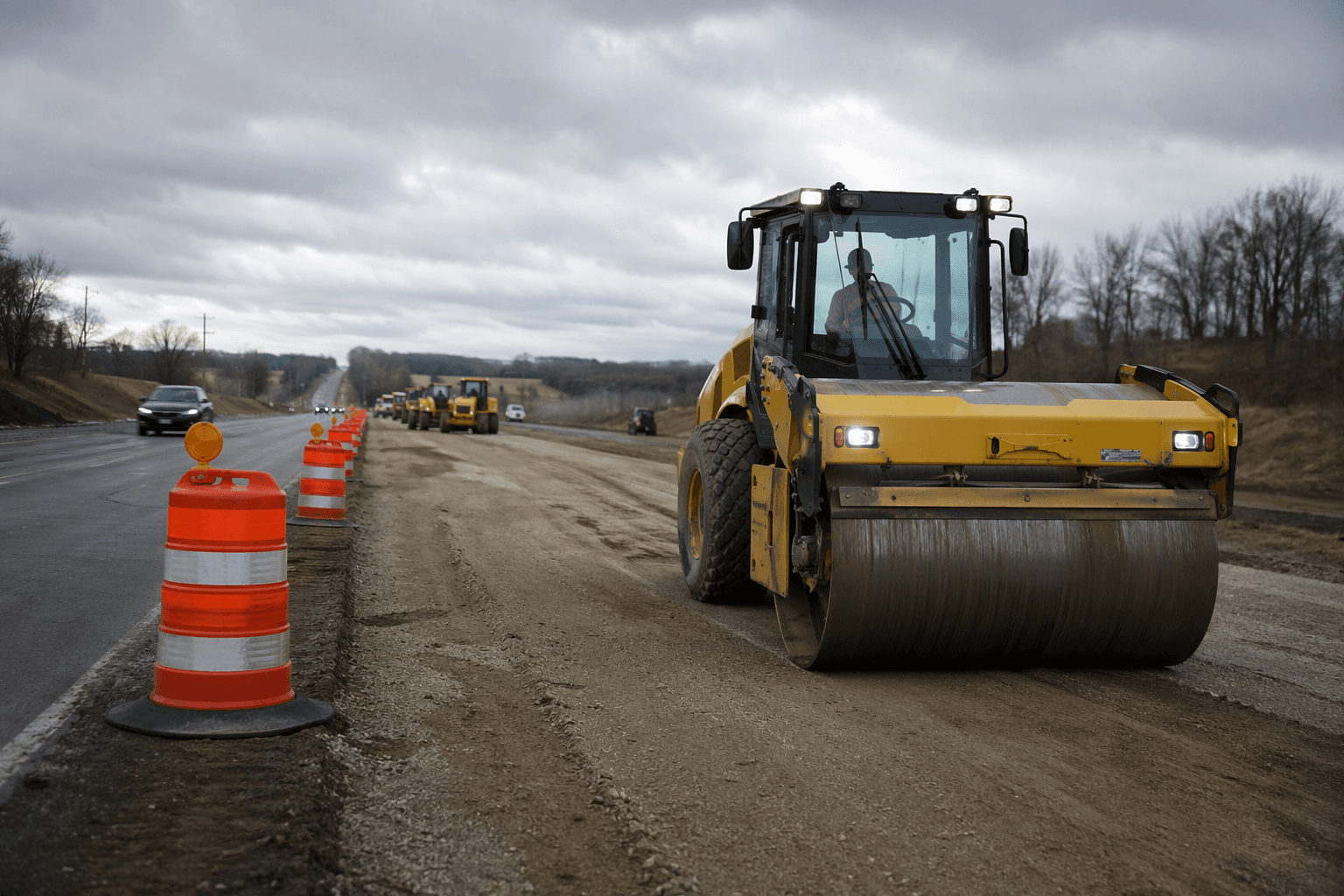
The biggest disruptions in Atchison County this year are not tucked away in a budget line. They are on the roads people use to get to school, move grain, reach town, and keep emergency access open when minutes matter. The county’s project list points to a season of microsurfacing, chip-and-seal, patching and bridge replacement across several of the same key corridors, with the heaviest attention centered on Greeley, Edwards, Broadway, Haskell, Douglas and Jewell Rd.
That mix matters because each treatment changes travel in a different way. Microsurfacing and chip-and-seal can mean slower trips, loose rock, temporary lane changes and short closures. Bridge replacement is a bigger disruption altogether, especially on routes that serve farm traffic and cross-county travel. For residents trying to map out 2026, the county’s road list is effectively a preview of where routines will be slowed and where safer travel should eventually replace rough pavement and aging structures.
Projects already under way
Some of the most immediate impacts are already visible. The county says Ottawa Road between 262nd and 246th roads was being rehabilitated and stabilized, with completion estimated for June 16, 2026. That kind of work can affect the daily path between rural homes, fields and town, especially for anyone using that stretch as a direct link rather than a side route.
Another active project is a bridge replacement at 314th Road east of Sedgwick Rd. Bridge work tends to ripple beyond the immediate site because it can reroute traffic for longer than a typical surface repair. Even people who do not live near the bridge can feel the impact if they rely on nearby roads for hauling equipment, school bus routes or emergency response.
Where the 2026 list points next
The county’s upcoming-projects page shows a wider slate of work that will spread impact across the network. Microsurfacing is planned on Greeley roads near 294th and Highway 73, a pairing that suggests attention on a route used heavily enough to justify a fresh surface treatment. Chip-and-seal work is listed for Greeley, Edwards, 318th, Douglas, 326th, Broadway and Haskell segments, with asphalt patching planned across the same corridors.
A bridge replacement is also listed on route 15.4-N.6 on Jewell Rd between 310th and 318th. That stretch is the kind of county road where bridge condition can shape everything from farm hauling to a plain trip into town, and replacement work there is likely to be the most consequential part of the year’s maintenance schedule. When the county is working on both the road surface and the bridge system at the same time, delays tend to stack up, which is exactly why these corridors deserve close attention from anyone planning regular travel.
What these repairs mean for daily life
The county’s project list is more than a maintenance memo. It is a practical map of where travel will take longer and where the road network should become more dependable after the work is done. For farmers, that can mean adjusting hauling patterns around chip-and-seal crews or bridge limits. For families, it can mean altered school-day routes and more time on the road. For emergency responders, it can mean detours that stretch response times until the project is finished.
That is why the county’s mix of resurfacing, sealing, patching and bridge replacement deserves as much attention as any single closure notice. Surface work can be frustrating, but it usually signals a shorter disruption and a quicker return to smoother travel. Bridge replacement is harder to absorb in the moment, but it often fixes the kinds of structural problems that can force repeated repairs later if left alone.
How Road & Bridge operates
Atchison County Road & Bridge says it maintains 156 miles of gravel roads and 134 miles of asphalt. The department also handles bridge repair and construction, snow removal, grading and upgrading roads, road signs and pothole repairs. That is a broad workload for a county where so many residents depend on the road system not just to get to work, but to move livestock, equipment and supplies.
The county also says Road & Bridge services are only available to Atchison County residents. For questions about timing, maintenance concerns or service issues, the county directs residents to the department office at 613 S. 22nd Street in Atchison. Joe Snyder is listed as Road & Bridge Superintendent, and the department’s phone number is 913-804-6120. Summer hours are Monday through Thursday from 7:00 a.m. to 5:30 p.m., with office hours from 7:00 a.m. to 4:30 p.m., and Friday office hours from 7:00 a.m. to 11:00 a.m.
Why the bridge work is part of a bigger picture
Atchison County’s projects also sit inside a larger statewide push. Kansas announced $40.5 million for 27 local bridge projects in fiscal year 2026, with about $20 million flowing through the Kansas Local Bridge Improvement Program for 11 bridge replacement projects and four bridge removals. That funding matters because county bridge work is expensive, specialized and often unavoidable once structures age out of current standards.
State transportation officials have said Kansas has more than 19,000 bridges on local road systems, and more than 5,000 need updates to meet current standards. That helps explain why bridge work keeps showing up on county project lists across the state: local governments are working through a long backlog while trying to keep daily traffic moving. In Atchison County, that means the roads most likely to disrupt commutes in 2026 are also the ones most likely to be safer and more reliable when the work is finished.
The year ahead will not be painless for drivers, but the county’s list shows a clear pattern: the hardest stretches are the ones where resurfacing, patching and bridge replacement are aimed at roads people already depend on every day.
This article was produced by Prism’s automated news system from verified source data, official records, and press releases, then run through automated quality and moderation checks before publishing. The system is built and supervised by the people who set the standards it runs under. Read our full AI policy.
Know something we missed? Have a correction or additional information?
Submit a Tip