Atchison museum invites self-guided tours of Amelia Earhart's childhood home
Self-guided tours at Amelia Earhart’s childhood home take 30 to 45 minutes and reveal the Otis family house, rare artifacts, and Atchison’s claim on her story.
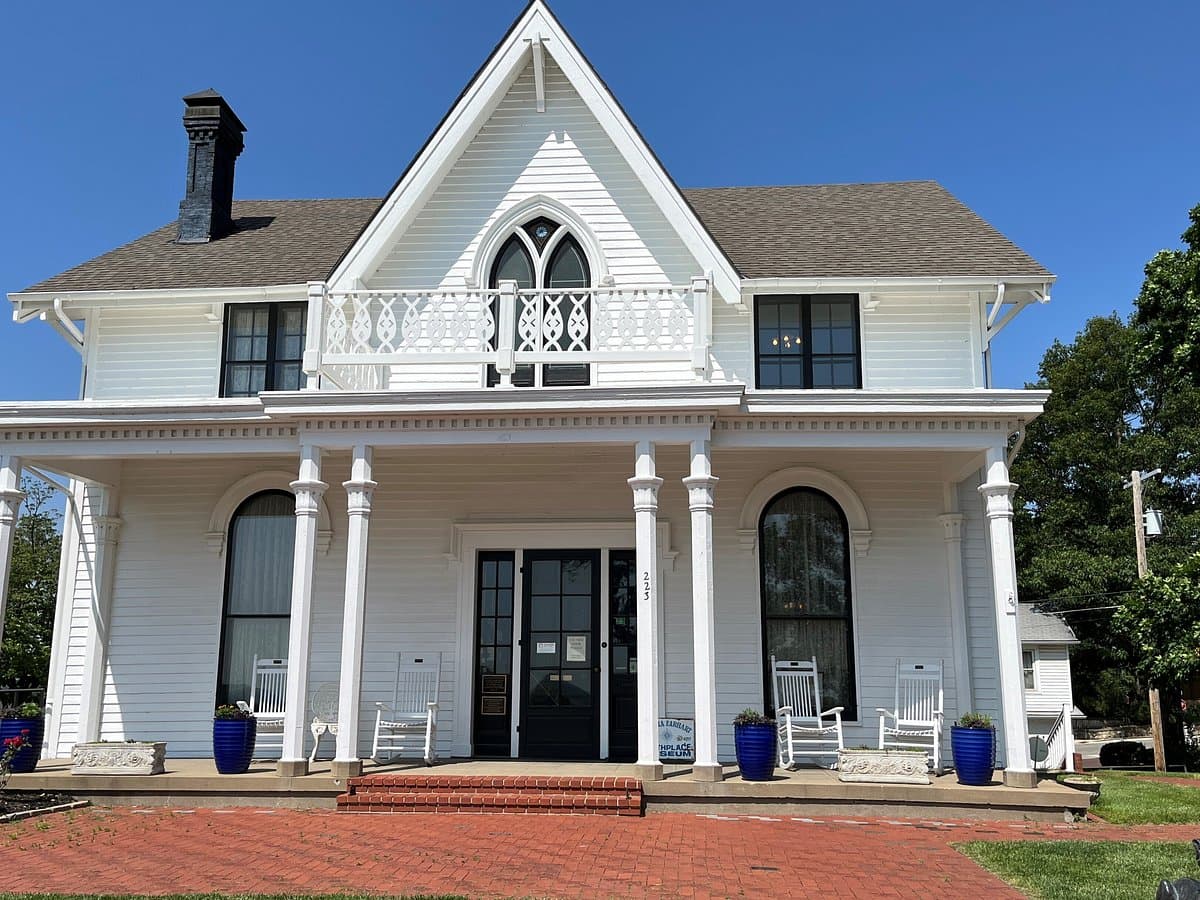
The Amelia Earhart Birthplace Museum turns a house on Terrace Street into one of Atchison’s clearest civic landmarks. At 223 N. Terrace Street, visitors can walk through the childhood home where Earhart’s story began, using a self-guided format that usually takes 30 to 45 minutes.
A museum built around a hometown story
The attraction is not a generic aviation display. Its public framing invites people to “Visit the House Where Amelia’s Adventures Began!” and centers the Otis family home as the place where Earhart’s early life in Atchison took shape. Earhart was born in Atchison on July 24, 1897, to Edwin Stanton Earhart and Amy Otis Earhart, and the museum says she spent more of her life in the Otis home than anywhere else.
That family connection matters because the house belongs to the generation that shaped the city’s social history as much as Earhart’s personal history. The home was owned by her maternal grandfather, Alfred Gideon Otis, a former judge, president of the Atchison Savings Bank, and one of the city’s leading citizens. In other words, the birthplace museum gives visitors a look at both a famous aviator’s beginnings and the local household that anchored them.
What the house looks and feels like
The building itself adds a strong sense of place. Search results identify it as a Victorian-era home, and one source describes it as a Gothic Revival house built in 1861 on a bluff overlooking the Missouri River. That combination of architecture and location gives the museum more than celebrity appeal, it gives the visit a physical setting that reflects Atchison’s river-town history and the standing of the Otis family.
Museum interpretation also reaches beyond Earhart’s flying career. Archive material attributed to Madison Paul, the museum’s director of archives, includes pieces such as “Family History: Amy and Edwin” and “Victorian Era Easter Traditions.” Those topics show how the house is used to explain domestic life, family background, and the period in which Earhart was raised, not just the headline facts of her later fame.
How the self-guided tour works
The museum’s self-guided format is one of its most practical features for a local outing or a day trip. Tour sheets lead visitors through the rooms and help explain what they are seeing, and the museum offers those sheets in Spanish and large text. That makes the house easier to navigate for families, school groups, and anyone who wants a slower, more flexible visit instead of a fixed docent-led tour.
The visit time is manageable, too. A typical tour takes about 30 to 45 minutes, which makes the museum an easy stop to fit into a broader Atchison itinerary. Visitor listings also show daytime hours that include 10 a.m. to 4 p.m., giving travelers a straightforward window for a stop on Terrace Street.
Why the museum still matters now
The site’s current preservation needs add urgency to the story. The Atchison Foundation has listed an Amelia Earhart Birthplace Museum fund to support a professional-grade dehumidifier system and electrical upgrades, work that is essential for protecting the house’s climate-sensitive collection. The foundation says those conditions are needed to preserve rare and irreplaceable artifacts, including signed books by Amelia Earhart, her sister Muriel Morrissey, and her father, Edwin Earhart.
That means the museum is not simply preserving a roomful of memorabilia. It is maintaining a fragile historic house museum where the building, the furnishings, and the archive all depend on careful stewardship. The museum’s board is chaired by Jan Mckenzie, underscoring that the site is being managed as an active local institution, not a static shrine.
Planning a visit to Terrace Street
The museum’s appeal comes from how many layers it puts in one short stop. Visitors can see the Otis family home, connect the house to Earhart’s parents and grandfather, and move at their own pace through a space designed to make the story readable for different ages and languages.
A practical visit looks like this:
- Go to 223 N. Terrace Street in Atchison.
- Plan for a 30 to 45 minute self-guided visit.
- Use the tour sheets, including Spanish and large-text versions.
- Check for daytime hours that include 10 a.m. to 4 p.m.
- Look for Sunflower Summer access, which can make admission free.
For Atchison, the museum is more than a preserved childhood home. It is the place where the city’s most famous name can still be traced to a specific house, a specific family, and a specific street, which is why the story of Amelia Earhart in Kansas still begins there.
This article was produced by Prism’s automated news system from verified source data, official records, and press releases, then run through automated quality and moderation checks before publishing. The system is built and supervised by the people who set the standards it runs under. Read our full AI policy.
Did this article answer your question?