Atchison walking tour maps downtown history block by block
Commercial Street turns into a block-by-block history lesson once you slow down. The Atchison tour shows how storefronts, facades and lot lines trace the city’s growth.
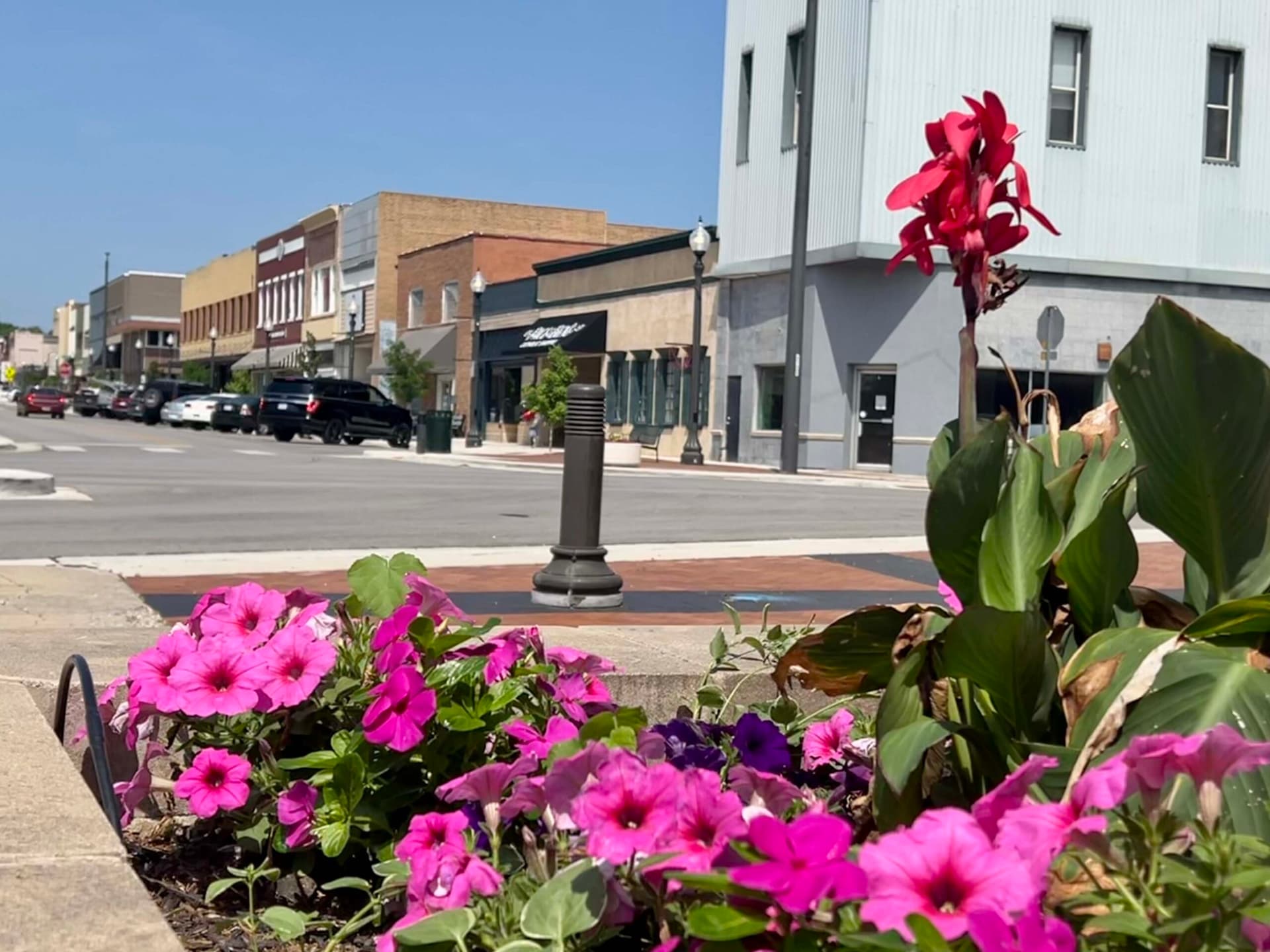
Downtown Atchison reads differently when you leave the car behind. The historical society’s Commercial Street walk strings together 510, 600, 720, 729, 725, 721, 711, 617, 609, 601-603, 523 and 517-519 Commercial, turning a stretch of storefronts into a visible record of how the city grew. What looks like an ordinary business block from behind the wheel becomes, on foot, a streetscape where older lot lines, changing facades and later remodels still tell the story.
Walk Commercial Street as a timeline
The value of this route is in the way it asks you to look. Instead of hunting for one marquee landmark, the walk trains your eye to notice shifts in building height, storefront width, window placement, masonry pattern and signs of later alterations. Those are the clues that show how businesses clustered, how properties were divided, and how downtown adapted as Atchison changed.
The point is not to race from address to address. It is to stand long enough at each block to see what a quick drive past would hide. A commercial street often reveals a town’s economic history more clearly than a single museum does, because the evidence is built into the frontage itself.
A short self-guided route
The society’s walking tour gives you a practical starting point for a self-guided outing. Begin with the addresses it lists and let the street do the work: 510 Commercial, 600 Commercial, 720 Commercial, 729 Commercial, 725 Commercial, 721 Commercial, 711 Commercial, 617 Commercial, 609 Commercial, 601-603 Commercial, 523 Commercial and 517-519 Commercial.
That sequence is useful because it turns downtown into a walkable set of comparisons. At each stop, look left and right as well as straight ahead. The contrast between adjacent storefronts is often where the history sits, especially when one facade has been updated while the neighboring building still carries older proportions or materials.
If you want a simple rule for the walk, use three questions at every stop:
- What changed in the storefront width?
- Where did the windows and doors get placed?
- What masonry, trim or remodel details suggest a later era?
Those small observations add up quickly. On a block like Commercial Street, they show how a working downtown absorbed new businesses, new tastes and new building methods without erasing every earlier layer.
Why this street matters to Atchison now
Atchison’s historic footprint gives the walk extra depth. Visit Atchison says the city was founded in 1854 and has more than 47 buildings listed on the National Register of Historic Places. The City of Atchison’s history page goes even farther back, describing the community as having more than 300 years of history. Put together, those details frame Commercial Street as part of a much larger preservation story, not a stand-alone row of old buildings.
The local Main Street effort reinforces that idea. Locally Atchison Main Street, part of the Atchison Area Chamber of Commerce’s downtown work, uses the Main Street Four-Point Approach: economic vitality, design, promotion and organization. Its design work includes historic preservation, signage and beautification, which means the street’s appearance is not just about nostalgia. It is tied to how downtown functions for business, visitors and community life today.
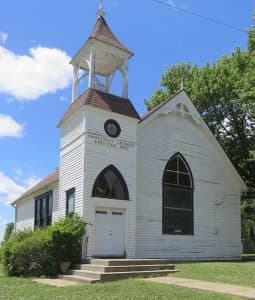
The Atchison County Historical Society gives the walk its interpretation. The organization says it has been dedicated to “preserving, promoting, recording and sharing” the history of Atchison County, Kansas since 1967. Its downtown walking tour sits alongside other projects the society lists, including Independence Creek, the Black Business District, Farmington Christian Church and the Santa Fe Depot Museum. That range shows a broad local history effort, one that reaches beyond a single block or a single era.
There is also a practical reality behind that work. The society has said funding is a challenge and that county tax-system support was discontinued, leaving a hole in its financial support. It has also said it is trying to generate support for rehabilitation of the Black Business District and Farmington Christian Church. Preservation in Atchison is not only about interpretation, but about the ongoing question of how small communities pay to keep local history visible.
Add the depot to the day
The Commercial Street walk pairs naturally with the Santa Fe Depot. Clio says the Freight Depot at 200 S 10th St was built in 1880 for the Atchison, Topeka & Santa Fe Railroad, then converted into a museum by the Atchison County Historical Society. The same building also houses the town’s Chamber of Commerce Visitor Center, so it works as a practical stop as well as a historical one.
Kansas Tourism identifies the Atchison County Historical Society Museum and Santa Fe Depot as a visitor attraction, which makes the depot a useful anchor for anyone turning a downtown walk into a fuller heritage outing. It connects the street-level story of Commercial Street to the rail era that helped shape the town’s development in the first place.
A downtown that still feels lived in
Atchison’s heritage appeal reaches beyond preservation circles. KCTV has described the city as known for its historic charm, boutique shops, restaurants, historic homes and stately buildings, and it noted that Amelia Earhart considered Atchison her hometown. That combination helps explain why a Commercial Street walk fits the city so well: it links the everyday downtown people still use with the larger identity that draws visitors in.
The best part of the route is that it does not ask you to imagine the past from a distance. It lets you see it in the materials already on the street, in the shape of the blocks, and in the way one storefront hands off to the next. In Atchison, downtown history is not confined to one corner or one monument. It is written across Commercial Street, block by block.
This article was produced by Prism’s automated news system from verified source data, official records, and press releases, then run through automated quality and moderation checks before publishing. The system is built and supervised by the people who set the standards it runs under. Read our full AI policy.
Did this article answer your question?