Atchison’s Cana House welcomes neighbors with food, friendship, and hope
Cana House is becoming a steady refuge in Atchison, where recurring meals, warm gatherings, and emergency access show real local need, not just a campus volunteer project.
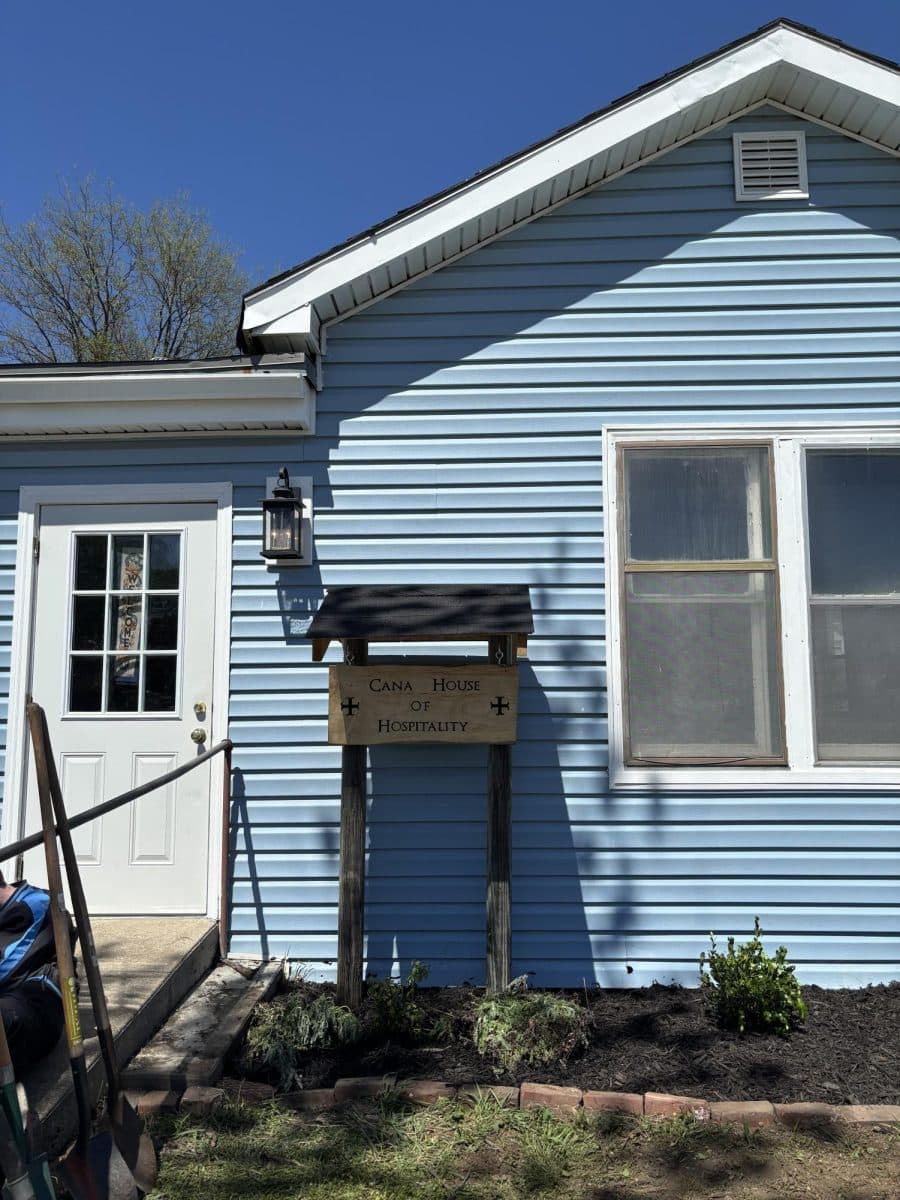
A house built around recurring need
Atchison’s Cana House of Hospitality is built on a simple idea with unusually hard edges: people in need deserve a place to eat, rest, and be welcomed as neighbors. Modeled after Dorothy Day’s Houses of Hospitality, the apostolate treats soup, cookies, conversation, and children’s laughter as part of the ministry, not a side effect. That matters in a county where help has to be practical, repeatable, and close to home.
Founder and board president Jeremy Sienkiewicz, a Benedictine College theology professor with a Ph.D. in systematic theology from The Catholic University of America, said the goal is not just to hand out food. It is to offer authentic human connection and create opportunities that help people move out of poverty in practical ways. That framing makes the house more than a meal site: it is an attempt to build durable relationships in a town where too many people still need help staying fed, warm, and connected.
From a church meal to a permanent house
The work began on Christmas Day 2022 at St. Joseph’s Church in Atchison, when the group first gathered around a meal and invited anyone to join, including homeless neighbors. What started as a parish gathering turned into a longer-term project after Benedictine professors and students spent work weekends renovating a home and opening it later in October. The Cana House of Hospitality Foundation later received IRS tax-exempt status in October 2024, giving the effort a formal structure to support its mission.
That timeline matters because it shows how the house grew out of a local relationship network rather than arriving as an outside program. Benedictine College is woven through that story at every stage: faculty helped lead the effort, students helped renovate the house, and parish life gave the first gatherings a home. The result is a Catholic apostolate rooted in Atchison, not a short-term outreach initiative that disappears when the semester ends.
How the house shows up week after week
The clearest sign that Cana House is built for sustained use is its schedule. Coffee is available Tuesday mornings, food is served Tuesday evenings, and every third Sunday brings a larger gathering with meals and songs. Parish families and children often take part, which gives the house a rhythm that feels closer to a neighborhood table than a charity event.
That regularity is part of the answer to what need the house is meeting. People do not just need a hot meal once in a while; they need a reliable place they can return to, see familiar faces, and be known by name. Students involved in the apostolate have said it helped them form real relationships in Atchison and made the town feel more like home because they now know people off campus by name. Junior Lizzie Hogan of St. Louis described the repeated visits as making the house feel like family because people had poured into her life.
The house also becomes emergency shelter in moments of severe weather. During two winter cold snaps, Project Concern announced that the Cana House would open to anyone who needed a place to get warm. That is an important detail for Atchison County: a hospitality ministry that can shift from fellowship to life-saving warmth is responding to more than social loneliness. It is meeting basic survival need.
What the county picture says about demand
The local context helps explain why the house matters. Atchison County has about 16,208 residents, and Atchison, Kansas, had a 2024 poverty rate of 15.8%. Kansas homelessness-coordination materials also include Atchison County in the 2024 point-in-time system, with one county table listing 11 people with at least one self-reported disability. Those numbers are small enough to be easy to overlook and large enough to show that need is present, persistent, and varied.
Atchison already leans on a broader safety net. Project Concern, a long-running county nonprofit founded in 1967, provides senior nutrition and transportation services. Its transportation program serves county residents for medical trips, shopping, employment, school, and social activities, which shows how often support in rural counties depends on mobility as much as food. Project Atchison has also published homeless-assistance guidance for the county, including after-hours instructions to contact Atchison police dispatch when someone lacks stable housing. Taken together, those services show that Cana House is entering a local ecosystem where need does not come in one form and does not end at one door.
A bridge between campus and town
Benedictine College gives the house its most visible local bridge. The college awarded 579 degrees in 2023, a reminder of how much institutional presence it has in Atchison and how much student energy can shape parish and volunteer life. That influence can be a strength if it is tied to long-term community care, because students, professors, parish families, and neighbors can keep showing up in the same place and building trust over time.
That is the real test of Cana House. If it remains a place where Atchison residents can count on food, conversation, and warmth every week, it will be doing more than offering service hours or a feel-good campus experience. It will be helping stitch together a local response to poverty, isolation, and unstable housing in a county where practical help still has to be personal, consistent, and close enough to matter.
This article was produced by Prism’s automated news system from verified source data, official records, and press releases, then run through automated quality and moderation checks before publishing. The system is built and supervised by the people who set the standards it runs under. Read our full AI policy.
Did this article answer your question?