Bromley Park grew from quarry land into an Atchison city park
Bromley Park was once quarry ground outside Atchison, and today it serves as a daily park with courts and neighborhood use. Its backstory traces how the city grew around it.
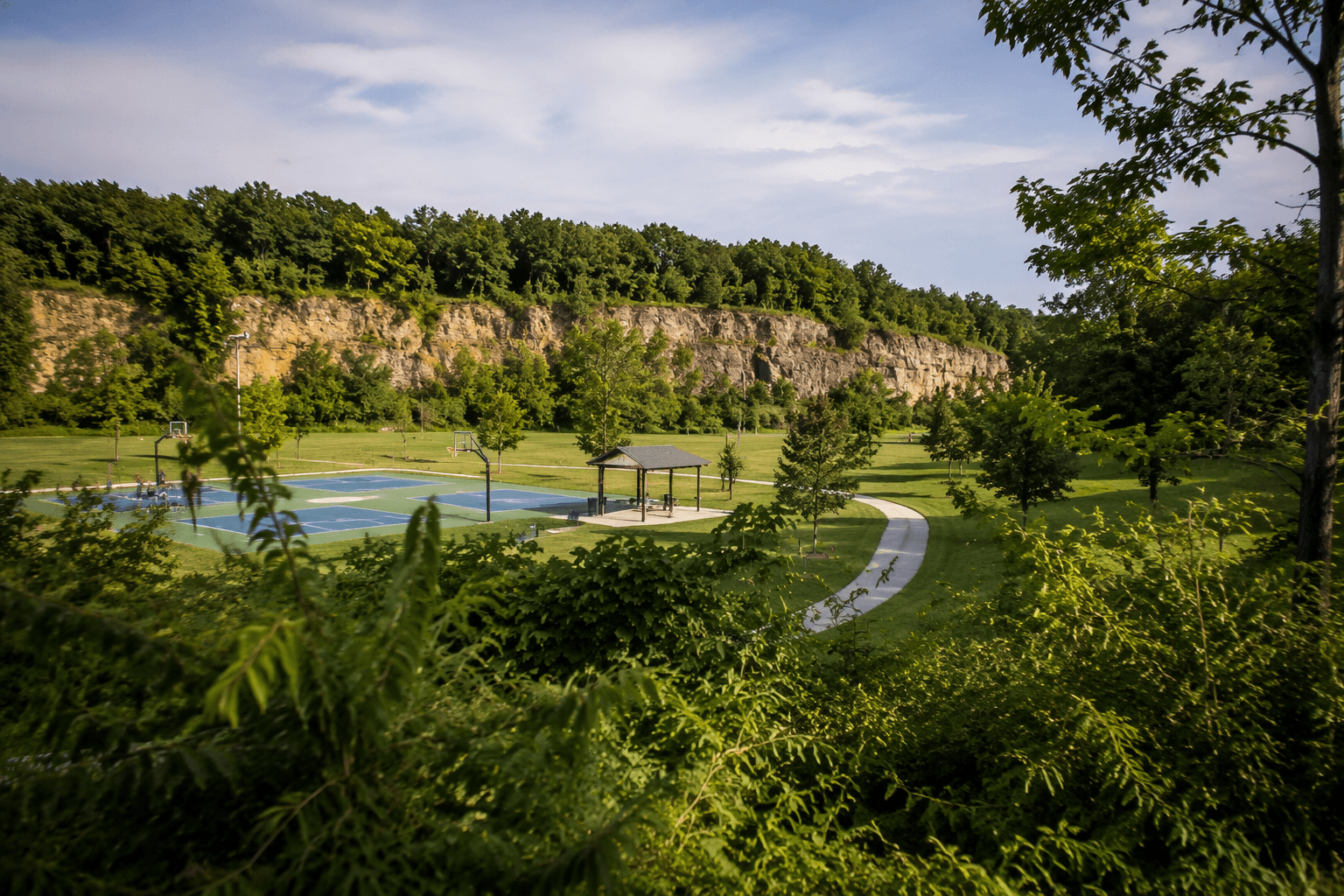
Bromley Park is one of Atchison’s clearest examples of land changing along with the town around it. What began as a quarry outside the city limits became a city park when Ralph Bromley moved his quarry business and donated the land, turning a working site into a place for daily recreation.
From quarry ground to public green space
The City of Atchison says Bromley Park started out as a quarry beyond the old city line, which makes the park more than a patch of grass and pavement. It is a piece of Atchison’s working landscape that was folded into the city as neighborhoods and streets spread outward.
That shift matters because it shows a pattern familiar to older Midwestern towns: industry first, public use later. Instead of being abandoned after its commercial life, the land was kept in use and made available to everyone, which is part of why Bromley Park still stands out in a compact town where land use history is easy to read in the shape of a block or a block of ground.
The Bromley family behind the name
Ralph H. Bromley is central to that story. A family group sheet lists him as Ralph Horance Bromley, born Jan. 20, 1903, in Ludlow, Missouri, and says he died Oct. 9, 1970, in Atchison, Kansas. It also places his burial at Mount Calvary Cemetery in Atchison, tying his life directly to the city that later received the park land.
A Find a Grave memorial adds another layer to that local history, saying Bromley was associated with his sons in Bromley & Sons Quarry & Transit Co. before starting his own quarry business. That detail helps explain why quarry work was not a side note in the Bromley name, but a family enterprise that shaped part of Atchison’s built environment before the land became public space.
For neighbors, that backstory gives the park a human scale. Bromley Park is not just a city asset with a familiar name on a sign; it reflects one family’s business history, a local land donation, and the city’s ability to absorb a former industrial site into everyday civic life.
What people use there now
Bromley Park is open daily from 7 a.m. to 11 p.m., which makes it a practical neighborhood park rather than a destination that sits empty after office hours. The city page lists tennis courts and basketball courts, features that give the park a steady role in ordinary routines: pickup games, practice sessions, and casual play.
That kind of use matters in a city where public space is part of the social infrastructure. A park with courts offers a low-cost place for exercise and gathering, especially in a neighborhood setting where families can use the space without leaving town or planning a formal outing.
The fact that Bromley Park sits on former quarry land also changes how people experience it today. The site carries the memory of extraction even as it functions as recreation space, which gives it a different identity from a park built on untouched land or on a brand-new subdivision lot.
How Bromley Park fits Atchison County
The Kansas Geological Survey’s industrial minerals records for Atchison County list 65 quarry records for active and abandoned sites. That number puts Bromley Park in a much wider county story, one shaped by stone, earthmoving, and the long footprint of extraction across the landscape.
Seen that way, Bromley Park is not an isolated curiosity. It is part of a county where quarrying left a documented mark, and where a former commercial site could be repurposed instead of erased. The park shows how Atchison grew around older land uses and then absorbed them into public life.
That kind of reuse is important in a county seat with older neighborhoods and limited room to sprawl forever. When a quarry becomes a park, the city gains open space without starting from scratch, and residents gain a place that is both useful now and rooted in the town’s own development history.
Why the park still matters
Bromley Park’s value is practical as much as historical. It is open every day, it has courts people can actually use, and it sits on a site that tells a story about how Atchison changed from a place with quarry ground outside its limits to a city that claimed that land for public use.
The park’s significance is not that it preserves a frozen past. It is that the past is still visible in what the land was and in how the city chose to use it next. That is what makes Bromley Park matter in Atchison now: it is a neighborhood asset with a backstory carved into the town itself.
This article was produced by Prism’s automated news system from verified source data, official records, and press releases, then run through automated quality and moderation checks before publishing. The system is built and supervised by the people who set the standards it runs under. Read our full AI policy.
Did this article answer your question?