Independence Creek links Kanza history to Lewis and Clark camp site
A quiet creek north of Atchison holds a recreated Kanza lodge, a short trail, and the July 4, 1804 Lewis and Clark camp that marked a historic Fourth.
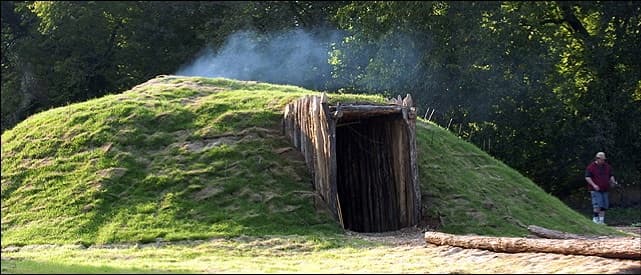
Independence Creek is one of those Atchison County places that can be easy to drive past and hard to forget once you stop. North of Atchison, just off 314th Road, the site ties a recreated Kanza Indian Lodge and a short nature trail to the exact campsite where Meriwether Lewis and William Clark’s Corps of Discovery spent July 4, 1804. For local residents, it offers something rare: a place that works as both a public-history stop and a low-key outdoor walk.
A hidden site with national reach
The Independence Creek site sits immediately adjacent to the parking lot at the east end of 314th Road, about five miles from the Main Street and Second Street intersection in Atchison. That location matters because it turns a nationally significant story into something tangible and close to home. The U.S. National Park Service identifies Independence Creek as a Lewis and Clark site, placing this quiet spot in northeastern Kansas inside the broader map of the Corps of Discovery.
The historical importance is precise, not vague. Lewis and Clark camped at Independence Creek on July 4, 1804, and the expedition celebrated by firing its swivel gun. That moment has been described as the first recorded Fourth of July celebration west of the Mississippi River, which gives the site a place in American civic history as well as frontier history.
What visitors can see on the ground
The best reason to visit is that the place is still legible in the landscape. The Atchison County Historical Society page points to a recreated Kanza Indian Lodge, a trail, and the camp location itself. The lodge gives visitors a physical sense of how people lived in the region before the Lewis and Clark expedition turned the creek into part of a national story.
The trail adds a simple but important layer. The area has been planted to native grasses, and visitors can observe flora and fauna along the walk. That makes Independence Creek more than a stop for history enthusiasts. It works as a short, family-friendly outdoor destination where the site’s ecology helps explain the history, rather than sitting apart from it.
The exact access point also makes the site practical. Because the lodge is right next to the parking lot, the stop does not require a long approach or a complex itinerary. That ease of access is part of why Independence Creek remains one of the county’s most overlooked public-history assets, even though its story reaches far beyond Atchison County.
Why the Kanza story changes the meaning of the place
The recreated lodge is not a decorative extra. It shifts the focus from one famous expedition to the deeper Indigenous history of the creek corridor. Kansas development-history material says first European explorers reached the area in 1724 and visited a Kanza village along Independence Creek, placing the site in a much longer timeline of Native presence and outside contact.
That longer frame matters because it keeps the creek from being reduced to a one-day stop on the Corps of Discovery route. The Kanza village history shows that Independence Creek was already a lived-in Native landscape before Lewis and Clark arrived. The recreated lodge helps visitors visualize that history without needing a museum case or a guided lecture.
Kansas history listings, including 8 Wonders of Kansas History, also connect the Kanza tribe and Lewis and Clark’s Independence Creek, reinforcing the idea that the site belongs to both Indigenous memory and expedition history. For Atchison County, that layered interpretation gives the place real educational value. It lets local schools, families, and casual visitors see how a familiar landscape carries more than one story at once.
Lewis and Clark's Fourth of July in Kansas
The July 4, 1804 camp at Independence Creek is the detail that keeps the site in national conversation. The National Park Service account of Lewis and Clark’s Fourth of July in Kansas says the Corps of Discovery marked the holiday there by firing its swivel gun. That detail turns the site into a vivid historical scene rather than a general reference point.
The story is also visible in the landscape around the creek. Search results point to a 4th of July, 1804 Creek historical marker associated with the location, and KSNT reported in 2021 that a marker and covered bridge commemorate the spot where the creeks were named. Those markers help connect the creek to the exact date and event that made it famous, so visitors are not left guessing where the history happened.
That combination of marker, bridge, trail, and recreated lodge makes Independence Creek unusually complete for a small local site. It offers a way to stand in a place where Native history, exploration history, and commemorative memory all overlap.
How to frame a visit
A stop at Independence Creek works best as a short, focused outing. Start at the parking lot at the east end of 314th Road, where the recreated Kanza Indian Lodge sits adjacent to the lot. From there, the trail and planted native grasses give you a chance to see the creek area as both a historical location and a restored outdoor space.
A practical visit can include three parts:
- the recreated Kanza Indian Lodge and the immediate interpretive area
- the trail and native-plant landscape
- the Lewis and Clark campsite, including the marker tied to July 4, 1804
That mix is what makes the site valuable to Atchison County now. It is not just a relic of one expedition, and it is not only a scenic stop. It is a place where the county’s public history, Indigenous heritage, and outdoor landscape meet in one quiet bend of the road, close enough to visit and significant enough to remember.
This article was produced by Prism’s automated news system from verified source data, official records, and press releases, then run through automated quality and moderation checks before publishing. The system is built and supervised by the people who set the standards it runs under. Read our full AI policy.
Did this article answer your question?