Muchnic Art Gallery showcases Atchison's Victorian-era wealth and craft
Muchnic Art Gallery turns a 19th-century Queen Anne mansion into a working arts center, linking Atchison’s wealth, craft, and civic life in one landmark.
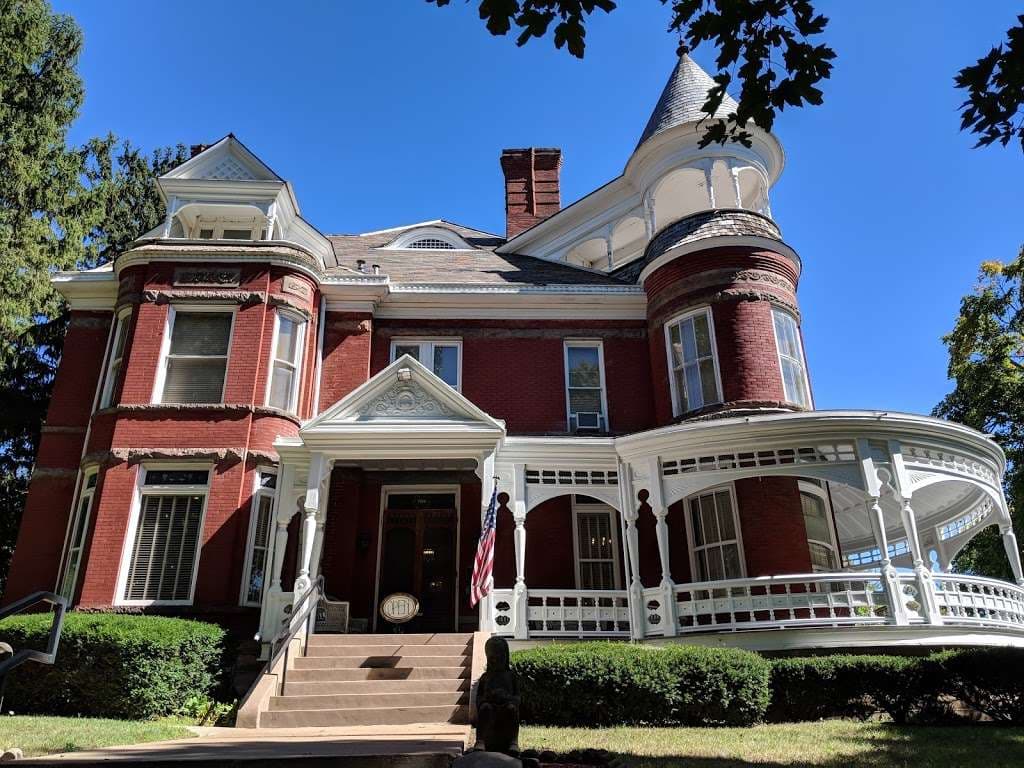
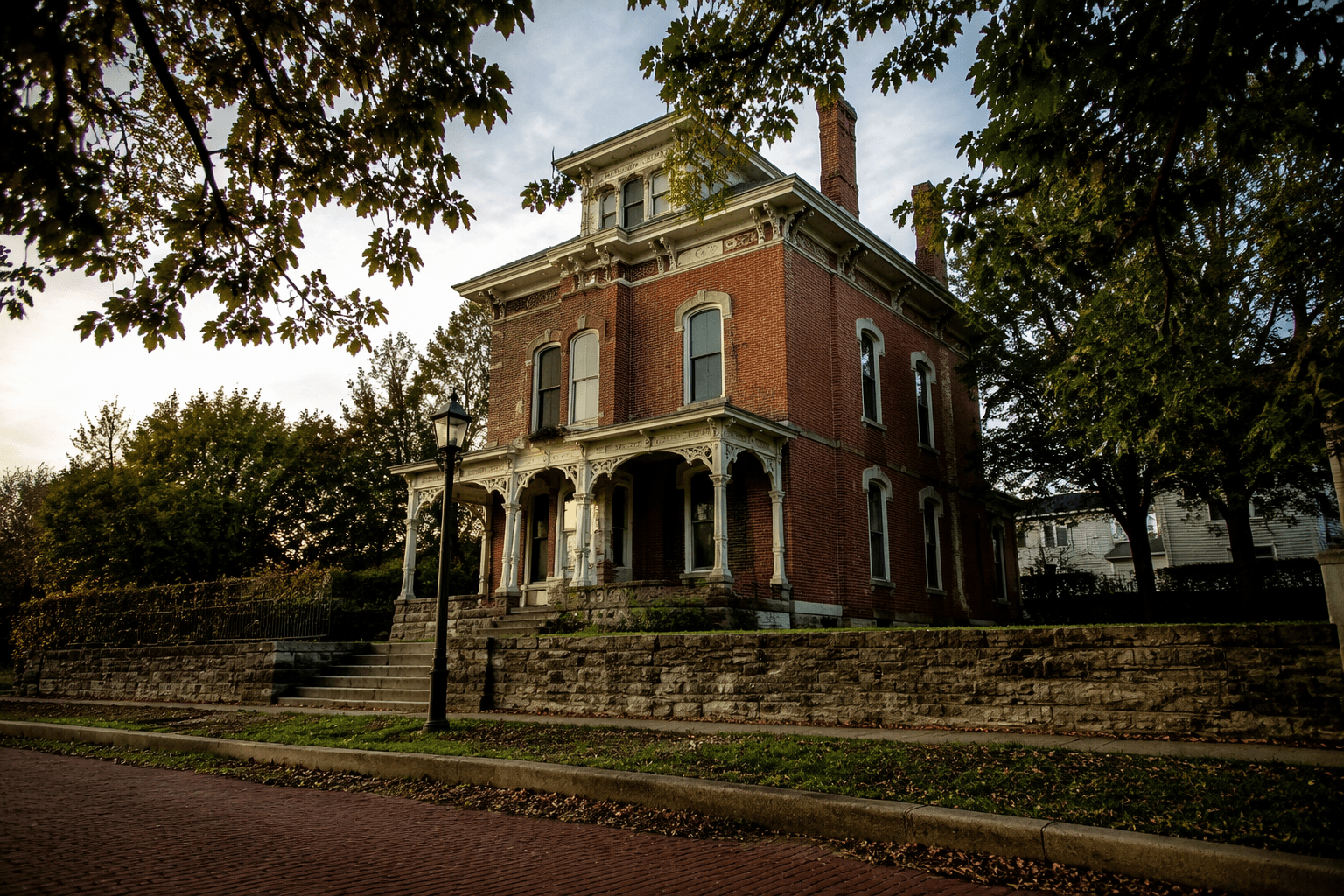
Muchnic Art Gallery sits at 704 N. 4th Street as more than a preserved mansion. The three-story brick Queen Anne home gives Atchison a visible reminder of the wealth, materials, and craftsmanship that shaped the city’s late 19th-century streetscape, while its galleries and programs keep the building active in daily civic life.
The house is a local landmark in the fullest sense: handsome enough to draw visitors, but still tied to the town’s present-day arts scene. That combination makes it one of the clearest places in Atchison to see how historic preservation can remain useful, not just decorative.
What the house reveals about Atchison’s past
The Muchnic home began as the house of lumber merchant George Howell, a prominent Atchison wholesale lumber dealer. The Art Association describes it as built in 1885, while National Register records place construction in 1887-1888 and identify it as the George W. Howell House, also known as the Muchnic House. That record also names local architect W. F. Wood and says the design reflected the wishes of Mrs. Howell.
The architectural details make the building easy to read from the sidewalk. It has 14 rooms, a slate roof, eyebrow windows, and an inviting wraparound porch, all features that fit the confidence of a prosperous Victorian-era home. The original owner reportedly spent years collecting oak, walnut, and mahogany before construction, a detail that helps explain how refined materials and careful finish work became part of Atchison’s built environment.
The house was listed on the National Register of Historic Places in 1974. That recognition places it among the city’s significant historic properties and underscores why the building still matters as part of Atchison’s architectural record.
How the gallery became a living arts center
Muchnic is not a frozen house museum. The Atchison Art Association has used the home as exhibition space since 1970, and the organization says the Muchnic family donated the Queen Anne Victorian home to house its work. That decision gave the building a second life, turning a private residence into a public cultural space with a direct link between preservation and use.
The association says it was founded in 1966 at the historic Muchnic Gallery and has been led by four executive directors. Its most recent transitions ran from Deborah Geiger, who served from 2010 to 2025, to Molly Porter, who began in 2025. That continuity matters because it shows the organization has been able to keep the building active across multiple leadership eras without losing its core mission.
The 2020 annual report says the association provides art education to local, public, and homeschooled students, as well as to senior citizens. It also hosts 6 to 8 rotating shows and exhibits each year and works closely with the City of Atchison and other local organizations. In practice, that means the gallery functions as both an exhibition site and a civic partner, with programming that reaches beyond a single audience or season.
The Cultural Center for the Arts expanded the footprint in 2020
The association’s work grew in 2020 with the opening of the Cultural Center for the Arts, made possible through a trust from benefactor Darrell Schmitt. The center adds another layer to the Muchnic story by extending the site’s role from a historic home and gallery to a broader gathering place for creative activity.
That addition strengthens the gallery’s relevance for Atchison. A preserved Victorian mansion can draw attention on its own, but a functioning arts center gives people a reason to return, whether for exhibitions, education, or community programming. The result is a landmark that still contributes to the social and cultural life around it.
Why Muchnic fits Atchison’s wider historic identity
Muchnic stands out, but it is not alone. Visit Atchison says the city has more than 47 buildings listed on the National Register of Historic Places, a count that reflects just how deeply historic architecture is woven into the city’s identity. In that context, Muchnic is one of the best examples of how Atchison’s 19th-century prosperity remains visible in brick, wood, and ornament.
Visit Atchison also places the gallery within a broader heritage landscape that includes the Evah C. Cray Historical Home Museum, Amelia Earhart heritage sites, and other historic architecture. That matters because the gallery is not an isolated attraction. It belongs to a network of places that help shape how visitors and residents move through the city, from historic neighborhoods to other heritage stops.
The gallery is also presented as a place to view art by regional and national artists. That keeps the site from being understood only as a relic of the past. It is both a showcase for work on the walls and a record of the house itself, with each visit connecting Atchison’s present arts activity to the era that produced the building.
Planning a visit
Muchnic Art Gallery is open Wednesday, Saturday, and Sunday from 1 to 5 p.m., March through December. That schedule makes it one of the more accessible historic sites in town for anyone looking to pair an architectural visit with an art stop.
A visit works best when you take in both halves of the experience. The exterior tells the story of Atchison’s Victorian wealth, from the slate roof to the porch and windows. Inside, the rotating exhibitions, education programs, and community-centered mission show how a single house can keep serving the city long after the original lumber fortunes have faded.
This article was produced by Prism’s automated news system from verified source data, official records, and press releases, then run through automated quality and moderation checks before publishing. The system is built and supervised by the people who set the standards it runs under. Read our full AI policy.
Did this article answer your question?