Pardee Butler's anti-slavery stand sparked violence in Atchison County
Farmington’s church and Stranger Creek still point to Pardee Butler, the abolitionist minister whose stand turned Atchison County into a Bleeding Kansas flashpoint.
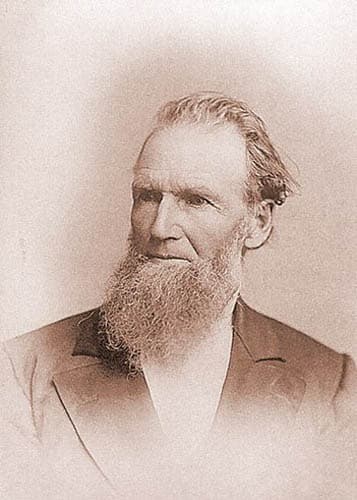
The church in Farmington and the bend of Stranger Creek still hold Pardee Butler’s footprint in Atchison County. His life tied a small rural settlement to the larger struggle over slavery in Kansas Territory, and the places connected to him still map that history across the county.
From New York to Stranger Creek
Pardee Butler was born on March 9, 1816, in Onondaga County, New York, and came west through a ministry shaped by the Disciples of Christ Church. Before settling in Kansas Territory, he had served as a pastor in Ohio and Iowa, building the kind of religious authority that later made his anti-slavery witness more visible and more dangerous. Kansas historical materials also identify him as one of the initial founders of the anti-slavery Republican Party in Kansas, a reminder that his work was political as well as pastoral.
Butler arrived in Kansas Territory from Illinois in the spring of 1855 and settled along Stranger Creek near Farmington in Atchison County. Kansas memory collections describe him as a homesteader on a farm about twelve miles from Atchison, while Atchison County historical records say he staked a 160-acre claim and built a cabin on Stranger Creek. That stretch of creek country became the base for his ministry, his political organizing, and the local congregation that would carry his name through later generations.
The August 1855 confrontation
Butler’s most famous encounter in Atchison County came in August 1855, when pro-slavery men targeted him after he spoke publicly against slavery in Atchison. Kansas Historical Society material dates the raft incident to August 18, 1855, and says Butler was forced onto a crudely constructed log raft after refusing to sign a pro-slavery statement. Another historical account says the mob painted an “R” on his forehead and towed him into the middle of the Missouri River.
He survived, returned, and kept working. That matters because the episode was not only a punishment; it was also a test of how much resistance anti-slavery settlers could endure in a county where the conflict over Kansas Territory’s future was playing out in streets, river landings, and church gatherings. Butler’s later life shows that the violence did not end his influence. It sharpened the local record of what Bleeding Kansas looked like when politics, religion, and intimidation met in the same town.
The Kansas Historical Society says Butler died on his Farmington farm on October 19, 1888, at age 72. The same historical record preserves a banner tied to the raft episode, which his son Charles Pardee Butler donated in 1927 and which is now displayed in the Kansas Museum of History. That artifact turns a frontier assault into something still visible, a material link between county memory and the statewide story.
Farmington Christian Church and the people around it
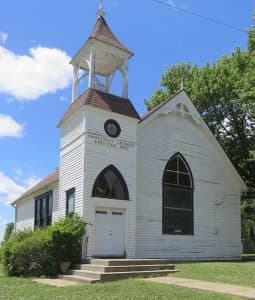
The strongest surviving local link to Butler may be Farmington Christian Church. The Atchison County Historical Society says the church was established on October 6, 1867 through Butler’s efforts, started with 23 charter members, and first met in a district schoolhouse. Another church history account says Butler had already gathered local Christians for meetings as early as June 1855 at the home of his neighbor, Caleb May, on Stranger Creek.
That sequence shows how quickly frontier religion and settlement grew together. Butler was not simply preaching to an abstract congregation. He was building a community in a place where families were few, travel was rough, and public commitments could provoke retaliation. The church history also says the congregation was reorganized in 1897, with 15 charter members, donated lots, a $240 fundraising effort, and a $1,000 building contract. Those numbers capture the slow, practical work of turning a fragile frontier gathering into an institution that could outlast the turmoil of the 1850s.
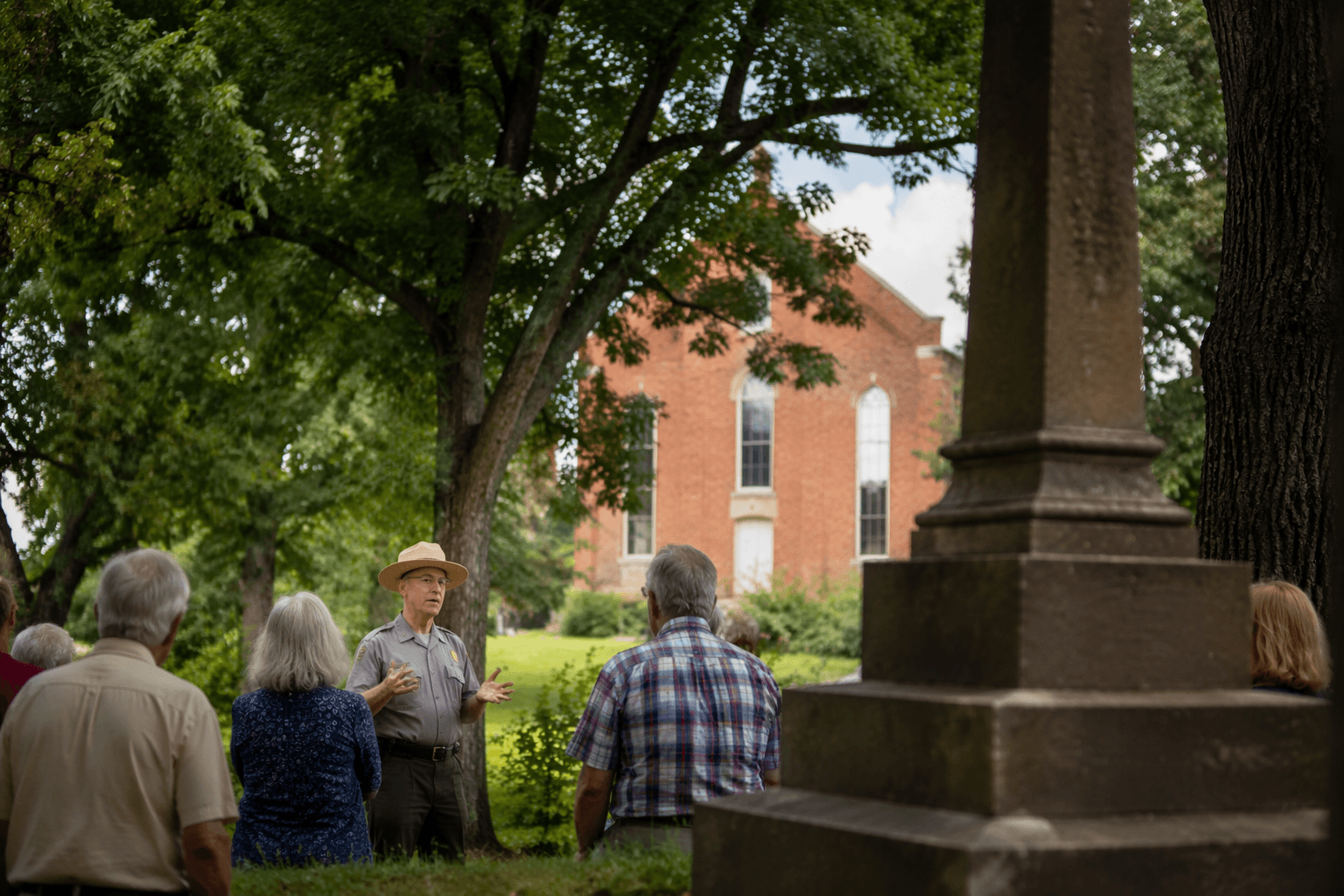
The historical society now presents Farmington Christian Church as a place to learn about the Bleeding Kansas era and Butler’s legacy. That framing fits the church’s own timeline, because its story reaches back to the earliest months of settlement, when Butler was still gathering neighbors in Caleb May’s home and laying the groundwork for a congregation that would survive beyond his lifetime.
A small town that still carries the scale of his era
Farmington itself helps explain why Butler’s story matters in Atchison County. Secondary local history says the town had only a few families by the 1880s and still relied on church services in a schoolhouse. By 1910, Farmington had just 46 residents, along with a general store, a blacksmith, and telegraph and express facilities. Those details make the church’s endurance more striking, because Butler’s influence took root in a place that remained small even as the county around it changed.
The result is a local history that never stayed local. Butler’s path ran from New York to Ohio and Iowa, from Illinois into Kansas Territory, from a Stranger Creek cabin into the violence of Atchison, and finally back to a Farmington farm where he died. In Atchison County, the church, the creek, and the county memory around Butler still show how one minister’s anti-slavery stand became part of the region’s defining conflict.
This article was produced by Prism’s automated news system from verified source data, official records, and press releases, then run through automated quality and moderation checks before publishing. The system is built and supervised by the people who set the standards it runs under. Read our full AI policy.
Did this article answer your question?