APTV episode explores Daniel Pratt’s role in shaping Prattville, Autauga County
Daniel Pratt’s factories and land deals still shape Prattville’s map, and APTV’s new episode ties that legacy to Autauga County’s present and future.
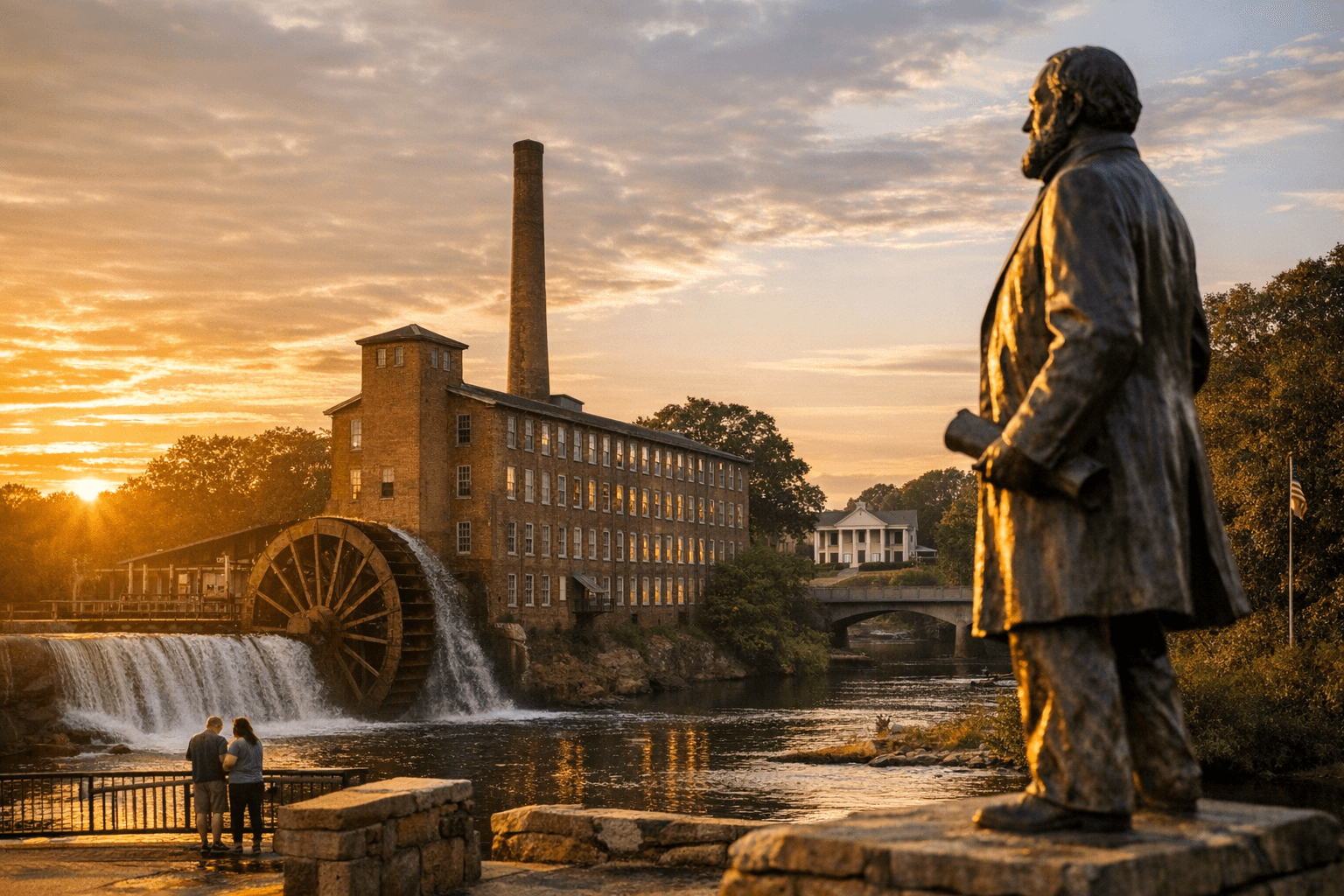
Why Daniel Pratt still matters in Autauga County
Daniel Pratt’s influence is still visible in the places Autauga County uses every day, from downtown Prattville to the industrial identity that helped define the city in the first place. The new Discovering Alabama episode, “Prattville/Autauga County,” airs on APTV at 11:30 a.m. and comes with a free teacher’s guide for families and classrooms that want the story behind the landscape. Produced by the Alabama Museum of Natural History at The University of Alabama in cooperation with Alabama Public Television, the program looks at Prattville’s past, present, and the concerns that continue to shape its future.
The episode is built around a simple but powerful idea: Prattville did not grow by accident. It grew because Daniel Pratt, Alabama’s first major industrialist, set out to build a self-sufficient manufacturing center a few miles northwest of Montgomery. That decision left a footprint that still reaches into how the city is remembered, how the county seat is organized, and how residents talk about local history today.
The industrial engine that built a town
Daniel Pratt, who lived from 1799 to 1873, founded what became present-day Prattville around manufacturing rather than plantation agriculture alone. His Pratt Gin Company, founded in 1833, became the world’s largest manufacturer of cotton gins, supplying machines to Alabama’s Black Belt planters and as far away as Russia. At its peak, the company employed as many as 175 workers and produced up to 1,500 gins a year, a scale that explains why Pratt’s name became inseparable from the city itself.
Pratt’s business reach went beyond gins. He also operated grist and flour mills, architectural millworks, and cotton and woolen mills, then later helped with railroad and coal-and-iron development in north Alabama. For Autauga County, that matters because Pratt’s industrial model did more than create jobs. It helped turn the area into a place where production, transport, and local growth reinforced one another, an early version of the kind of economic clustering that still shapes small-city development across the South.
How the county seat followed the growth
Autauga County’s political geography changed as Prattville grew. The county seat was first established at Washington in 1819, then moved to Kingston in 1830, and finally relocated to Prattville in 1868 because of the town’s growth in population, wealth, and business activity. Prattville was incorporated on February 19, 1872, formalizing the city’s rise as the county’s civic center.
That shift helps explain why Prattville is more than a namesake town. It is the seat of Autauga County and is still tied to Daniel Pratt’s legacy in both symbolism and practical geography. The city’s nickname, the Fountain City, comes from its artesian wells, another reminder that the community’s identity is built from both industry and natural features. In a county where history often shows up in plain sight, the episode gives viewers a way to connect those local markers to the larger story of Alabama’s economic development.
What to look for in Prattville today
The most visible reminders of Pratt’s era are not locked away in a textbook. They are part of the built environment and local preservation efforts that continue to define the city. The Daniel Pratt Cotton Gin Factory, built in 1848, is one of Prattville’s most iconic industrial landmarks and remains a major focus of preservation and redevelopment work.
That work has been guided in part by the Historic Prattville Redevelopment Authority, which was created by the Alabama Legislature in 1988 to revitalize the Daniel Pratt Historic District. The authority has most recently purchased the Daniel Pratt Cotton Gin Factory with the goal of preserving and re-adapting the landmark. For residents who move through Prattville’s downtown core, that means the story is not only historical. It is architectural, economic, and ongoing.
The episode’s value lies in how it connects those visible places to the choices that created them. A factory complex built in 1848, a county seat moved because of growth, and a city named for its founder all point back to the same central fact: Pratt’s decisions still shape the local landscape. That is especially useful for readers trying to understand why Prattville developed the way it did, and why preservation debates today carry real weight for the community’s future.
How to watch, and how the lesson extends into the classroom
“Prattville/Autauga County” is part of Discovering Alabama with Doug Phillips, and the guide says the program was completed in 2019 and timed to Alabama’s bicentennial. That timing matters because the episode is not just a local history recap. It is framed as a way to look back at 200 years of statehood while asking what should happen next in places like Prattville and Autauga County.
The teacher’s guide is especially useful because the series makes its educational materials available free online, giving teachers a ready-made resource for state history, local industry, and civic change. The guide also notes that the video includes interviews with some of Alabama’s most notable historians and reflects on concerns for the area’s future. That combination makes the episode practical for classrooms and appealing for families who want a clear, locally grounded explanation of how Daniel Pratt’s industrial vision still echoes through Autauga County.
For anyone watching on APTV, the episode offers more than a portrait of a 19th-century manufacturer. It shows how one industrialist’s decisions shaped the county seat, the city’s name, its nickname, its preservation priorities, and the story residents still tell about Prattville today.
This article was produced by Prism’s automated news system from verified source data, official records, and press releases, then run through automated quality and moderation checks before publishing. The system is built and supervised by the people who set the standards it runs under. Read our full AI policy.
Did this article answer your question?