Prattville woman arrested in Millbrook Walmart theft case, police say
Millbrook police say a Prattville woman hid merchandise at Walmart, used self-checkout and left with more than $1,500 in unpaid goods before a felony arrest.

Millbrook police arrested Brandy M. Barlow, 43, of Prattville, after a Walmart loss-prevention investigation tied her to more than $1,500 in unpaid merchandise. Officers said the case shows how quickly a suspected shoplifting stop can turn into a felony arrest when the value crosses Alabama’s theft threshold.
The July 15 report says loss-prevention staff watched Barlow enter the store on July 13 and move through the business for several hours while concealing items in a purse and another bag she obtained inside the store. Police said she also placed items in a shopping cart and went through self-checkout, paying for only a limited number of items before passing the last point of sale and leaving without paying for multiple other items.
After she was detained, Barlow was charged with retail theft in the second degree and taken to the Millbrook Police Department for questioning, processing and later transport to the Elmore County Jail. Police said she was later placed under a $15,000 bond.
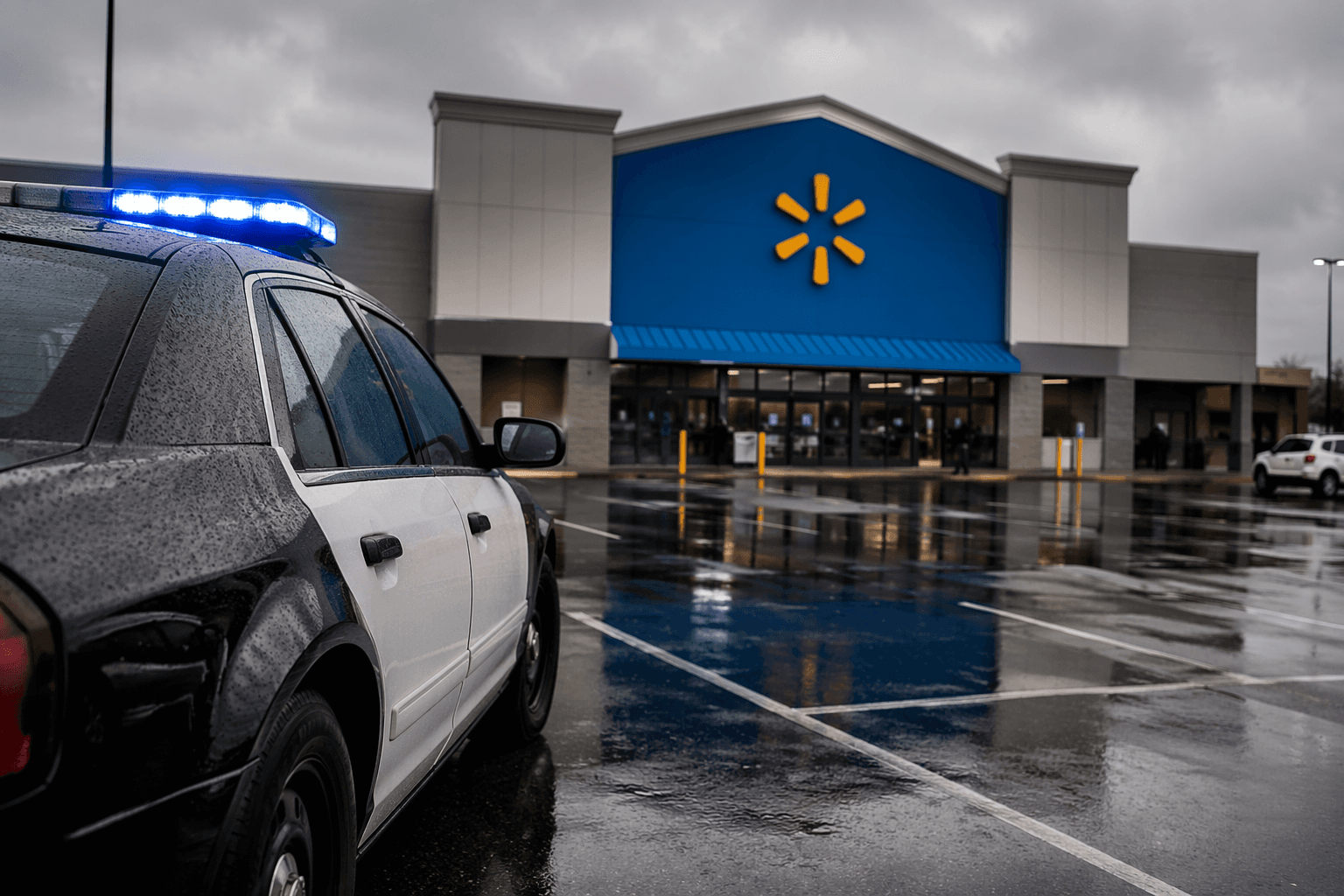
The arrest fits a pattern Millbrook officers say they see often, especially at the local Walmart, where retail theft cases can be built with trained loss-prevention workers and surveillance video. For store managers, those cases are not just about missing goods. They are part of a larger security bill that includes cameras, staffing and the time needed to document losses, identify suspects and prepare a case that can move through the criminal system in a matter of hours.
Alabama law helps explain why a case involving roughly $1,500 in merchandise can trigger a felony charge. Retail theft in the second degree applies when the retail value is more than $500 but does not exceed $2,500, and it is classified as a Class C felony. The state’s Retail Theft Crime Prevention Act took effect Sept. 1, 2023, and allows merchants or their employees to detain suspected shoplifters when they have probable cause.

The pressure on retailers is not limited to Millbrook. The National Retail Federation’s 2025 study reported an 18% increase in the average number of shoplifting incidents per year, a statistic that has helped keep loss prevention high on the list of store priorities. Millbrook police also publicized a separate Walmart theft investigation in July 2025 involving three suspects and merchandise valued at $5,229.17, underscoring how often the same store has surfaced in theft cases.
This article was produced by Prism’s automated news system from verified source data, official records, and press releases, then run through automated quality and moderation checks before publishing. The system is built and supervised by the people who set the standards it runs under. Read our full AI policy.
Did this article answer your question?