Baker City BLM launches folklife series at Oregon Trail center
Baker City’s Oregon Trail center is adding a folklife series through October, bringing basket weavers, cowboy poets and tribal artists into one of the county’s key tourism stops.
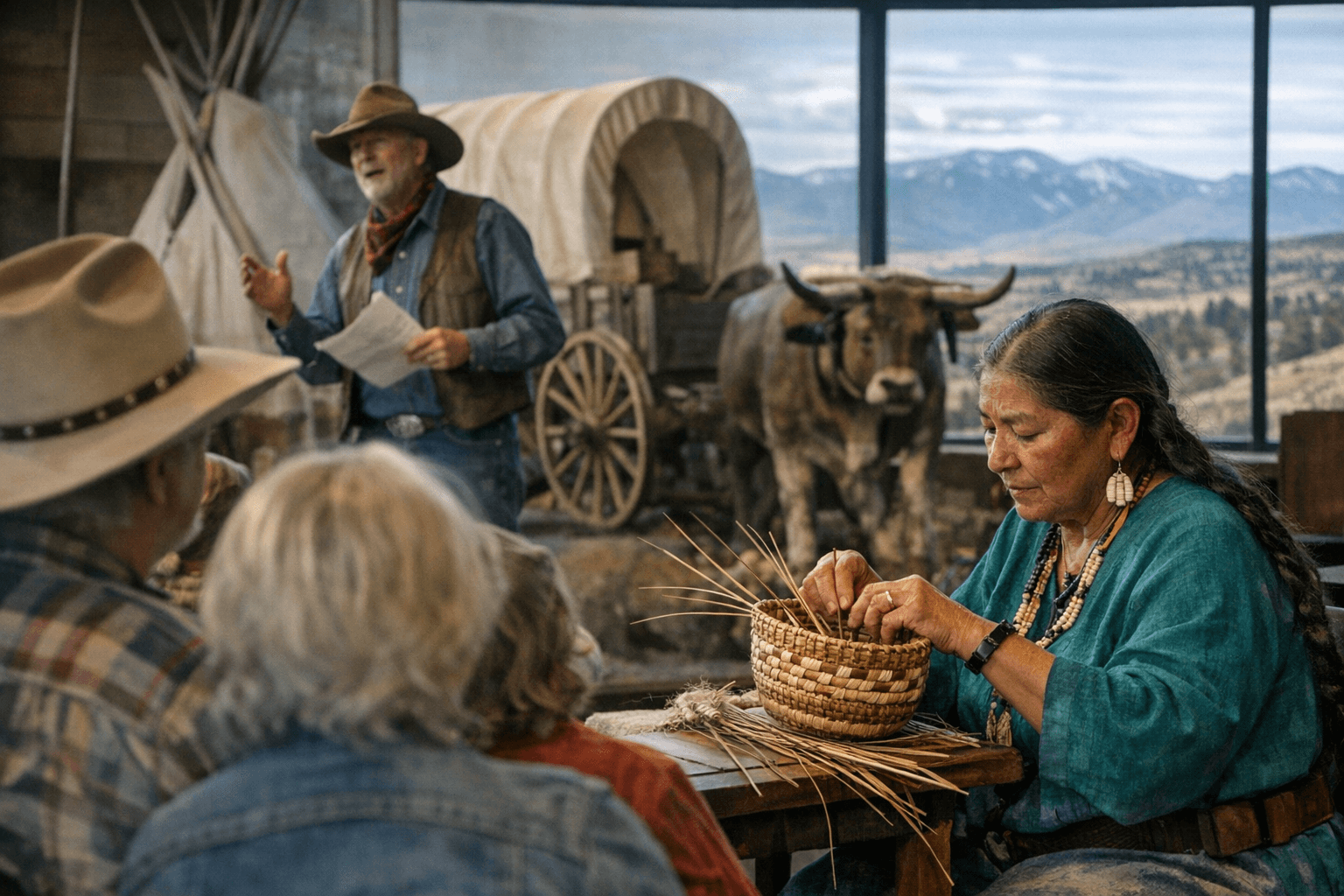
Basket weavers, cowboy poets and tribal artists will share the stage at the National Historic Oregon Trail Interpretive Center, giving Baker City a new cultural draw that links living traditions with one of Eastern Oregon’s best-known tourism sites.
The Bureau of Land Management’s Baker City office announced the folklife series on April 21, setting up a rotating lineup of regional arts and customs at the interpretive center just outside Baker City through October. The program is designed to showcase the people and practices that continue to shape Eastern Oregon, from native basket weaving and Warm Springs bead artistry to weaving from Richland, Umatilla dentalium artistry, John Day leather working, cowboy poetry from Prairie City and Wallowa tribal regalia.
That mix matters for Baker County because the interpretive center already serves as a stop tied to the Oregon Trail, westward migration and the history that brought travelers through this part of the state. By adding living demonstrations and performances, the BLM is turning a site long associated with the past into a place where visitors can see present-day cultural knowledge in action. The agency said the series fits with America’s 250th anniversary and is meant to highlight the people, traditions and cultural knowledge that have shaped the nation over time.
For Baker City, the timing could help broaden the center’s reach beyond one-time sightseeing. A series that runs through October gives families, school groups and out-of-town travelers more chances to plan a stop, rather than waiting for a single weekend event. That matters for nearby businesses, especially restaurants, gas stations and shops that depend on visitors who stay long enough to spend money in town.
The focus on regional makers and tribal artists also gives the series a distinctly local identity. Prairie City’s cowboy poetry, John Day leather working and the bead and regalia traditions connected to Warm Springs and Wallowa all point to a broader Eastern Oregon cultural network, not just a Baker City attraction. For a county where public lands, heritage tourism and community identity often overlap, the program positions the interpretive center as more than an exhibit space. It becomes a place where the Oregon Trail story and the living culture of today’s region meet under one roof.
This article was produced by Prism’s automated news system from verified source data, official records, and press releases, then run through automated quality and moderation checks before publishing. The system is built and supervised by the people who set the standards it runs under. Read our full AI policy.
Did this article answer your question?