Baker City crash case sees new fight over evidence before trial
Judge Matt Shirtcliff may decide if jurors hear Cleveland’s pre- and post-crash statements in the six-injury Baker City wreck, a ruling that could reshape fault.
The fight over what jurors can hear in the Baker City crash case now sits in Judge Matt Shirtcliff’s hands, and it could shape whether the wreck is seen as reckless driving alone or as conduct prosecutors say showed extreme indifference to human life.
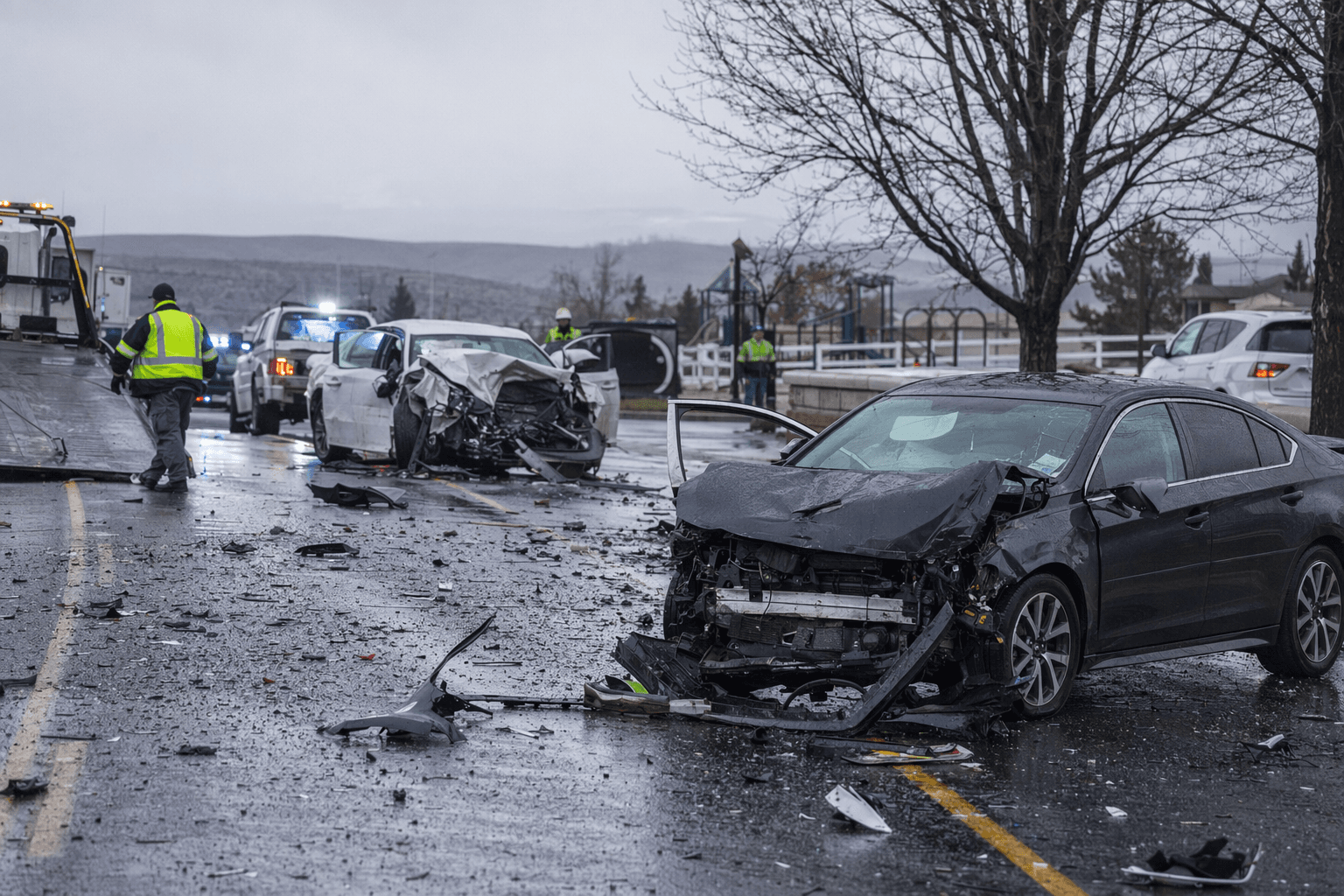
The case stems from the 1:28 a.m. crash on Dec. 23, 2024, when a 2008 Ford Escape driven by Izek Matthew Cleveland hit a large tree head-on on 17th Street near Grace Street in southwest Baker City. Police said Cleveland told an officer he had used cocaine and consumed alcohol before driving, and an affidavit said his blood alcohol level was 0.12. Six passengers were injured, all of them 18 or 19 years old, and at least three suffered serious injuries. Two were flown by LifeFlight to Saint Alphonsus Medical Center in Boise. The victims named in the charging documents were Brooklyn Jaca, Timothy Sage Darlington, Danaeh Darnell, Kaden Garvin, Sydnee Pierce and Taylor Dalton.
Cleveland was arrested at the scene, jailed on $60,000 bail and released on Christmas Day 2024 after posting $6,000. He was initially charged with DUII, five counts of second-degree assault and six counts of recklessly endangering another person. In Oregon, second-degree assault is a Measure 11 offense that carries a mandatory minimum prison term of 5 years and 10 months on conviction.
The case has already moved through several pretrial turns. On Feb. 24, 2025, Shirtcliff added a no-driving condition to Cleveland’s release agreement and entered a not-guilty plea on his behalf. Oregon Department of Justice prosecutor Deena Ryerson also said some assault counts could be reduced based on the severity of the injuries, and the court later set a settlement conference for July 24, 2025. Trial was first tentatively set for Jan. 12, 2026, and later court scheduling put it on June 22, 2026.
Now William Thomson, Cleveland’s attorney, is asking the court to admit evidence of Cleveland’s state of mind before and after the crash, even if it would normally be barred as hearsay. That matters because the most serious assault theory depends on proving Cleveland acted with extreme indifference to the value of human life, not just recklessness. If Shirtcliff allows the evidence, jurors could hear a fuller and more complicated account of what happened. If he excludes it, the trial will likely be narrower, and both sides will have to tell the story with tighter limits on what the jury hears.
This article was produced by Prism’s automated news system from verified source data, official records, and press releases, then run through automated quality and moderation checks before publishing. The system is built and supervised by the people who set the standards it runs under. Read our full AI policy.
Did this article answer your question?