Baker County marks its place in eastern Oregon history
Baker County's claim as eastern Oregon's first official jurisdiction began with a 1861 gold strike near present-day Baker City, then hardened into county government in 1862.
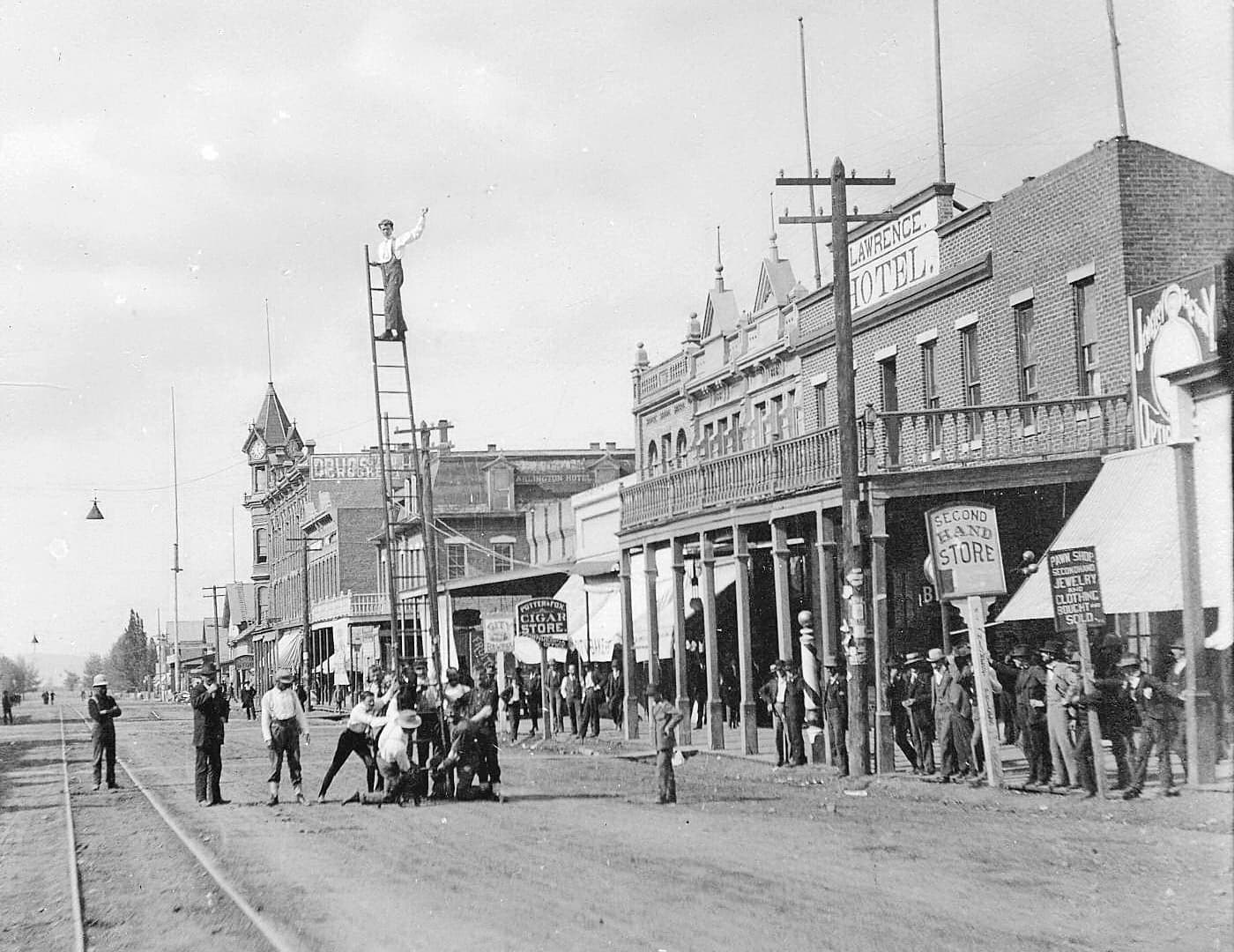
The first official jurisdiction in eastern Oregon took shape in the hills south of present-day Baker City, where Henry Griffin and three other miners struck gold and set off a rush that quickly turned camps into a county seat. Baker County was established from Wasco County on September 22, 1862, and that early leap from mining district to organized government still defines how the county understands itself.
From Griffin Gulch to county government
The county’s own facts-and-history page places the first mineable mineral at October 23, 1861, when Henry Griffin found a gold nugget that later gave its name to Griffin Gulch. The Oregon Encyclopedia adds the other men tied to the strike: David Littlefield, William Stafford and G.W. Schriver, all working a couple of miles south of what is now Baker City. Together, those details show that Baker County did not begin as an abstract boundary on a map. It began with a strike, a rush and a sudden need for order.
By September 1862, the Oregon legislature had carved off the eastern edge of Oregon to create Baker County. That was more than a line on paper. In a place where mining camps were growing faster than institutions could keep up, county government meant a legal framework for land, taxation, roads and records, and it meant those decisions would be made close to the people living through the boom.
Auburn’s brief reign at the center
Auburn became the county seat in September 1862, and for a short time it was the center of a frontier district in motion. The Oregon Encyclopedia describes Auburn as a mostly tent city that had mushroomed to more than 4,000 miners during the summer, and says it was one of the largest towns in eastern Oregon by the fall. That kind of growth explains why county government settled there first: Auburn was already acting like a major settlement before the courthouse functions ever arrived.
William Packwood’s role adds another local thread to the story. The gold rush of 1862 drew him to eastern Oregon, and after arriving at Blue Canyon, southwest of present-day Baker, he helped lay out Auburn. The town also became home to the first post office in northeastern Oregon in November 1862, another sign that the mining camp had crossed into civic territory. By 1863, Auburn’s population was estimated at about 6,000, mostly men, a number that captures both the speed of the boom and the lopsided character of life in a gold district.
Why Baker City took over
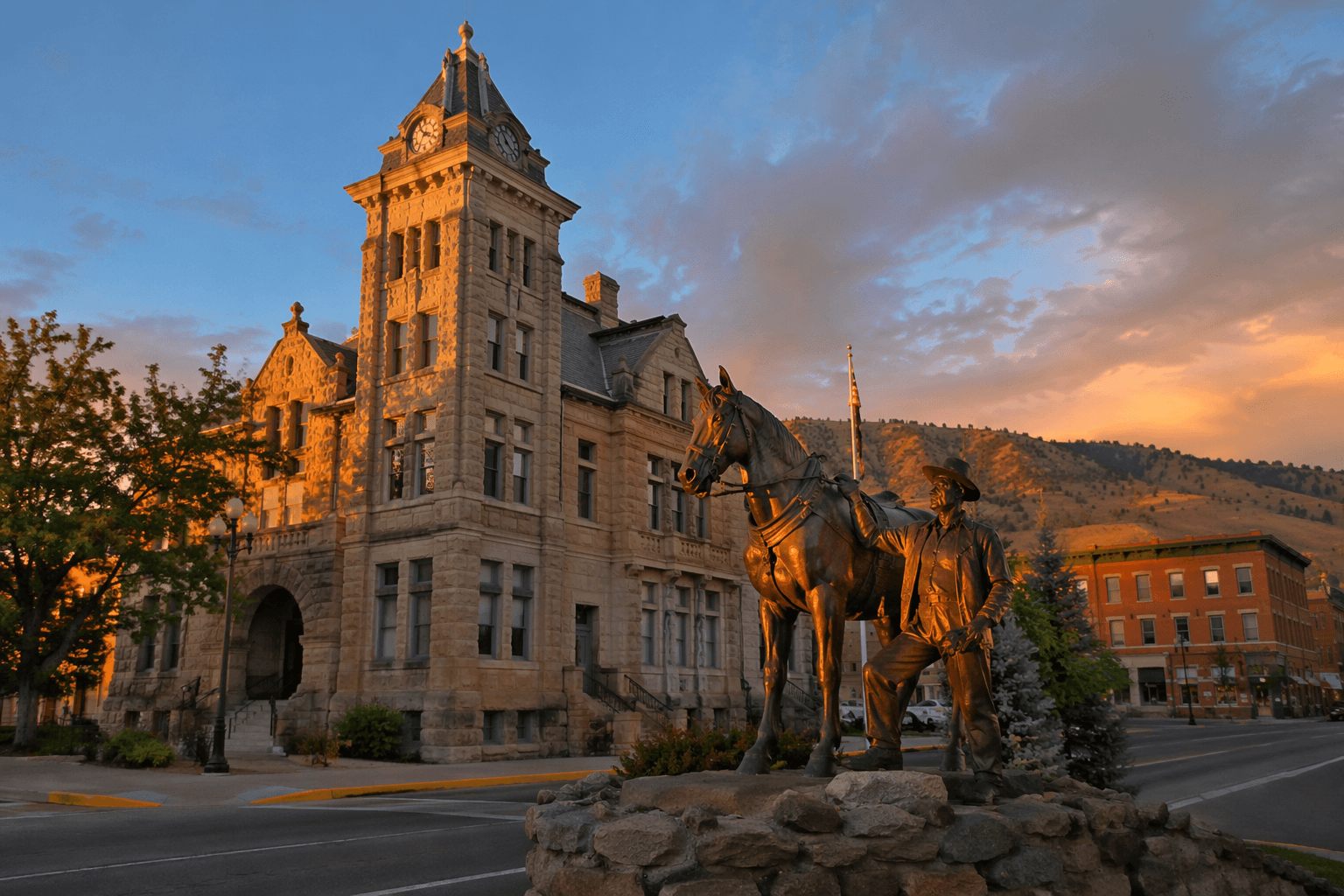
Baker City became the county seat in 1868, and that move marked the point where the county’s center of gravity shifted from the camps to a more durable town. Baker County and Baker City were both named for Edward Dickinson Baker, Oregon’s first senator and the only sitting member of Congress killed in the Civil War. His name tied the county to the broader political life of the young state, even as the local economy remained rooted in mining and the traffic of people chasing it.
Baker City then became the commercial center for Baker County. That shift accelerated on November 12, 1884, when the Oregon Railway & Navigation Company and the Oregon Short Line linked up near Huntington, giving Baker City access to Portland, the West Coast, Omaha and points east. The rail connection changed what the county could sell, where people could travel, and how Baker City fit into the region. Mining still mattered, but rail access gave the town a longer life than the gold camps that had first fed it.
Why the first county still matters
Baker County’s early history matters because it explains more than a date in 1862. It shows why the county became eastern Oregon’s first official jurisdiction, why Auburn could briefly serve as the center of government, and why Baker City later absorbed the county seat and the county’s commercial life. Those moves created a civic geography that residents still recognize in place names, boundaries and the county’s enduring sense of being a distinct part of the state.
The story also connects the county’s present identity to the frontier institutions that followed the gold strike. A county that formed around mining had to build the machinery of governance while the ground was still filling with tents, claims and newcomers. That left Baker County with a history shaped by extraction, transportation and settlement, but also by the practical decisions that made a raw district legible as a county. The line from Henry Griffin’s gold nugget to Baker City’s rail-linked commercial role runs straight through the institutions that still define local life.
This article was produced by Prism’s automated news system from verified source data, official records, and press releases, then run through automated quality and moderation checks before publishing. The system is built and supervised by the people who set the standards it runs under. Read our full AI policy.
Did this article answer your question?