Talk explores Chinese immigrant history in Baker City and Pendleton
Baker City’s Chinese Cemetery and Chinatown mark a history local talks are bringing back into view. The story reaches beyond heritage labels to how eastern Oregon was built and then forgotten.
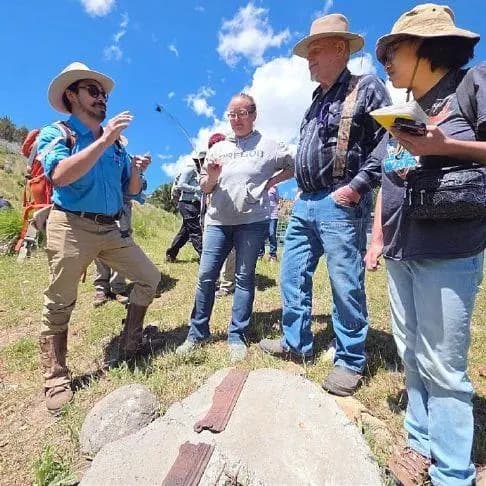
Baker City’s Chinese Cemetery and the old Chinatown district hold a history many people still drive past without reading. A talk on Chinese immigrant history in Baker City and Pendleton pushes those places back into focus, connecting today’s landmarks to Chinese workers, merchants and families who helped shape eastern Oregon and then faced exclusion, discrimination and violence.
What Baker City still has on the ground
Baker City’s Chinese history is not buried entirely in archives. The Chinese Cemetery still anchors that story, and the historic Chinatown area gives residents a physical marker of the community that once lived and worked there. Visit Eastern Oregon calls the cemetery one of just a few interpretive sites commemorating Chinese heritage in the region, which makes it more than a local curiosity: it is one of the rare places where eastern Oregon’s Chinese past can still be read in the landscape.
A local talk matters because the evidence is visible but easy to miss. The Baker Heritage Museum, established in 1982 by the Baker County Museum Commission, says its mission is to preserve, interpret and share Baker County’s historic objects and archives. That mission fits this story closely, because the Chinese chapter of Baker County history survives in both objects and places, from museum displays to burial grounds.
The cemetery is a record of a community, not just a graveyard
The Baker County Historical Society identifies the Chinese Cemetery with an 1880-1940 Chinese community. That span places the site inside a long period when Chinese residents were part of daily life in Baker County, even as public memory often skipped over them. The cemetery’s preservation work began in 1994, when a committee included Jim Evans, Alvin Ward, Dick Taylor and Don Christy, with Annie Wong and Richard Harris among the volunteers who carried the project forward.
That history has remained active, not sealed off. A 2022 Baker City Herald story described a remembrance ceremony at the cemetery that used oranges, tea and wine, details that point to a living tradition of respect rather than a static monument. The site’s meaning also widened in 2023, when the Baker Heritage Museum opened the exhibit "Pioneers to Pillars," an effort that placed local Chinese history inside the county’s larger story of settlement and development.
Where to start if you want to understand the story locally
The most useful way to read this history is to connect the surviving places to each other. Start with the Baker City Chinese Cemetery, then look at the remains of Chinatown and the Baker Heritage Museum, which holds the county’s historic objects and archives. Together, those sites show that Chinese presence in Baker City was not incidental or temporary; it was woven into the town’s commercial life, labor force and public memory, even if that memory was later thinned out.
The talk’s value lies in that kind of specificity. Baker County history becomes concrete when it is attached to a cemetery plot, a museum exhibit and the footprint of a former Chinatown rather than to abstract ideas about diversity or heritage. That is the difference between knowing that Chinese immigrants were here and seeing where they lived, buried their dead and left traces that still shape Baker City today.
Baker County sits inside a larger Oregon history
The story does not begin or end in Baker City. Oregon Encyclopedia and Oregon Historical Society materials place Chinese immigration to Oregon in the 1850s, with Chinese labor shaping mining, railroad construction and other industries across the state. The Chinese Exclusion Act of 1882 then hardened the legal and social barriers that Chinese communities faced, making it harder for families to stay visible in public records and in public memory.
That larger context matters in Baker County because it explains why so many local traces are fragmentary. When a community is restricted by law and targeted by prejudice, its history is more likely to survive in cemeteries, business districts and a few archival references than in the dominant stories told about a town. Baker County’s Chinese cemetery and Chinatown fit that pattern exactly.
Pendleton shows how memory gets distorted
Pendleton carries a related lesson. In December 2021, the Portland Chinatown Museum presented "Hidden Histories: Pendleton’s Early Chinese Community," a program that addressed "Tunnel Myth vs. Above-Ground History." The Oregon Encyclopedia also has an article titled "The Myth of Chinese Tunnels in Pendleton," a reminder that local Chinese history has often been pulled into folklore that obscures the real places where people lived and worked.
That matters to Baker County readers because the same kind of distortion can flatten Baker City’s story too. When Chinese history is reduced to tunnel legends or vague heritage language, the actual evidence on the ground gets pushed aside. The museum, cemetery and historic Chinatown area in Baker City keep pulling the story back to reality: Chinese immigrants were part of the region’s economy and community life, and their presence can still be traced in named places, records and rituals of remembrance.
Why the talk matters now
A talk on Chinese history in Baker City and Pendleton does more than fill a lecture slot. It helps local institutions keep a fuller record of how the county developed, and it gives residents a clearer way to understand places they pass every day. In Baker County, that means seeing the Chinese Cemetery not as an isolated landmark, but as part of a wider landscape that includes the museum, Chinatown’s footprint and the region’s broader immigrant past.
It also shows why interpretation still matters in a county where visible history can be easy to overlook. The Baker County Historical Society’s preservation work, the Baker Heritage Museum’s archival mission and the limited number of interpretive sites all point to the same fact: Chinese immigrant history in Baker County is still being recovered, and public memory depends on whether the county keeps telling it in concrete places.
This article was produced by Prism’s automated news system from verified source data, official records, and press releases, then run through automated quality and moderation checks before publishing. The system is built and supervised by the people who set the standards it runs under. Read our full AI policy.
Did this article answer your question?