Baltimore Adds School Speed Cameras and Truck Height Enforcement
The Baltimore City Department of Transportation will begin operating two new school-zone speed cameras on or about Monday, Jan. 5, 2026, and announced a new 24-hour commercial vehicle height monitoring location in the 2600 block of Federal Street (21213). The equipment and fines aim to reduce speeding and oversized truck traffic on neighborhood streets, affecting motorists, commercial drivers, and nearby school communities.
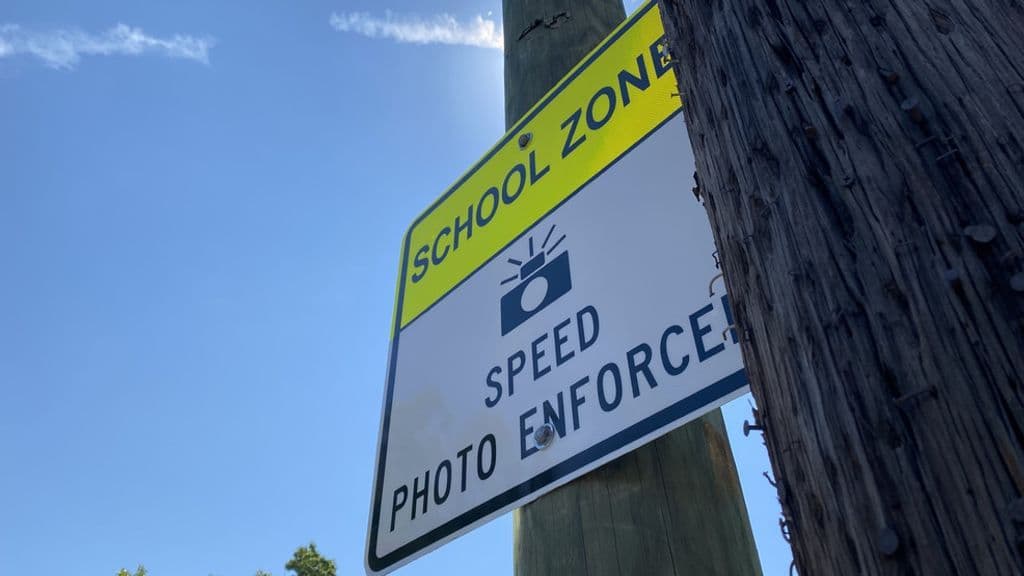
The Baltimore City Department of Transportation will implement two new school-zone speed cameras beginning on or about Monday, Jan. 5, 2026. The cameras will be placed on the 1000 to 1300 blocks of Argonne Drive, near Walter P. Carter Elementary/Middle and Lois T. Murray Elementary, and on the 1000 to 1100 blocks of Harford Avenue, near Johnston Square Elementary. School-zone cameras will operate Monday through Friday from 6:00 a.m. to 8:00 p.m. and will detect vehicles traveling 12 miles per hour or more over the posted limit.
Speed camera violations carry civil fines that begin at $40 for drivers recorded 12 to 15 mph over the posted limit and escalate to $425 for speeds 40 mph or more over the limit. The city frames these cameras as part of a broader traffic safety strategy for corridors adjacent to schools, where reducing vehicle speeds is intended to lower crash risk and improve pedestrian safety for students and families.
In the same announcement, the DOT identified a new 24-hour commercial vehicle height monitoring enforcement location on the 2600 block of Federal Street, in the 21213 ZIP code. Height enforcement at that location will use progressive penalties for repeat violations: an initial warning followed by fines of $125 for a subsequent violation and $250 for further repeat offenses. The city cited previous truck detours through area tunnels as part of the context for increasing height monitoring on local streets.
The immediate impact will be felt by local commuters, parents dropping off and picking up students, and commercial vehicle operators who use central city routes. Drivers who routinely travel these blocks should expect active enforcement during posted school hours and around the clock for the Federal Street height monitors. For commercial carriers, the 24-hour monitoring means routing decisions and load checks must account for Federal Street restrictions to avoid escalating fines.

Policy implications include renewed attention on enforcement as a tool for traffic safety and questions about transparency and program metrics. City officials will face expectations to publish data showing whether added cameras and height monitoring reduce speeds, crashes, and unsafe truck movements without disproportionate impacts on specific neighborhoods. Residents can request citation totals, collision statistics, and placement criteria from the Department of Transportation or their City Council representative to evaluate program effectiveness.
These steps mark a continued municipal effort to align enforcement resources with neighborhood safety priorities near schools and to address commercial vehicle impacts on Baltimore’s street network.
This article was produced by Prism’s automated news system from verified source data, official records, and press releases, then run through automated quality and moderation checks before publishing. The system is built and supervised by the people who set the standards it runs under. Read our full AI policy.
Did this article answer your question?