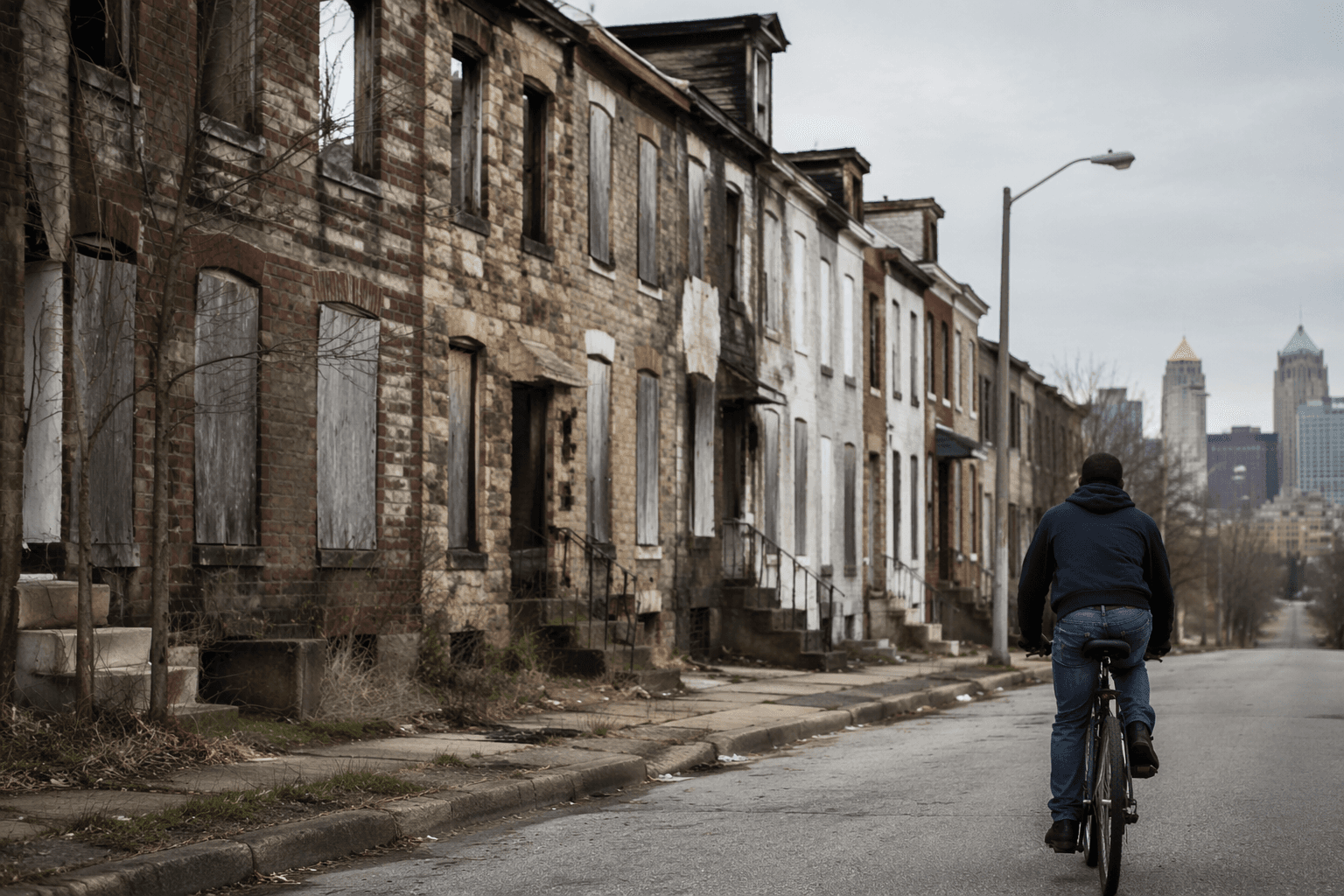
Baltimore City Council Moves to Ban Private Immigration Detention Centers
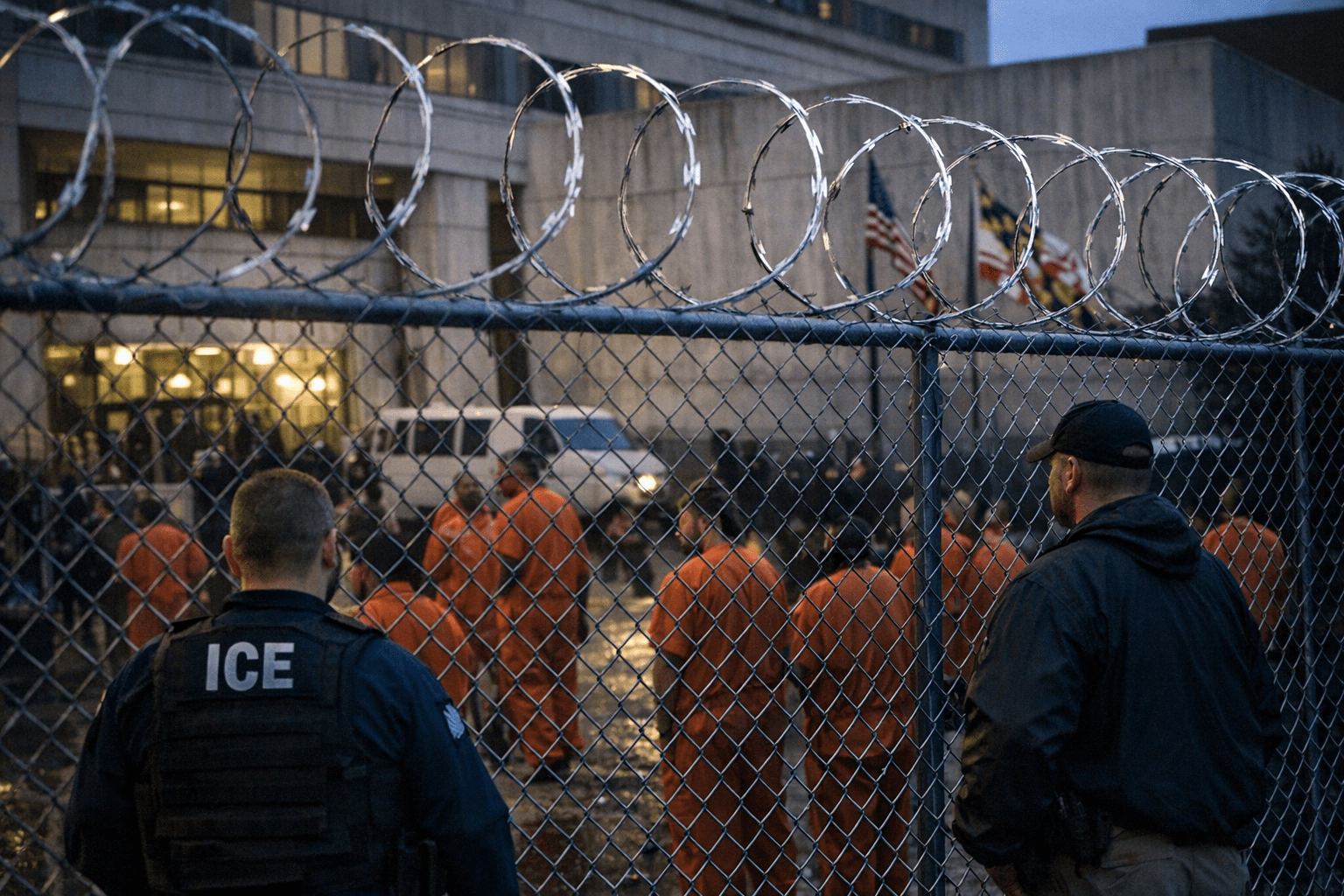
Baltimore's City Council introduced a bill Monday to ban private detention centers through zoning law, days after 200+ detainees vanished from the Fallon Federal Building.

Baltimore City Council members introduced legislation Monday evening to ban private detention facilities from operating anywhere within city limits, using the city's zoning code as the enforcement mechanism in a direct response to escalating federal immigration enforcement activity.
The bill, titled "Baltimore City Policies and Procedures - Safe Spaces and Communities," was introduced by Councilmembers Odette Ramos, Paris Gray, and Mark Parker, with Council President Zeke Cohen as co-sponsor. If passed, it would also require city agencies to develop plans limiting immigration enforcement activities in city-owned spaces, including schools, libraries, parks, offices, and public buildings.
Cohen framed the zoning strategy as the practical lever the city actually controls. "We could introduce a new category within the zoning code of private detention centers. Then, we would ban them in the city," he said. The approach targets privately operated facilities; Cohen acknowledged the legislation cannot reach federal property. "Our bill would not speak to that because it is a federal building," he said, referring to the George H. Fallon Federal Building, which houses an ICE field office and holding facility in downtown Baltimore.
The Fallon building sits at the center of the events that accelerated the council's push. On Monday morning, five members of Maryland's Congressional delegation, including U.S. Sen. Chris Van Hollen and U.S. Rep. Kweisi Mfume, made an unannounced visit to the ICE office there and found that more than 200 detainees who had been held in the facility had been moved. ICE had not responded to inquiries about where those detainees were taken.
Separately, ICE contracted KVG LLC, a private defense contractor, to open a detention center near Hagerstown in Williamsport. ICE vehicles were spotted at Baltimore's Symphony Garage Center before being relocated to that new facility, raising alarms among city officials about the infrastructure of private detention expanding in the region.
Cohen tied the bill directly to that expansion. "We know that when prisons are privatized, it creates a profit motive to incarcerate more people. We don't want that in the city of Baltimore," he said. "The private prison industrial complex doesn't just harm our immigrant neighbors. There should never be a profit motive to incarcerate people."
Ramos, who represents District 14, was blunter in characterizing the federal posture the legislation is meant to counter. "This racist, white supremacist, misogynist federal government is just not welcome here," she said. "We're taking these actions very clearly to send that strong message." She added that the issue carried personal weight: "This is very deeply personal for me, for members of my community to be separated from their families, ripped from the arms of their loved ones."
The council's move fits into a layered set of local protections Mayor Brandon Scott has been building. Scott signed an executive order last week banning ICE from using city-owned buildings or entering government offices without a judicial warrant. Baltimore Police officers are also restricted from asking about immigration status during routine encounters or detaining residents on immigration grounds.
Baltimore City is not moving in isolation. Howard County enacted a law banning private detention centers in early February following an emergency bill. Baltimore County passed a similar emergency measure in February after the U.S. General Services Administration leased office space in Cockeysville.
For the city bill, sources reported conflicting committee assignments: some indicated a Public Safety Committee hearing was scheduled for Tuesday, March 10 at 1 p.m., while others reported the bill was referred to the council's land use and transportation committee for its first reading. The discrepancy reflects the early stage of the legislation's path through the council.
"Baltimore cannot control what Washington does, but we can control what happens within our own city," Cohen said. "This legislation ensures that no private detention facility will be built on Baltimore soil to warehouse our neighbors.
This article was produced by Prism’s automated news system from verified source data, official records, and press releases, then run through automated quality and moderation checks before publishing. The system is built and supervised by the people who set the standards it runs under. Read our full AI policy.
Did this article answer your question?