Baltimore City Council Seeks One-Year Ban on Large Data Centers
Zeke Cohen wants to freeze large data center construction citywide for a year, citing soaring BGE bills and fears South Baltimore could "pay the price."
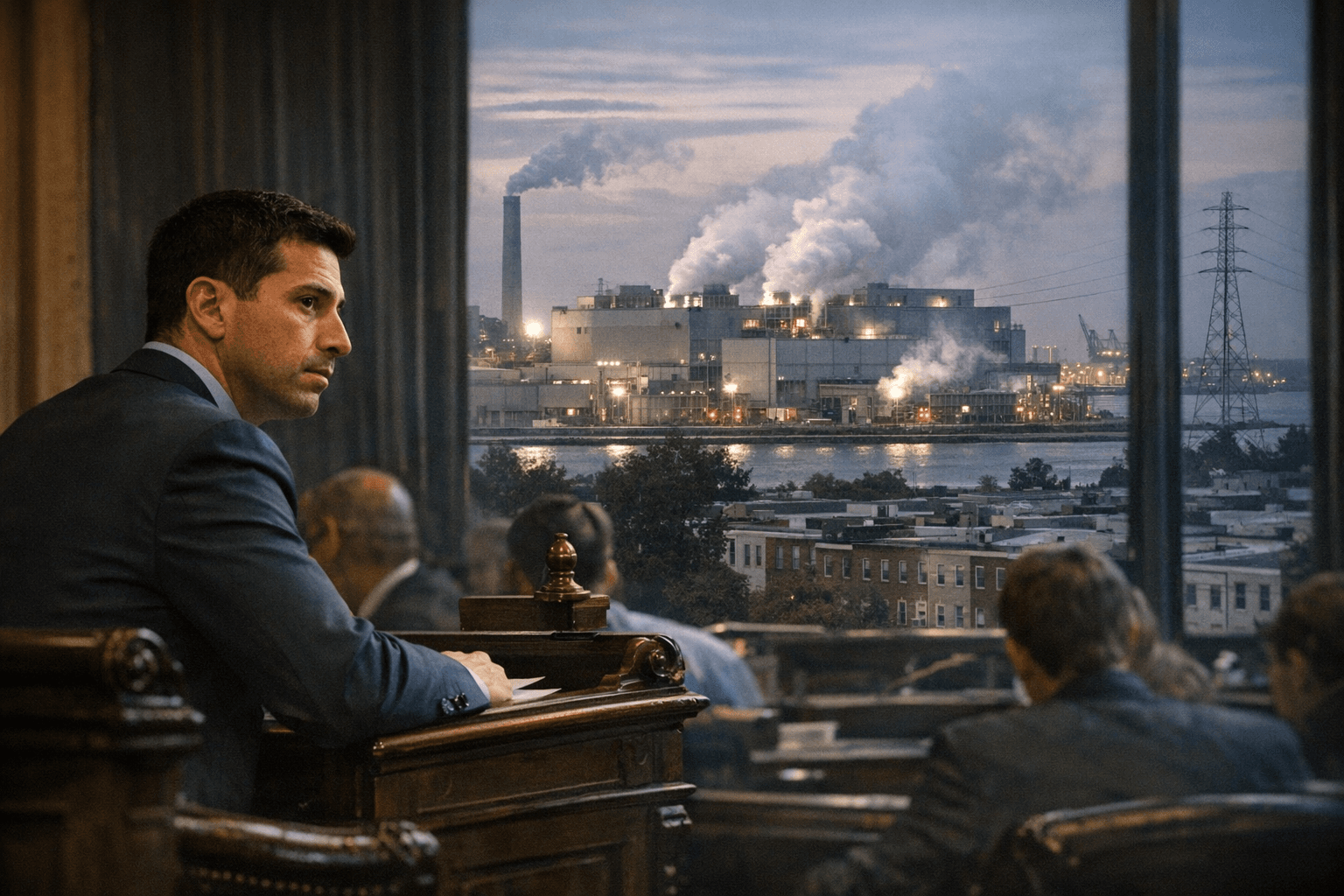
With BGE bills already straining household budgets across the city, Baltimore City Council President Zeke Cohen introduced legislation Monday to impose a one-year citywide moratorium on new data centers, saying residents should not be left absorbing costs and risks that belong to the industry.
The bill would classify any facility used for remote storage, processing, and distribution of data with an electrical demand of 10 megawatts or greater as a prohibited zoning use anywhere in Baltimore City for one year after enactment. The threshold effectively targets the largest commercial-scale operations, not small server rooms.
"I think it's appropriate and important that we take a timeout, we pay the bills, and their shareholders make bank," Cohen said. "That is why another data center is not needed."
The one-year pause is timed to align with a study the Maryland General Assembly authorized during its previous legislative session. Pending state legislation would also direct the Public Service Commission to establish a registration process for "large load customers," a category that includes data centers. Cohen said the city wants those two tracks completed before Baltimore commits to any regulatory framework. "I think it's really important that these large, load-bearing customers pay their own way," he said.
The moratorium proposal comes after the Maryland Office of the People's Council called for an investigation into a BGE transmission line project at the Baltimore Peninsula. Council members have said they are concerned a data center could be sited there, putting South Baltimore on the hook for the consequences. "City Council says Baltimore should not be the guinea pig for this project," as one summary of council remarks put it.
Phylicia Porter, a Democratic member representing South Baltimore, said the stakes extend beyond the current moment. "I intend to make sure that we not only focus on the infrastructure and the economy, but we also focus on not only just the health of our people now, but also the health of our people later," Porter said.
Matt Krosche of Hampden was blunter: "I think there are too many of them. I think the BGE costs are already pretty high."
Environmental concerns have also entered the conversation. Celine Brundridge, a Ridgely's Delight resident, pointed to the water demands of large data centers and their downstream effects. "I know that data centers tend to use up a lot of water, which makes it harder for local residents as well as also warming up the temperatures in the water, which is not good for the ecological systems in the Chesapeake Bay," Brundridge said.
Cohen framed the moratorium as a pause for deliberation, not a permanent door closing. "While we're just hearing rumors about desire for data centers, I want to make clear that for one year, I want us to pause, I want us to really think about the impacts on human health, the environment and on affordability," he said. "Then, we can revisit the conversation."
Before a final vote, the Council plans to hold an informational hearing on community impacts. During the moratorium year, lawmakers intend to evaluate how Baltimore should regulate data centers going forward, with the stated goal of ensuring any future development is guided by policies that protect residents and maintain the integrity of the city's infrastructure.
This article was produced by Prism’s automated news system from verified source data, official records, and press releases, then run through automated quality and moderation checks before publishing. The system is built and supervised by the people who set the standards it runs under. Read our full AI policy.
Did this article answer your question?