Baltimore Complaints Filed Over No Virtual Testimony at Zoning Hearing
Residents filed multiple complaints with the state after City Councilman Ryan Dorsey, chairing a December 11 committee hearing on Bill 25 0066, declined to allow virtual public testimony. The decision has raised legal and accessibility concerns, intensified debate over Mayor Brandon Scott's upzoning package, and prompted calls to shift the bills to another committee.
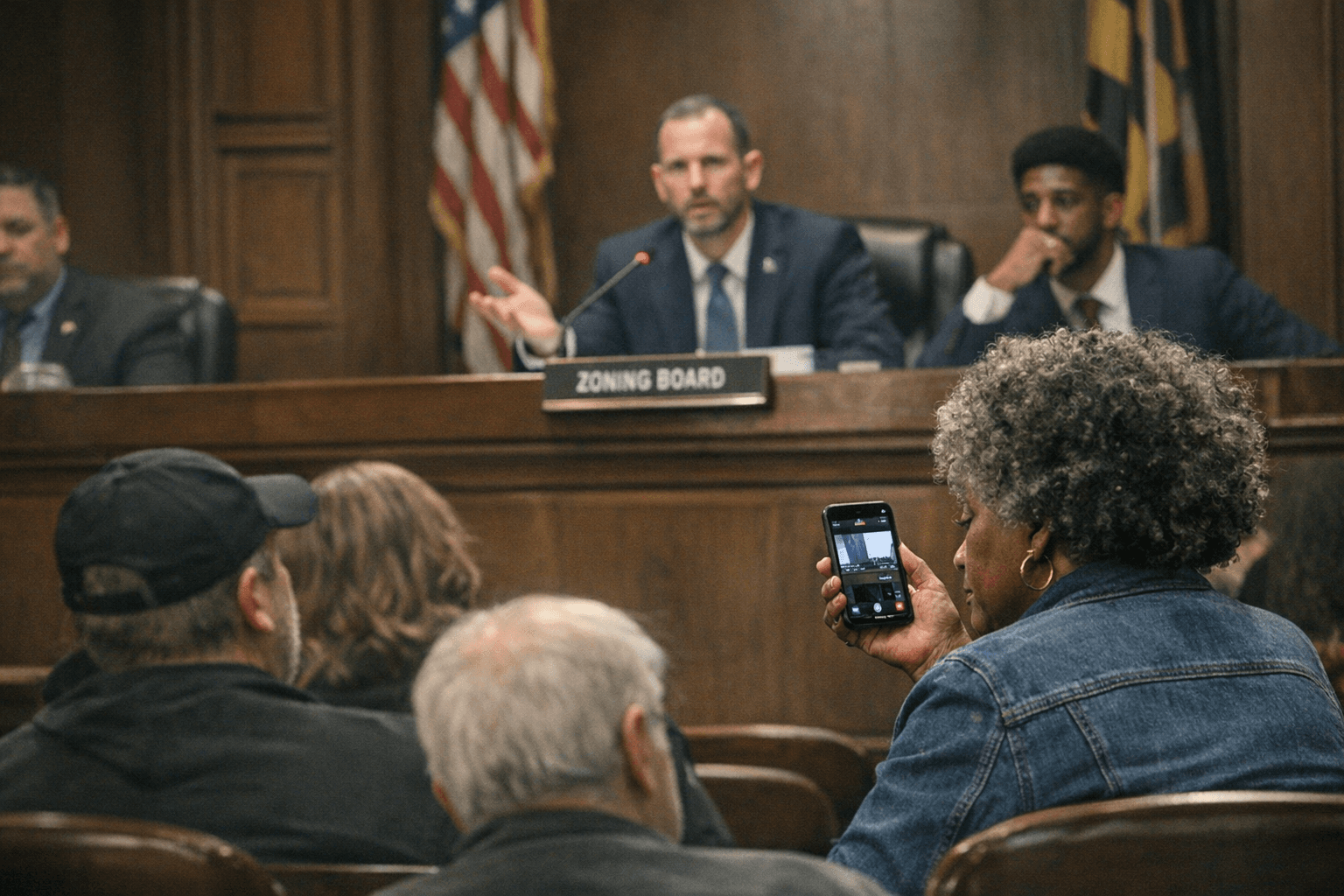
City residents and advocacy groups escalated a dispute over Baltimore zoning reform after a December 11 committee hearing in which City Councilman Ryan Dorsey, acting as chairman, initially ordered that no virtual public testimony would be taken. The Maryland Office of the Attorney General Civil Rights Division has agreed to review multiple complaints stemming from the hearing, including allegations that the choice may have violated the Maryland Open Meetings Act and discriminated against people with disabilities.
The hearing drew a standing room only crowd to Council Chambers and more than 80 online viewers. When the announcement that virtual testimony would not be accepted surfaced, the in person audience reacted with boos and jeers, and Dorsey later relented to allow in person testimony. He did not, however, permit remote testimony, leaving several residents unable to participate. “I felt truly disgusted,” said West Baltimore resident Mary Hughes, one of those who had hoped to testify. Reservoir Hill resident Keondra Prier has filed a complaint citing potential legal violations and saying the action was unfair to disabled people.
Seventy three year old community leader Deb O’Neill described repeated attempts to participate online that yielded no chance to speak. “I’d pre registered,” she said. “When I sent a note to confirm they’d received my registration and was told no testimony would be taken, I couldn’t believe it.” She added, “I kept putting stuff in the chat. I told them, ‘I’m handicapped. I am pretty severely mobility impaired with arthritis.’” Others who had hoped to testify online included Nichole' Gatewood, Mary Hughes and Keondra Prier.
Dorsey has been a prominent advocate for Mayor Brandon Scott’s density promoting upzoning legislation and a focal point for opposition, including Black community leaders who dispute his framing of the bills as promoting racial equity. The contested package begins with Bill 25 0066 and has provoked criticism that the process is rushed and that constituents were not adequately informed. Supporters counter that the effort represents administrative efficiency. “It’s not rushed. It’s efficiency,” said Rebecca Witt, former Zoning Board executive director.
The controversy has prompted at least one council member to urge procedural change. Councilman James Torrence asked Council President Zeke Cohen to consider moving the bills out of Dorsey’s Land Use and Transportation Committee into the Housing and Economic Development Committee. For Baltimore residents, the dispute raises immediate questions about access to civic processes, obligations to accommodate disabled participants, and whether major zoning changes are proceeding with sufficient public input and legal safeguard.
This article was produced by Prism’s automated news system from verified source data, official records, and press releases, then run through automated quality and moderation checks before publishing. The system is built and supervised by the people who set the standards it runs under. Read our full AI policy.
Did this article answer your question?