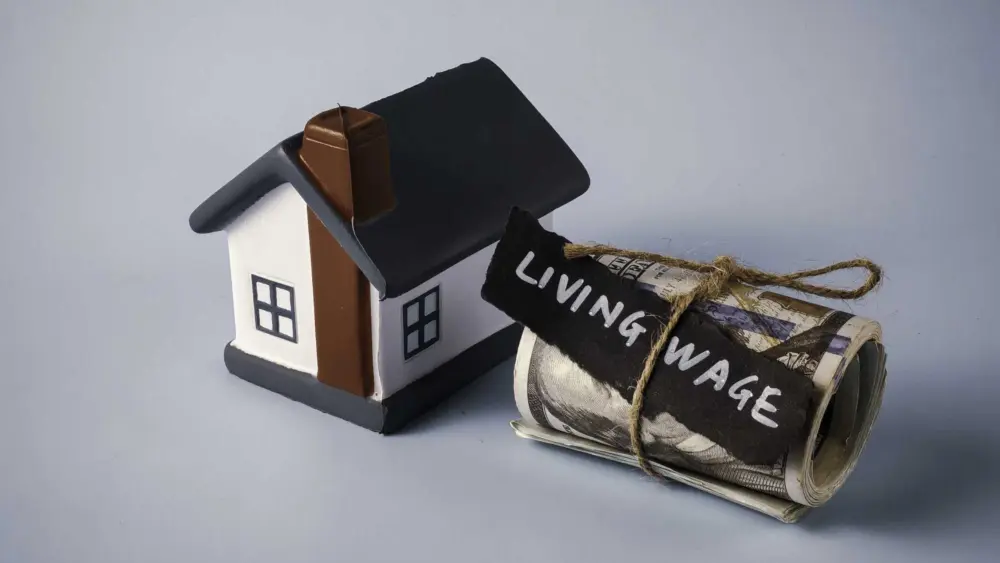
Baltimore council advances property tax relief plan, trims cap to 5%
Council members cut the Homestead cap to 5 percent, a move that could lower homeowner bills starting July 1 and set up more cuts through 2035.

Baltimore homeowners could start seeing smaller tax bills as early as July 1, while City Council members weigh how far the city can cut without squeezing schools, sanitation and other services. Lawmakers have trimmed Mayor Brandon Scott’s Homestead Property Tax Credit cap proposal to 5 percent, down from the 6 percent the mayor first sought, after warnings about lost revenue and which households might not feel the full benefit. The change is meant to help thousands of owner-occupants, but it also locks Baltimore into a longer tax-cut path through fiscal 2035.
The city says the current effective homeowner rate is $2.048 per $100 of assessed value, compared with the city’s standard real property tax rate of $2.248 for fiscal 2025. Under the strategy, homeowners would get a 1-cent reduction on July 1, 2026, then another 4 cents the following July, bringing the rate to $1.99. That works out to about $58 a year in savings for every $100,000 of assessed value once the full cut is in place, or about $116 for a home assessed at $200,000.

Scott introduced the property tax relief strategy in February 2026, with legislation slated for the February 9 council meeting to take effect for the FY 2027 tax season. The city says the plan is built into its 10-Year Financial Plan and includes continued 1-cent annual reductions through fiscal year 2035. City officials describe the target as the lowest homeowner tax rate in Baltimore in 50 years.

The benefit will not reach every household in the same way. City leaders have said the lower rate should offset the Homestead credit adjustment for most residents, but they also acknowledge that homeowners who have not enrolled in available state and local credits may leave money on the table. The city says the plan is designed to protect homeowners through two full assessment cycles, though some homes with extremely rapid growth could eventually pay slightly more after many years.
The broader package also reaches into Baltimore’s tax-sale system. The city says it will raise the minimum bid in tax sales to assessed value and create payment plans for residents facing tax sale, part of an agreement with Maryland Legal Aid. That shift comes against a backdrop of vacancy and blight, with the city’s vacant building notices dataset listing 11,661 records.
The political stakes are familiar in Baltimore, where property taxes have long been a flashpoint. In 2024, an outside-backed ballot measure to slash the city’s tax rate was blocked after courts and elections officials ruled that setting a specific rate is City Council’s job under state law. WYPR reported later that year that Baltimore’s real property tax rate was more than double anywhere else in Maryland, a reality that has made affordability and competitiveness central to the debate.
This article was produced by Prism’s automated news system from verified source data, official records, and press releases, then run through automated quality and moderation checks before publishing. The system is built and supervised by the people who set the standards it runs under. Read our full AI policy.
Did this article answer your question?