Baltimore Council Members Propose Charter Amendments to Reshape City Governance Powers
Isabel Cumming found fraudulent invoices and a data breach in a $694K city program, but got 200+ pages of records redacted. Now five council members want voters to make that obstruction permanently impossible.
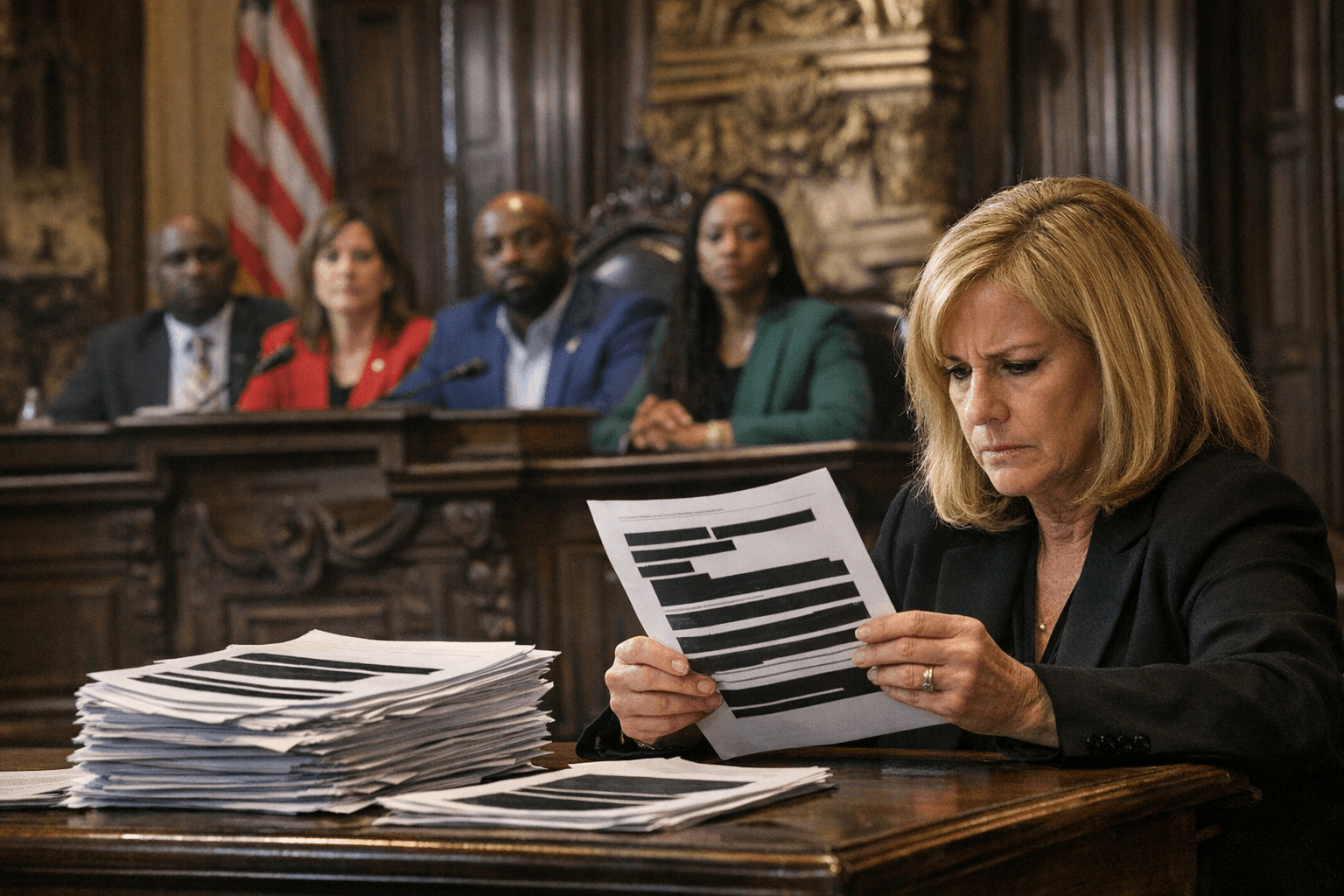
Three weeks after Inspector General Isabel Cumming referred fraudulent billing inside a city-funded anti-violence program to law enforcement and disclosed that a data breach had exposed the names of more than 700 Baltimore youth, five City Council members introduced a package of charter amendments Monday aimed at making the institutional failure that hampered her investigation structurally impossible.
The test case is SideStep, a youth diversion program run through the Mayor's Office of Neighborhood Safety and Engagement (MONSE) in Baltimore's Western District. Cumming's investigation found multiple fraudulent invoices from at least two community-based organizations paid a combined $694,000, along with evidence that a city employee's relative received the sensitive personal records of program participants through a personal email account. But the OIG said its review was constrained from the start: on January 16, the city's Law Department returned more than 200 pages of financial records in redacted form, and the office has been fighting for that information ever since. Cumming filed a lawsuit seeking a court order to enforce her subpoena.
Councilman Mark Conway, who introduced the centerpiece proposal Monday, said the redactions left a direct gap in accountability. "The inspector general has said that there may be more fraud, but she can't confirm it, because the city has redacted more than 200 documents that she requested," Conway said. "Considering the City's history, it is profoundly unwise for any administration to resist scrutiny into how the people's money is being spent. Every public dollar requires public accountability."
Conway's bill would designate the OIG as a co-custodian of city agency records. Under the current charter, the inspector general must route document requests through the city solicitor, effectively giving the mayor's office veto power over what investigators can access. A co-custodian designation would remove that bottleneck permanently. Cumming, whose office has handled nearly 5,000 hotline complaints and more than 200 investigations across three mayoral administrations, told the council Monday the constancy of her office's work was precisely the point. "During all those changes, the office has performed the same work with the same access, serving as a constant for this city," she said.
The co-custodian bill is the highest-profile piece of a four-amendment package. Councilman Bill Henry sponsors a proposal to lower the veto override threshold from three-quarters of the council to two-thirds, bringing Baltimore in line with most legislative bodies. A second amendment would move the mayor's budget submission deadline from mid-May to mid-April, giving the council an additional month to scrutinize spending. A third, co-sponsored by Henry alongside Councilmembers Ryan Dorsey, Leon Pinkett III and Kristerfer Burnett, would create a formal mechanism to remove the mayor, closing a gap that has existed in the charter even as similar processes apply to the comptroller, council president and individual members.
The effort is already encountering resistance. Council President Zeke Cohen raised concerns about the constitutionality and logistics of several proposals, and allies of Mayor Brandon Scott have warned that certain amendments could upset the balance of power or invite legal challenges.
Any amendment approved by the council goes to Baltimore voters on the November 2026 ballot as a standalone yes-or-no question. A yes vote on the co-custodian amendment means no future administration can use the city's Law Department as a gatekeeper when the OIG investigates fraud. A yes on the earlier budget deadline shifts fiscal leverage toward the council before the spending plan is locked in. Committee hearings and public testimony sessions will run through spring, and legal review is expected before any measure reaches a final council vote.
Here is the final formatted article:
SUMMARY: Isabel Cumming found fraud and a data breach in a $694K city program, then got 200+ pages of records redacted. Five council members want voters to make that obstruction permanently impossible.
CONTENT:
Three weeks after Inspector General Isabel Cumming referred fraudulent billing inside a city-funded anti-violence program to law enforcement and disclosed that a data breach had exposed the names of more than 700 Baltimore youth, five City Council members introduced a package of charter amendments Monday aimed at making the institutional failure that hampered her investigation structurally impossible.
The test case is SideStep, a youth diversion program run through the Mayor's Office of Neighborhood Safety and Engagement in Baltimore's Western District. Cumming's investigation found multiple fraudulent invoices from at least two community-based organizations paid a combined $694,000, along with evidence that a city employee's relative received sensitive personal records of program participants through a personal email account. But the OIG said its review was constrained from the start: on January 16, the city's Law Department returned more than 200 pages of financial records heavily redacted, and the office had been fighting for those documents ever since, ultimately filing a lawsuit to enforce its subpoena.
Councilman Mark Conway, who introduced the centerpiece proposal Monday, framed the redactions as the core accountability failure. "The inspector general has said that there may be more fraud, but she can't confirm it, because the city has redacted more than 200 documents that she requested," Conway said. "Considering the City's history, it is profoundly unwise for any administration to resist scrutiny into how the people's money is being spent. Every public dollar requires public accountability."
Conway's bill would designate the OIG as a co-custodian of city agency records. Under the current charter, the inspector general must route document requests through the city solicitor, giving the mayor's office effective veto power over what investigators can access. A co-custodian designation would remove that bottleneck. Cumming, whose office has handled nearly 5,000 hotline complaints and more than 200 investigations since 2018, told the council the constancy of her office's work was precisely the point. "In those same eight years we have had three different mayors, four different council presidents, four different solicitors," she said. "During all those changes, the office has performed the same work with the same access, serving as a constant for this city."
The co-custodian bill anchors a four-amendment package. Councilman Bill Henry sponsors a proposal to lower the veto override threshold from three-quarters of the council to two-thirds, bringing Baltimore in line with most legislative bodies. A second amendment would move the mayor's budget submission deadline from mid-May to mid-April, giving the council an additional month to scrutinize spending. A third, co-sponsored by Henry, Councilmembers Ryan Dorsey, Leon Pinkett III and Kristerfer Burnett, would create a formal mechanism to remove the mayor, closing a gap that currently exempts the chief executive from the removal processes that apply to the comptroller, council president and individual council members.
The effort faces resistance. Council President Zeke Cohen raised concerns about the constitutionality and logistics of several proposals, and allies of Mayor Brandon Scott warned that certain amendments could upset the balance of power or invite legal challenges.
Any amendment approved by the council lands on the November 2026 ballot as a standalone yes-or-no question. A yes vote on co-custodian status means no future administration can use the city's Law Department as a gatekeeper when the OIG investigates fraud. A yes on the earlier budget deadline shifts fiscal leverage toward the council before spending is locked in. Committee hearings and public testimony sessions will run through spring, with legal review expected before any measure reaches a final council vote.
This article was produced by Prism’s automated news system from verified source data, official records, and press releases, then run through automated quality and moderation checks before publishing. The system is built and supervised by the people who set the standards it runs under. Read our full AI policy.
Did this article answer your question?