Baltimore County Seeks Tougher Pet Protection Laws After Hoarding Case
A Halethorpe woman got some of her pets back despite 328 animal cruelty charges. Now Baltimore County wants laws the city doesn't have.
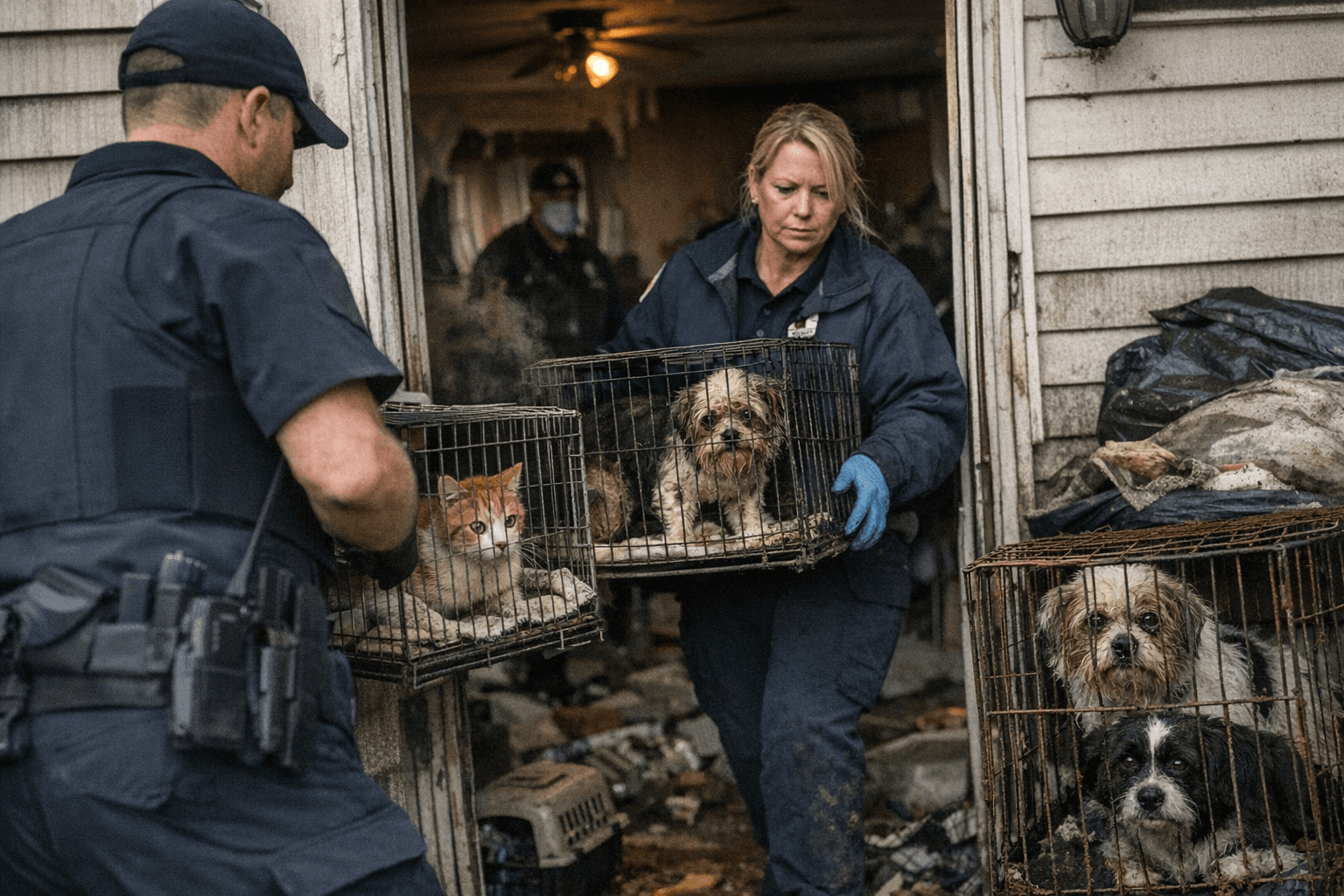
BARCS, Baltimore City's only open-admission shelter, absorbs more than 30 surrendered animals per day while operating with 40 fewer staff than its own 120-person goal. That chronic strain is part of why shelter and enforcement officials across the region are watching a three-bill animal welfare package Baltimore County introduced Monday after a Halethorpe woman managed to reacquire pets while on probation for 328 counts of animal cruelty.
Kimberly Klein, 54, had 82 animals, including two pigs in her Francis Street basement, removed from her home by county officials roughly a year ago. Those charges included 80 felony counts of intentional torture. A judge sentenced her to probation and permitted her to keep four court-approved animals. While on that probation, officials returned in February and found 14 more dogs, 21 birds, several reptiles and a cat at her home. Through a legal loophole, she was able to reclaim some of those animals before county leaders intervened.
County Executive Kathy Klausmeier announced the legislative response at a news conference in Towson on April 6. The three bills, co-sponsored by County Council Chair Mike Ertel and Councilmen Julian Jones, Izzy Patoka, and David Marks, would establish a "reckless animal owner" designation for anyone who commits two or more animal welfare violations within 24 months. That designation triggers a four-year ownership ban, immediate license revocation, and seizure of remaining animals. A second bill cuts the appeal window in animal cruelty cases from 30 days to 10, shortening the time animals spend in county shelters at taxpayer expense. A third creates a new "potentially dangerous" animal category designed to allow earlier intervention before neglect reaches crisis scale.
"Too often, cruelty toward or neglect of pets can go unnoticed and unreported," Klausmeier said. "I want to make sure that we're doing everything we can to protect them, ensure they are in safe and caring homes, and support responsible pet owners."
The legislation highlights a resource gap that crosses jurisdiction lines. Baltimore County's animal services budget is $4.3 million for a population of 854,000 residents, trailing the $4.9 million Anne Arundel County spends for roughly 600,000. The county's nine animal patrol officers cannot enter a residence without police assistance, and residents are not required to cooperate.
Baltimore City operates under a similar structure. The Office of Animal Control enforces city and state codes and transfers seized animals to BARCS, but the city carries no reckless-owner designation, no 10-day appeals cap, and no tiered classification for potentially dangerous animals. Where the County's bills attempt to close those gaps, City residents dealing with repeat-offender neighbors have no equivalent framework.
Klein's original cruelty case was reopened in Baltimore County Circuit Court in March and remains ongoing. Jones said the legislative package had been in development for more than a year, with the Klein case accelerating its urgency. BARCS, meanwhile, is already coordinating with Baltimore County Animal Services on a regional multi-shelter adoption event, a collaboration that underscores how tightly the two systems are linked, even when their laws are not.
This article was produced by Prism’s automated news system from verified source data, official records, and press releases, then run through automated quality and moderation checks before publishing. The system is built and supervised by the people who set the standards it runs under. Read our full AI policy.
Did this article answer your question?