Baltimore Faces Property Assessment Increases, Average Values Up 12.7 Percent
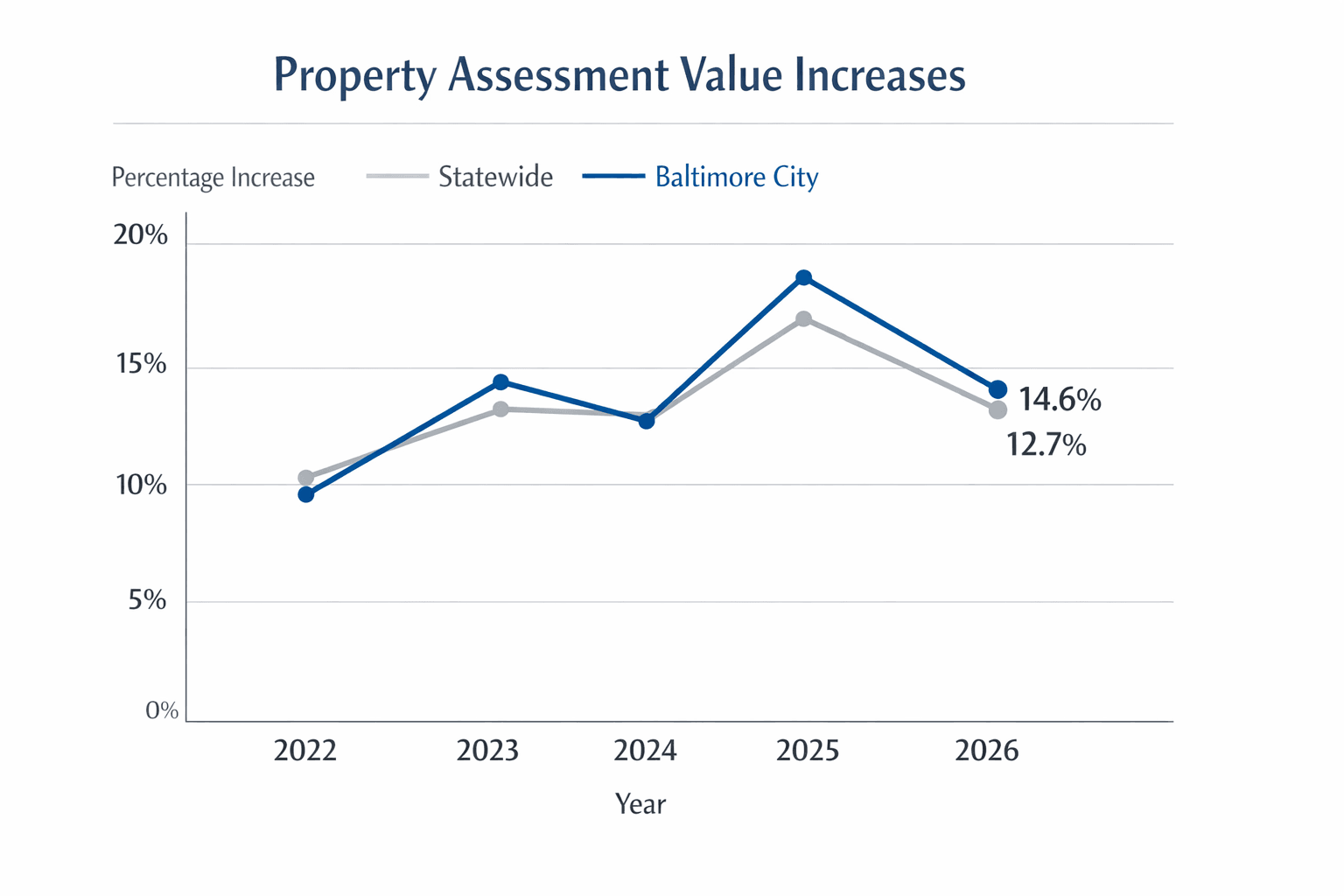
State figures released December 30, 2025 showed reassessments for the 2026 tax year will raise assessed values on average 12.7 percent statewide, a change that includes Baltimore City and affects more than 789,000 properties across Maryland. The increase signals potential higher property tax bills for local homeowners if tax rates remain unchanged, and it will shape municipal budget decisions and political debate in the months ahead.

State officials released data on December 30 showing that properties in the current reassessment group will see assessed values rise by an average of 12.7 percent for the 2026 tax year. The reassessment covered 789,178 properties statewide, and every county including Baltimore City recorded increases. The statewide average is smaller than the jump seen in 2025, but the scale of the reassessment still represents a significant shift in taxable bases for local governments and homeowners.
For Baltimore City residents the change matters immediately. Assessed value increases do not automatically translate into higher tax bills, but they change the base on which municipal and school tax rates are applied. If local tax rates remain at current levels, homeowners with rising assessments can expect larger bills. City officials will face choices about whether to adjust rates to offset assessment growth, a decision that affects revenue for services from public safety to neighborhood maintenance.
Taxpayers were advised to review their reassessment notices and appeal if they believe valuations are incorrect. The appeals process is a critical institutional check on assessment accuracy, and participation can affect both individual outcomes and broader perceptions of fairness in property taxation. Transparent and accessible communications from the city and the state assessment authority will be important to ensure residents understand deadlines and documentation requirements.
The reassessment also has political implications. Changes in taxable values tend to shape budget debates and can influence voter priorities in local elections. Elected officials who set tax rates and oversee city spending will be accountable to residents for how they respond to the increased assessments. Neighborhoods with rapidly rising values may press for property tax relief, while areas seeing smaller changes will assess how resources are allocated across the city.
From a policy perspective, the reassessment highlights the tension between stable revenue flows and tax equity. Higher assessed values expand the revenue base and can ease pressure to raise rates, but they can also increase bills for long term residents on fixed incomes unless targeted relief measures are applied. Civic engagement will determine how these trade offs are resolved. Residents should examine their notices, seek guidance on appeals if needed, and bring concerns to their elected representatives as the city considers rate and budget options for 2026.
This article was produced by Prism’s automated news system from verified source data, official records, and press releases, then run through automated quality and moderation checks before publishing. The system is built and supervised by the people who set the standards it runs under. Read our full AI policy.
Did this article answer your question?