Baltimore hosts national conference on AI, government innovation and long-term investment
Baltimore’s big AI and investment conference delivered a $100 million jobs pledge, but most of the promised gains are aimed far beyond the city.
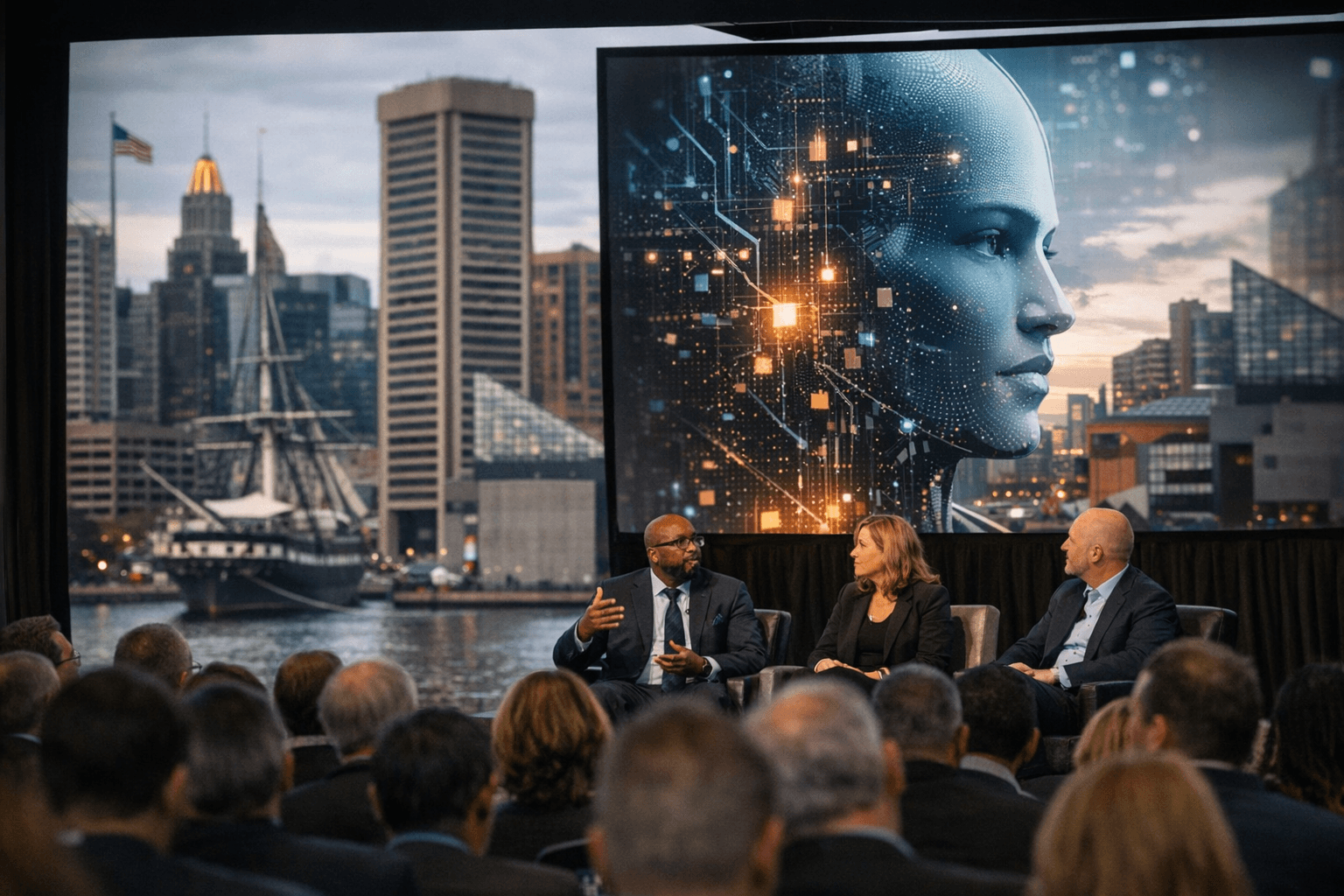
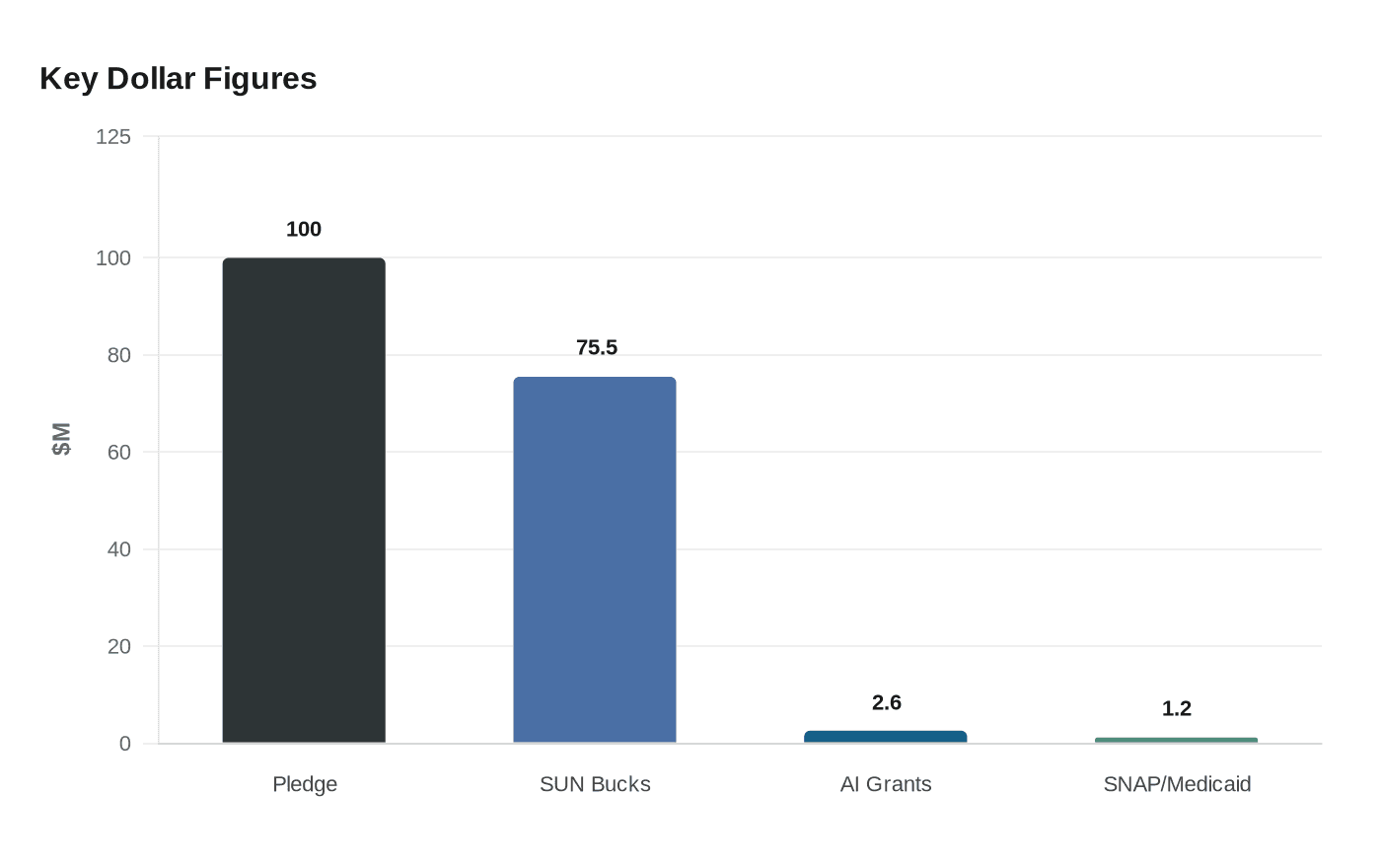
Baltimore's Big Bets for America conference produced a $100 million pledge for jobs, but most of the promised gains were aimed far beyond city limits. The Rockefeller Foundation used the April 21 gathering to launch Good Jobs for America, a three-year strategy it says could help create about 1.6 million additional good jobs nationally and reach 10 million to 20 million people across roughly 250 distressed communities.
For Baltimore, the immediate payoff was visibility and access. More than 250 leaders from policy, philanthropy, the private sector and nonprofits came to the city, with Maryland Gov. Wes Moore, Baltimore Mayor Brandon Scott and Cleveland Mayor Justin Bibb among the named participants. The foundation also put several Baltimore institutions inside the effort itself, naming the Abell Foundation, Baltimore Community Foundation, Baltimore Homecoming, Greater Baltimore Committee and The Harry and Jeanette Weinberg Foundation to the steering committee. Greater Washington Partnership, Baltimore Development Corporation and Johns Hopkins University were listed as strategic partners.
The event was framed around what cities and states can do with the country moving toward its 250th anniversary, but the strongest local policy thread was artificial intelligence. Moore has made Maryland one of the more active state testers of AI in government, and the conference highlighted that work in a city where residents and businesses still run into slow permits, paperwork and service delays. State officials said Maryland is already using AI in SUN Bucks and in efforts to improve the permitting process.
That matters because SUN Bucks is not an abstract pilot. Maryland’s Department of Human Services says the program helps school-aged children who receive free or reduced-price meals buy groceries during summer break, with eligible families getting $40 for June, July and August, or $120 per eligible student. State officials also said Maryland issued a record $75.5 million in SUN Bucks benefits in summer 2025, and that the program now includes a chatbot to help families.
The state has also been building a broader AI agenda. In November 2025, Moore announced a partnership with Anthropic, Percepta and The Rockefeller Foundation to modernize government, expand housing access and tackle child poverty. In December, Maryland said it had won more than $2.6 million in AI grants over two years, including $1.2 million to develop tools that streamline work verification for SNAP and Medicaid. The state said its applications came from a pool of more than 400 submissions from 45 states, and Maryland took two of the seven awards.
The biggest local question now is whether Baltimore gets more than prestige from hosting a national convening. The conference did not deliver a city-specific development deal, but it did put Baltimore institutions, state leaders and national funders in the same room around the kinds of investments that shape permits, hiring, benefits delivery and neighborhood economic activity.
This article was produced by Prism’s automated news system from verified source data, official records, and press releases, then run through automated quality and moderation checks before publishing. The system is built and supervised by the people who set the standards it runs under. Read our full AI policy.
Did this article answer your question?