Baltimore Launches Regional Water Governance Work Group to Reform Systems
Maryland’s Department of the Environment announced on December 22, 2025 the creation of a 13 member Baltimore Regional Water Governance Work Group to evaluate governance for the region’s drinking water and wastewater systems, a move that could reshape how services and rates are managed for more than a million residents. The group, chaired by Baltimore City Comptroller Bill Henry with Delegate Dana Stein as vice chair, will study options to improve efficiency, affordability, accountability and regional representation for surrounding counties and ratepayers.
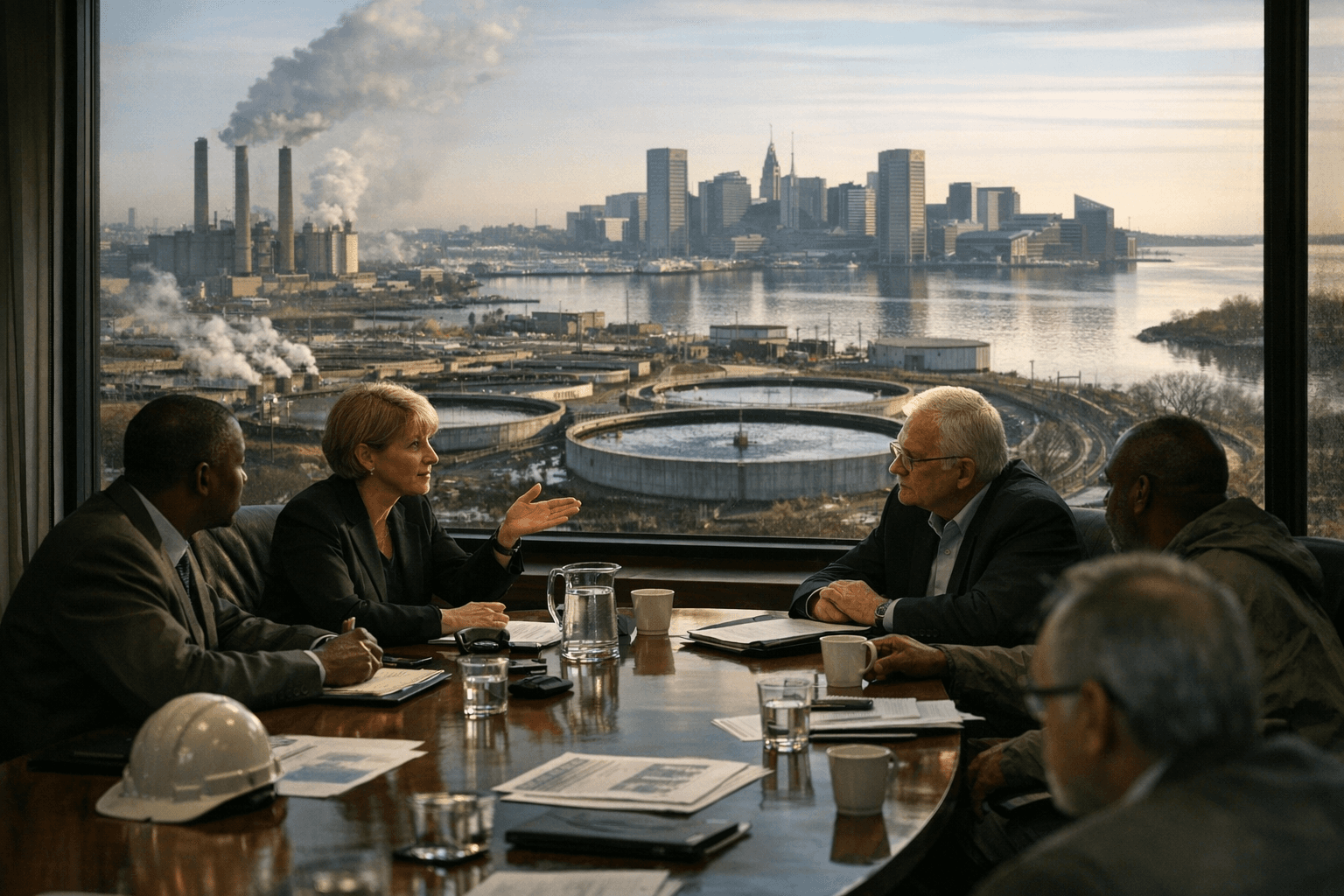
State officials announced the formation of a 13 member Baltimore Regional Water Governance Work Group on December 22, 2025 to examine potential governance models for the region’s drinking water and wastewater systems. The work group will focus on options to increase efficiency, reduce costs, strengthen accountability and give surrounding counties a clearer voice in decisions that affect ratepayers across the watershed.
The panel is chaired by Baltimore City Comptroller Bill Henry and vice chaired by Delegate Dana Stein. Appointees represent a mix of elected officials, county and city public works leaders, union representatives and water industry experts. Baltimore City currently owns and operates the regional water and wastewater systems under interjurisdictional agreements, a structure the work group will scrutinize as it weighs practical reforms.
The systems serve roughly 1.8 million residents, making governance decisions consequential for a broad population that includes Baltimore City households and residents of neighboring counties. Possible changes could affect rate structures, investment priorities for aging infrastructure, emergency response protocols and the balance of local and regional decision making. The work group’s deliberations will therefore have direct implications for service reliability and affordability for Baltimore residents.
The group scheduled its first meeting for January 7, 2026 in City Council Chambers. That meeting will be streamed on CharmTV, allowing residents and municipal stakeholders to observe the opening discussions and the framing of study questions. The Department of the Environment emphasized that the work group’s charge is to recommend practical, implementable governance reforms rather than pursue abstract policy debates.
Regional utility governance is a common challenge in cities worldwide where infrastructure spans multiple jurisdictions. For Baltimore, the outcomes could determine how investments are financed, how ratepayer burdens are shared and how accountability is enforced across municipal and county lines. Residents should monitor the work group’s meetings and recommendations as they could lead to concrete changes in service and costs in the years ahead.
This article was produced by Prism’s automated news system from verified source data, official records, and press releases, then run through automated quality and moderation checks before publishing. The system is built and supervised by the people who set the standards it runs under. Read our full AI policy.
Did this article answer your question?