Baltimore leaders debate long-delayed reform of Board of Estimates
Baltimore may wait until 2028 to reform a board that controls contracts and budgets, even as critics say the mayor still holds three of five votes.
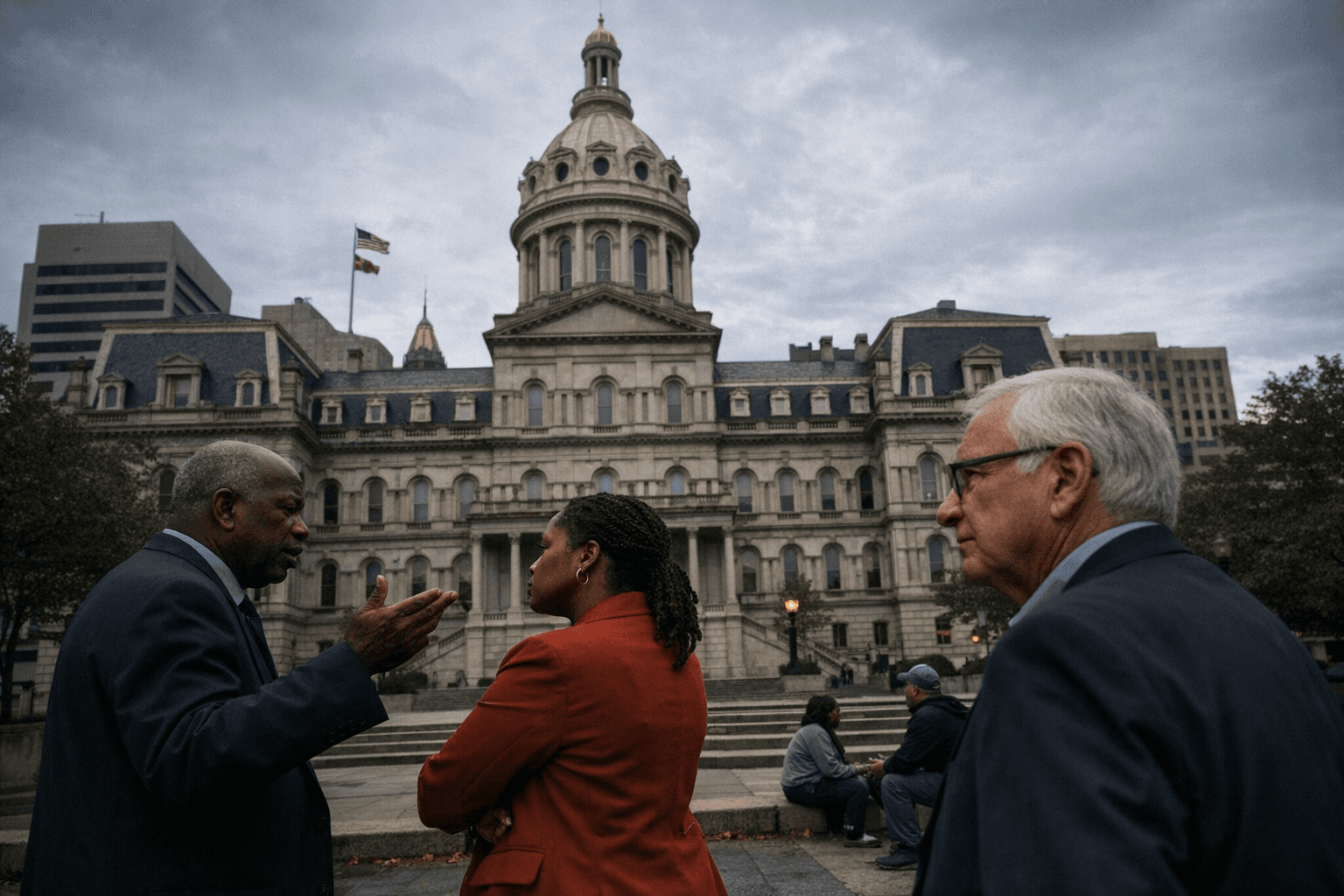
Baltimore’s long-running fight over who controls city spending has landed back on the table, but reform may still be years away. Members of the City Council’s Charter Review Special Committee want more time before changing the Board of Estimates, while critics say another delay would leave the current power structure intact through another election cycle.
That matters because the Board of Estimates does far more than sign off on routine paperwork. Under the city charter, it formulates and executes Baltimore’s fiscal policy, adopts the annual Ordinance of Estimates, and oversees contracts, purchasing, and audits. The board has five ex officio members: the mayor, comptroller, City Council president, city solicitor, and director of public works. Because the mayor sits on the board and appoints two members, the mayor effectively controls three of the five votes.

Former City Council Member Carl Stokes, who has pushed for reform for years, has argued that elected leaders keep stepping back when they have a chance to reduce the mayor’s dominance over spending. He sponsored reform efforts in 1994 and again in 2015, only to see Mayor Stephanie Rawlings-Blake veto charter bills #12-0113 and #15-0479 on May 6, 2016 after the council did not override her. The result is a governance structure created by the 1898 municipal charter and first put into operation at a Board of Estimates meeting on March 20, 1900.
The current debate is not limited to history. In 2023, then-Council President Brandon Scott proposed removing the two mayoral appointees from the board. In 2025, Comptroller Bill Henry said he had not approved a city employee’s travel expenses in four years, blaming structural problems with the board. Those episodes reinforced the argument that the board still shapes day-to-day decisions at City Hall, not just headline budget votes.
Supporters of waiting say the city should study reform longer and bring a proposal to voters in 2028. Opponents say Baltimore has already spent decades debating the same imbalance while contracts are awarded, audits are reviewed, and spending authority remains concentrated in the mayor’s office. For residents watching budget fights and major procurement decisions, the question is not abstract: it is who gets to decide how public money is spent now, and whether Baltimore is willing to change that before another round of City Hall politics locks it in again.
This article was produced by Prism’s automated news system from verified source data, official records, and press releases, then run through automated quality and moderation checks before publishing. The system is built and supervised by the people who set the standards it runs under. Read our full AI policy.
Did this article answer your question?