Baltimore leaders propose independent water utility charter amendment
Baltimore leaders want voters to decide whether the city’s water system should break from DPW and run as its own agency.

Baltimore leaders want to pull the city’s water system out of the Department of Public Works and give it its own independent municipal structure, a shift they say would bring sharper accountability to a utility that serves about 1.8 million people across the region.
Mayor Brandon Scott, City Council President Zeke Cohen and Comptroller Bill Henry announced the plan Friday, with Councilmembers Odette Ramos and Ryan Dorsey set to sponsor the charter amendment. If the measure clears the city process and reaches voters in 2026, Baltimore residents would be asked whether the Bureau of Water and Wastewater should remain inside DPW or stand alone as its own agency.

Supporters argue the change would matter most where residents feel the system’s failures: billing disputes, water main breaks, delayed repairs and long-term infrastructure planning. A standalone agency would give the utility a clearer chain of command over maintenance, capital upgrades, billing and planning, instead of competing for attention inside a department that also handles other city services. City leaders say that structure could improve management, financial oversight and transparency.
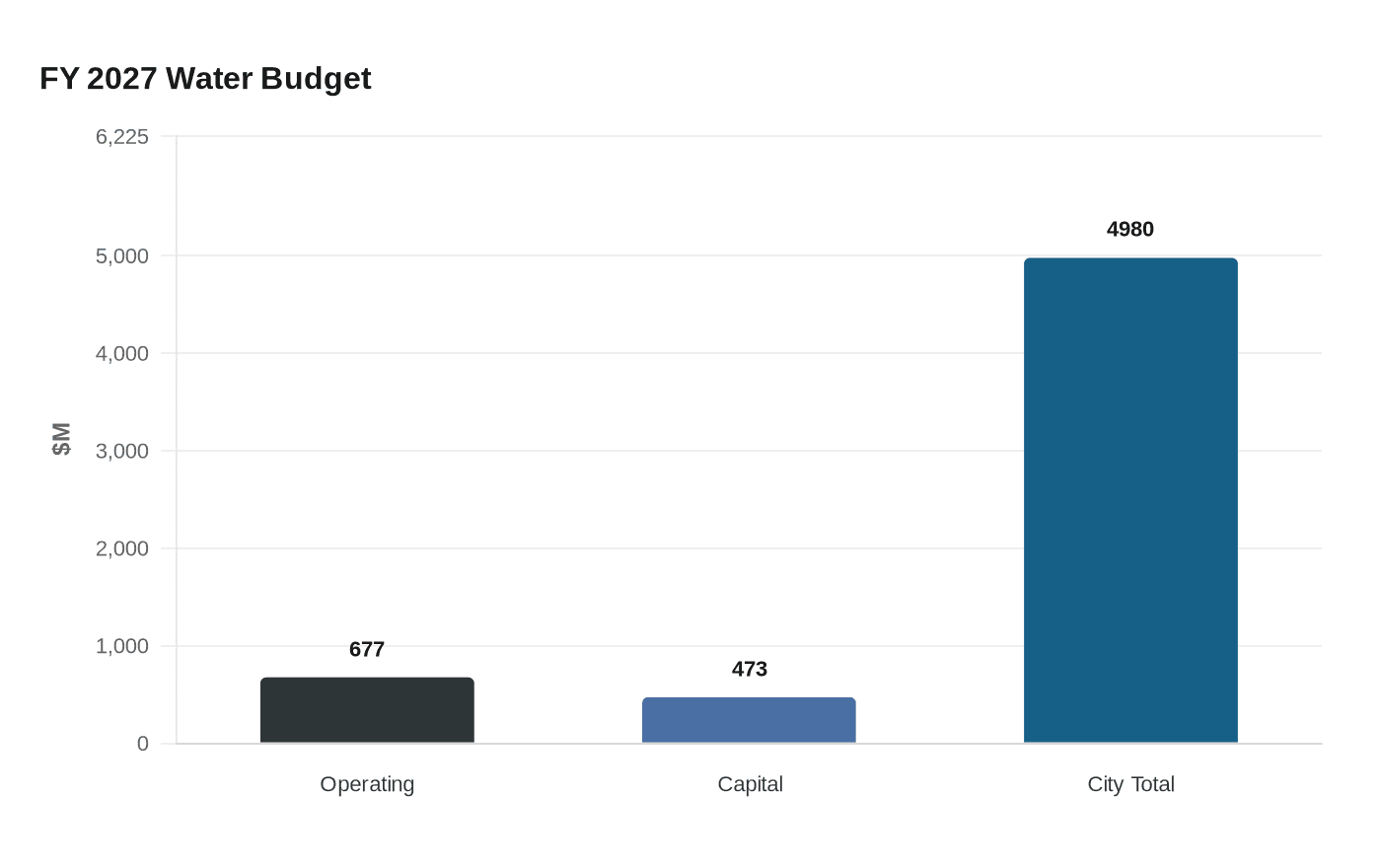
The scale of the system helps explain why the proposal is drawing attention. The bureau’s fiscal year 2027 operating budget is $677 million, with a $473 million capital budget. City budget documents place Baltimore’s overall recommended FY 2027 budget at $4.98 billion, making the water system one of the city’s largest and most consequential operations. The utility is also no ordinary local bureau: it functions as a regional system serving Baltimore City, Baltimore County and surrounding jurisdictions, with three reservoirs, three water and wastewater treatment plants, 3,700 miles of pipeline and 19 pumping stations.
This push also follows years of regional review. The Baltimore Regional Water Governance Task Force was created under state law to modernize governance of the water and wastewater systems, and city and county officials launched a broader review in 2021. The existing city-county arrangement dates to 1972. In February 2024, the task force issued final recommendations, including a short-term call for Baltimore City and Baltimore County to study restoring or establishing standalone water and wastewater departments so each side could focus on operations, maintenance, capital investment and service delivery.
Labor and advocacy groups have already warned that restructuring can bring risks as well as promises. AFT-Maryland said its coalition partners, including City Union of Baltimore Local 800, the Baltimore County Federation of Public Employees Local 4828, Food and Water Watch, the NAACP Legal Defense Fund and Blue Water Baltimore, were concerned about employee impacts and feared protections against privatization and certain water policies could be weakened.
For Baltimore, the central question is not just whether the bureaucracy changes shape, but whether a dedicated water agency can do a better job with an aging regional system that has spent years under scrutiny.
This article was produced by Prism’s automated news system from verified source data, official records, and press releases, then run through automated quality and moderation checks before publishing. The system is built and supervised by the people who set the standards it runs under. Read our full AI policy.
Did this article answer your question?