Baltimore Magazine explores how city residents spend their evenings
Baltimore’s new 5-to-9 lens celebrates weeknight fun, but free events, water taxis, and neighborhood reach show how uneven access still shapes who can stay out.
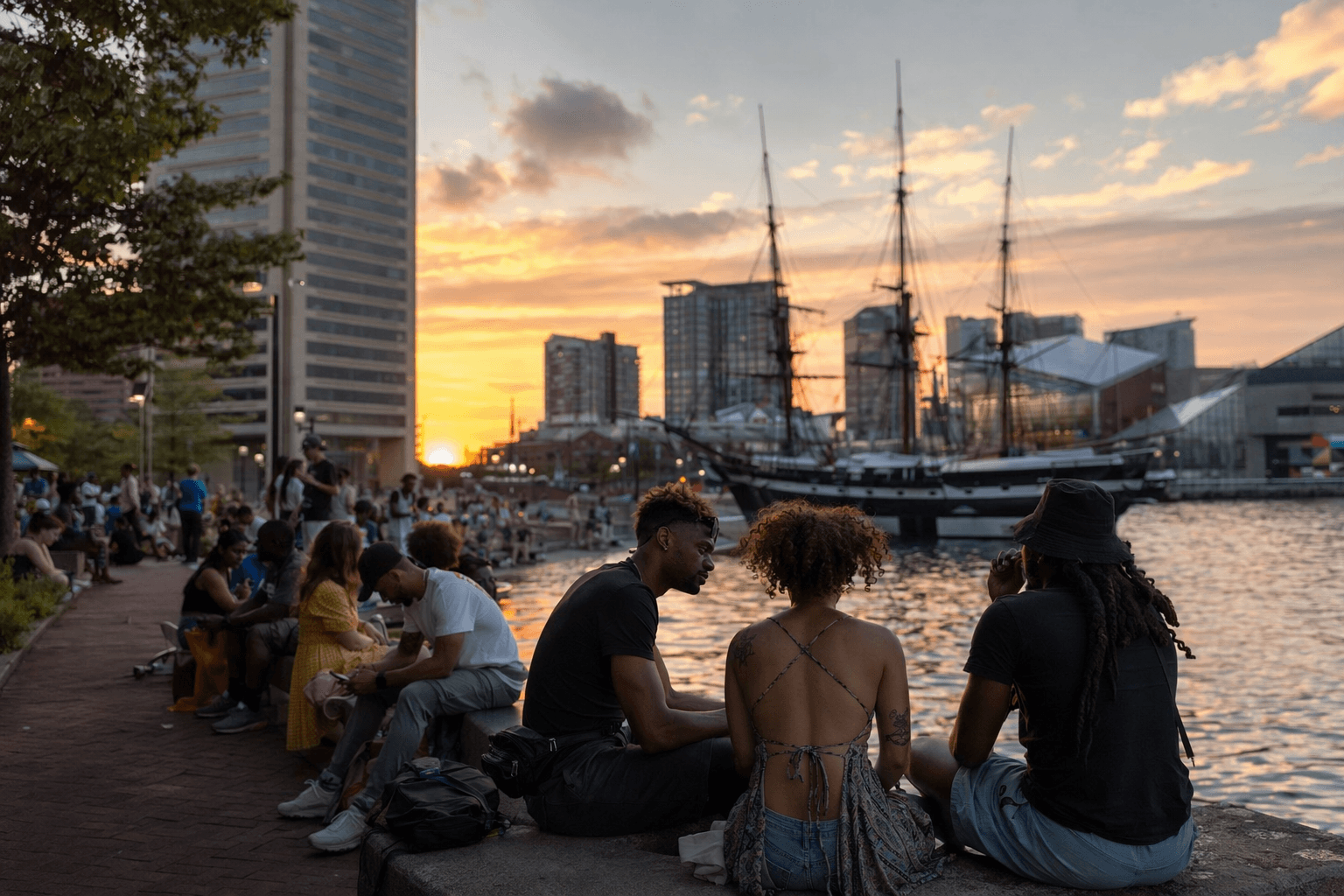
Baltimore after work
Baltimore Magazine’s “Baltimore 5 to 9” package treats the hours after work as prime civic territory, a chance to make the most of weeknights and still be in bed by 10 p.m. Digital senior editor Lauren Cohen, who covers food, events, lifestyle, and community news and is a Baltimore native and Towson University graduate, frames that idea around a simple tension: people want routines and downtime, but they also want community, shared activities, and a reason to leave the house.
The package sits alongside Flower Mart’s 115th anniversary and an Irvington neighborhood feature, which broadens the message beyond nightlife. Baltimore is being presented not just as a place to go out, but as a city where art, neighborhood identity, and everyday social life all belong in the same conversation.
What a weeknight can look like here
Cohen’s version of after-work life stretches far beyond happy hour. The issue points to crafting groups, karaoke, trivia nights, social sports, and even a yo-yo club, which together make a strong case that Baltimore’s social scene does not have to look one way to count as real civic life. That range matters because people are balancing burnout, family schedules, and the need for connection, not just looking for a late-night crowd.
The city calendar backs that up with concrete examples. The free Bromo Art Walk is set for May 14 from 5 to 9 p.m., and the route includes Current Space, the Eubie Blake Cultural Center, Le Mondo, and the Lineup Room. It is a useful model for what the magazine is selling: a night out that feels local, compact, and easy to enter without committing to an expensive or exhausting evening.
The harbor as a social corridor
One of the most memorable examples is a book club cruise on the Baltimore Water Taxi. The idea mixes reading, socializing, and a moving tour of the harbor, with participants swapping books as they ride. It is the kind of activity that feels distinctly Baltimore because it uses the city’s waterfront as both a gathering place and a transit route.
Baltimore Magazine has described the Baltimore Water Taxi as the oldest public water-based service of its kind in the United States, with service reaching Fells Point, Canton, Federal Hill, Locust Point, and Fort McHenry. That reach matters. The water taxi is not just a novelty; it helps stitch together neighborhoods that can feel separated by traffic, parking, and the simple friction of moving around after work.
Where the ideal meets reality
The appeal of the 5-to-9 concept is that it understands how tired people are. A good weeknight plan has to be affordable, relatively short, and flexible enough to fit around work, errands, and family life. That is why free programming like the Bromo Art Walk matters so much: cost is often the first barrier to staying out, and low-cost events make the city more accessible in a very practical way.
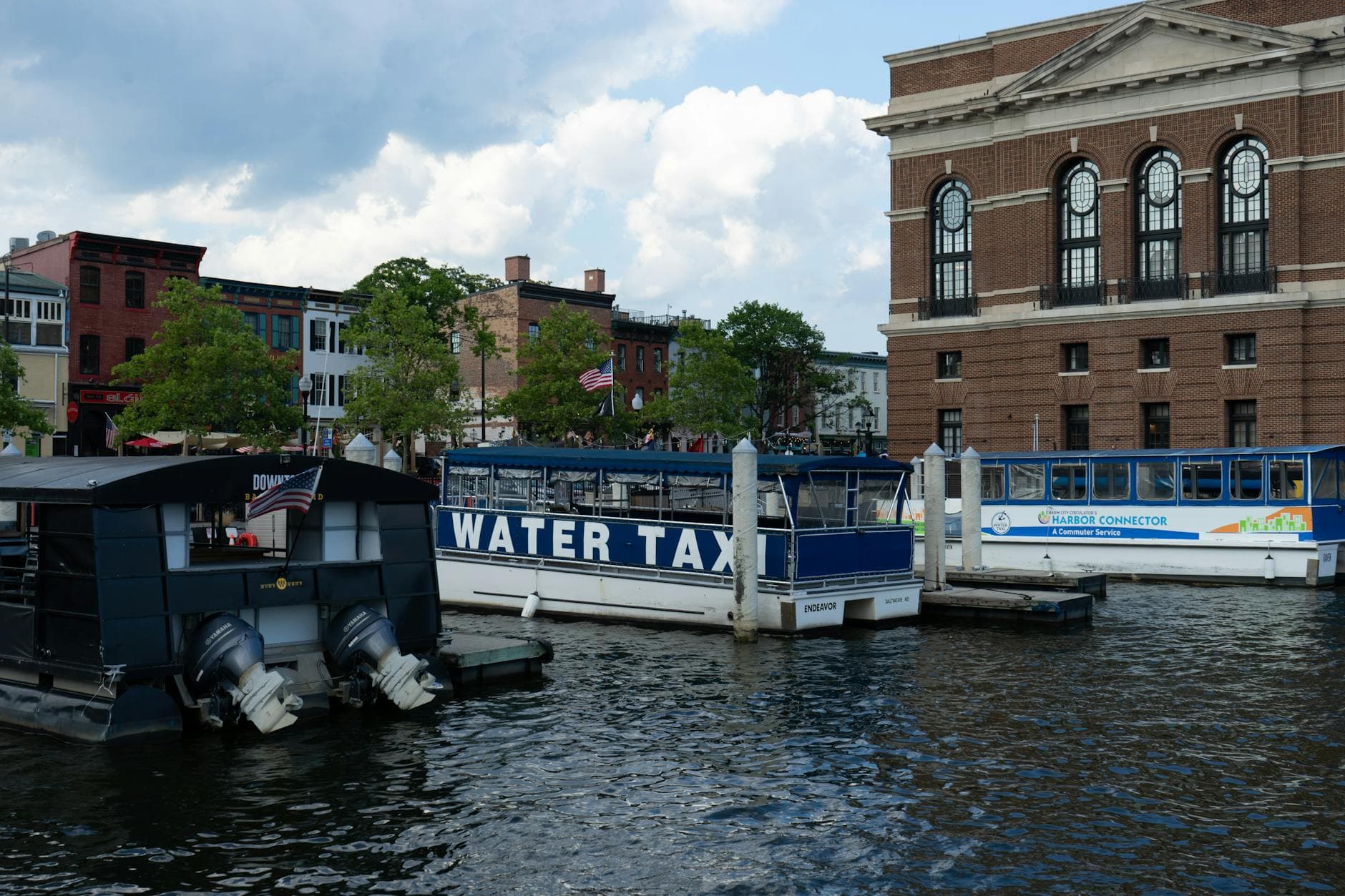
Transit and neighborhood access are just as important. The Water Taxi serves several waterfront neighborhoods, but Baltimore still asks people to decide how far they are willing to travel after work and which parts of the city feel easy to reach without a car. The magazine’s optimistic picture works best when the evening options are spread around the city, not clustered in only a few familiar corridors.
That question of access is not abstract. A University of Maryland, Baltimore conversation about reducing social isolation drew 49 attendees on April 24, 2025, and 70 percent of registrants lived in target West and Southwest Baltimore ZIP codes. That turnout suggests real demand for connection in neighborhoods where the need for accessible community spaces is especially visible. The Baltimore City 2023-2024 Community Health Needs Assessment, produced with the Baltimore City Health Department and major systems including Johns Hopkins Health System, Mercy Medical Center, MedStar Health, Ascension St. Agnes, Mt. Washington Pediatric Hospital, LifeBridge Health, and University of Maryland Medical Center, underscores that social connection is being treated as a health issue as well as a lifestyle one.
Why this version of Baltimore matters
The Downtown Partnership of Baltimore says events help activate downtown spaces, attract residents and businesses, and build a stronger sense of community, which is exactly the backdrop that gives the 5-to-9 idea its civic weight. Baltimore Magazine’s package is not only about nightlife. It is about how art walks, neighborhood features, social sports, trivia nights, and waterfront outings can all function as ways to belong in the city after the workday ends.
That is the bigger story behind the magazine’s framing. Baltimore’s evening life feels most inclusive when it is varied, local, and easy to reach, but the city still has work to do if that promise is going to extend evenly across neighborhoods and budgets. The strongest post-work Baltimore is not the one that keeps people out late. It is the one that makes it realistic for more people to step back into the city at all.
This article was produced by Prism’s automated news system from verified source data, official records, and press releases, then run through automated quality and moderation checks before publishing. The system is built and supervised by the people who set the standards it runs under. Read our full AI policy.
Did this article answer your question?


