Baltimore Marks Two Years Since Key Bridge Collapse, Honors Six Victims
For two years, longshoreman Dave Couslin's commute has swelled from 20 minutes to more than an hour. The bridge that killed six won't reopen until 2030.
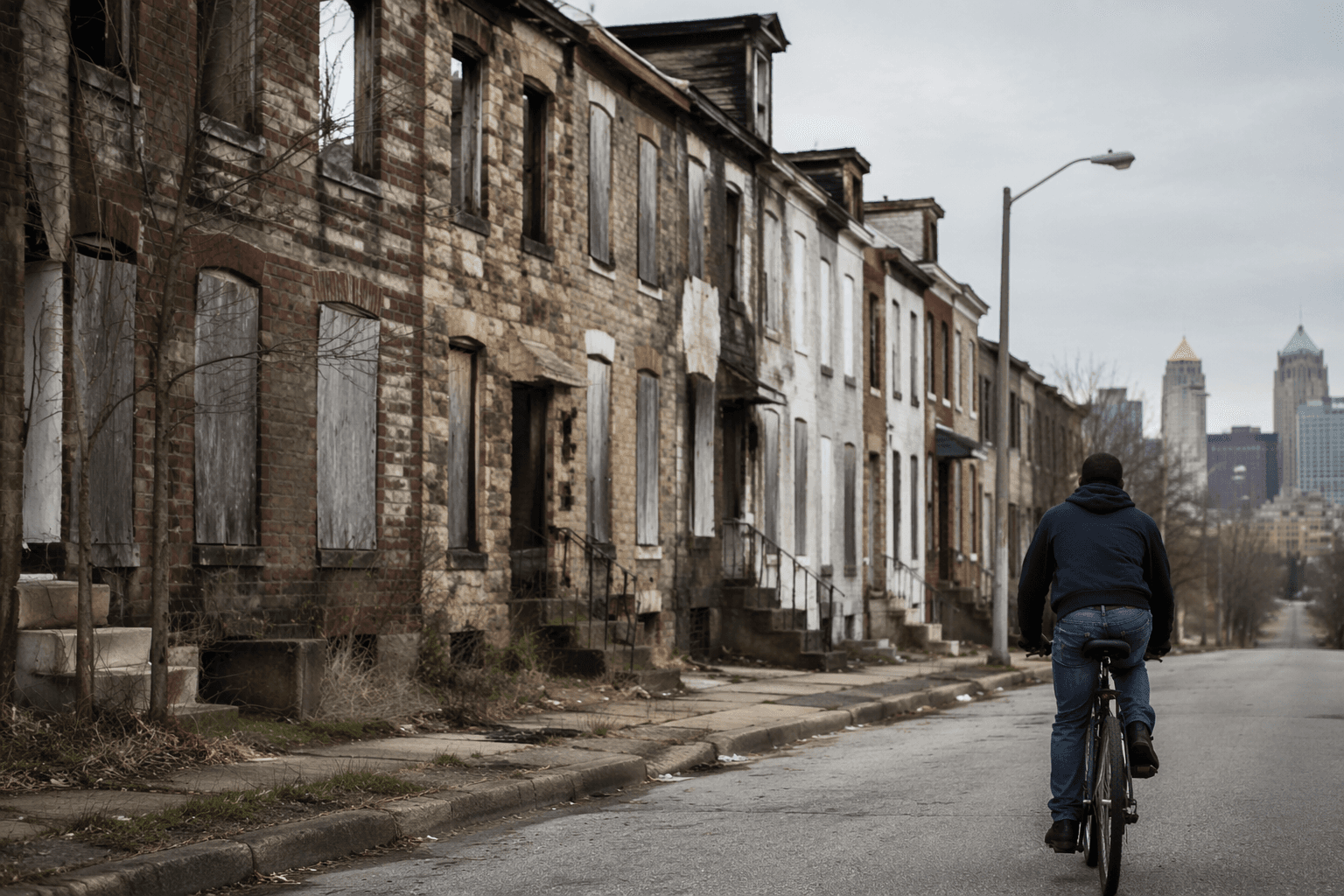
For longshoreman Dave Couslin, two years of detoured Baltimore commutes compress into one relentless calculation: a drive to the Port of Baltimore that once took a tight 20 minutes now routinely stretches past an hour. "'Course you don't like to be late for work," Couslin said, "because if a ship comes in, there's four guys: me and three others to tie it up."
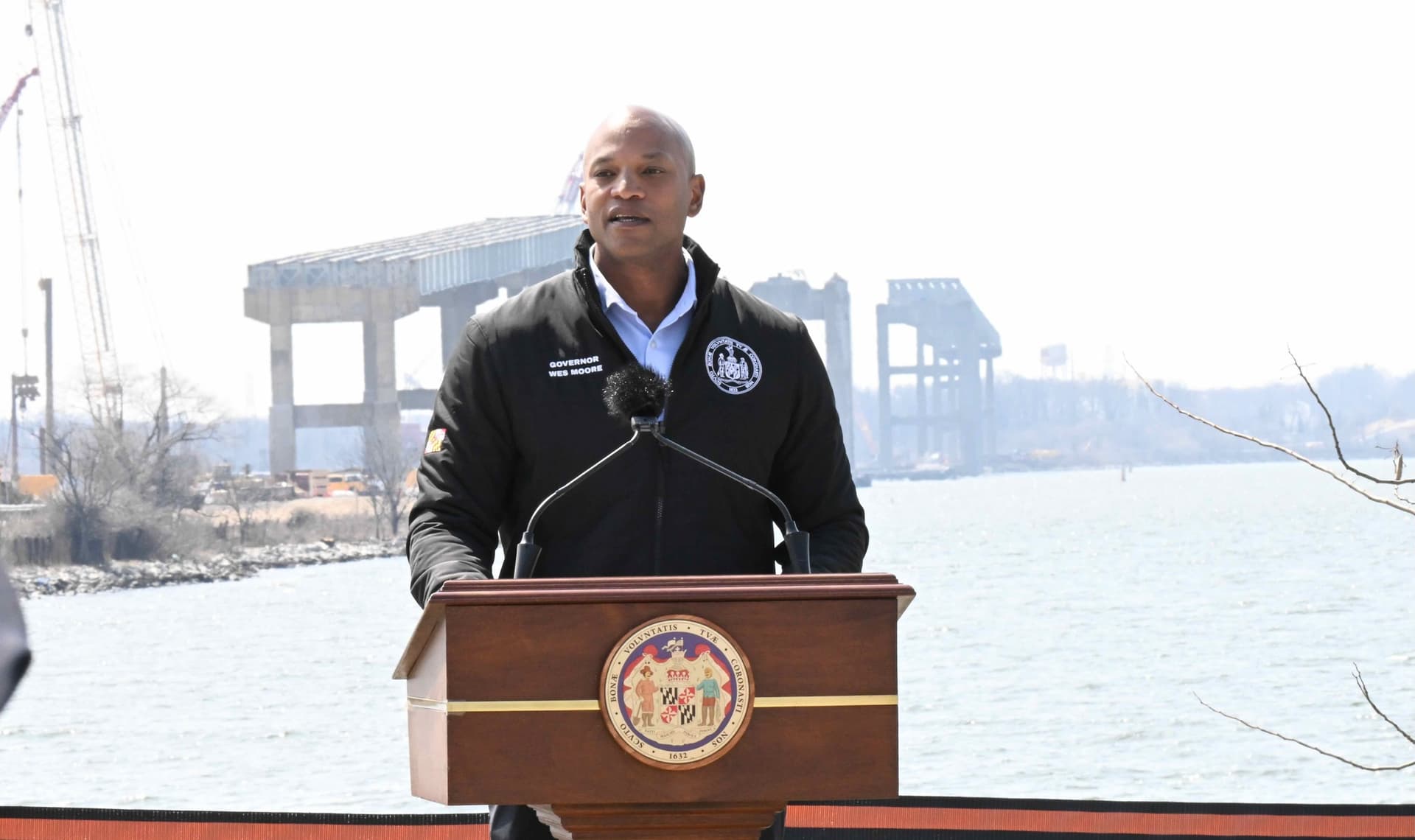
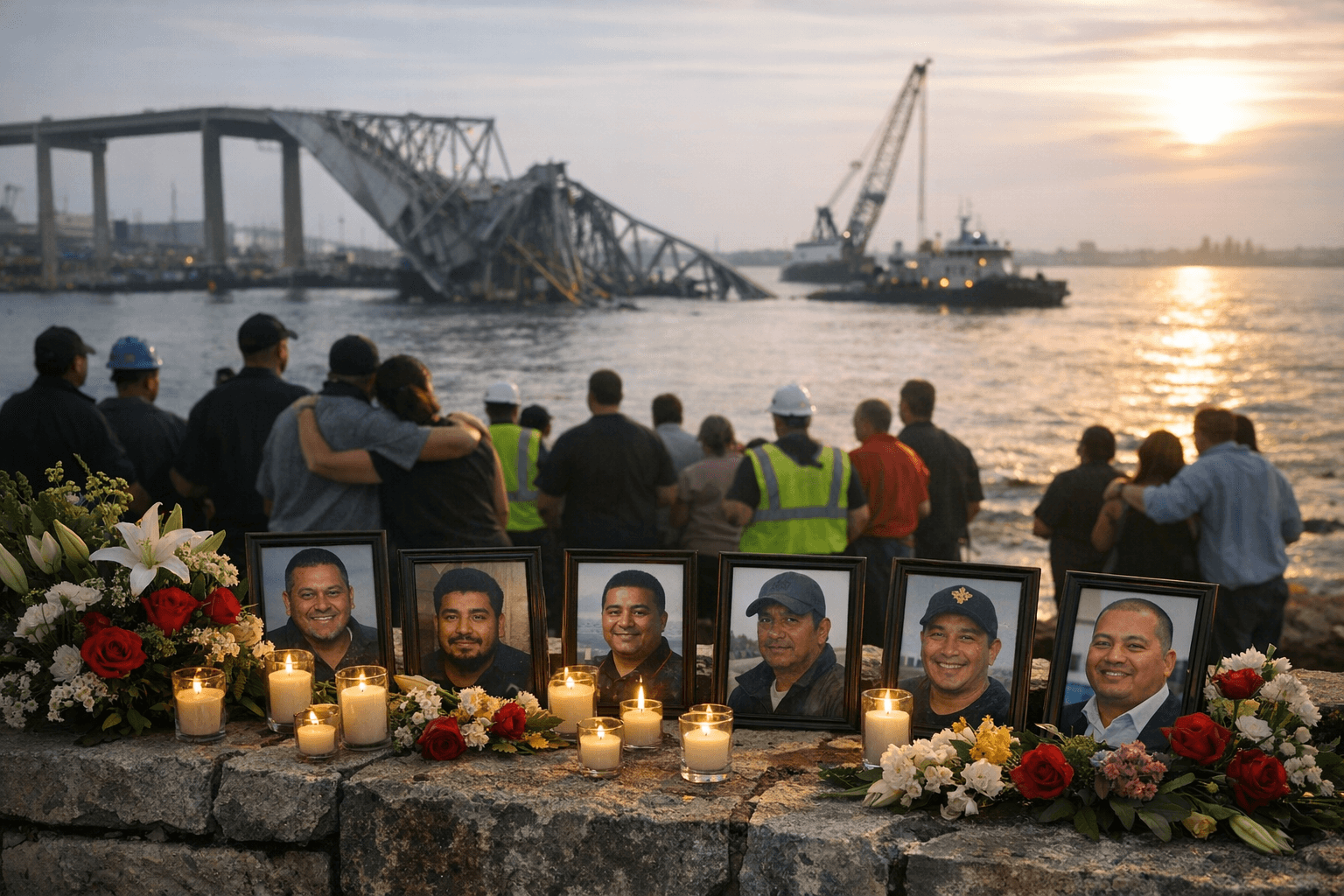
That daily arithmetic ran beneath the ceremony in Dundalk on March 26, where Gov. Wes Moore, Lt. Gov. Aruna K. Miller, and a gathering of elected officials, first responders, and grieving families marked two years since the containership Dali lost power, drifted into the Francis Scott Key Bridge, and dropped it into the Patapsco River in seconds, killing six construction workers who had no warning a vessel nearly three football fields long was bearing down on them in the dark.
Moore read their names at the water's edge: José Mynor López, Alejandro Hernandez Fuentes, Dorlian Ronial Castillo Cabrera, Maynor Yasir Suazo-Sandoval, Carlos Daniel Hernandez Estrella, and Miguel Angel Luna Gonzalez, all immigrants from Latin America, calling each of them a patriot. "We return to the water's edge two years after a day that changed our state forever," Moore said. "Things look different, but the memories of that March morning, they remain as clear as ever."
The Maryland Transportation Authority announced the replacement bridge's design is now 70 percent complete, a benchmark MDTA Chief Engineer Jim Harkness called remarkable. "Those efforts alone can take five to seven years on average," Harkness said of reaching that threshold in only 14 months. Full design is expected to wrap by June, after which MDTA will finalize the construction contract. Officials are targeting a late 2030 reopening at a cost now estimated between $4.3 billion and $5.2 billion, a figure updated in November 2025.
The displacement toll remains staggering: more than 38,000 vehicles crossed the bridge on an average weekday before the collapse, and a 2024 state analysis found those drivers are collectively absorbing 21,000 extra hours in traffic every single weekday.
Anne Arundel County Executive Steuart Pittman put the human ledger plainly: "Each of them came to this country looking for a better life, and were on that bridge working to make life better for all who live here."
For Couslin and the port workers who depended on that span, the accounting stays open until 2030.
This article was produced by Prism’s automated news system from verified source data, official records, and press releases, then run through automated quality and moderation checks before publishing. The system is built and supervised by the people who set the standards it runs under. Read our full AI policy.
Did this article answer your question?