Baltimore Mayor Scott Unveils $4.9 Billion FY2026 Budget, Biggest Capital Investment in 20 Years
Mayor Scott's FY2026 budget marks Baltimore's biggest capital investment in 20 years, with $125M in new borrowing targeted at housing, schools, and parks.
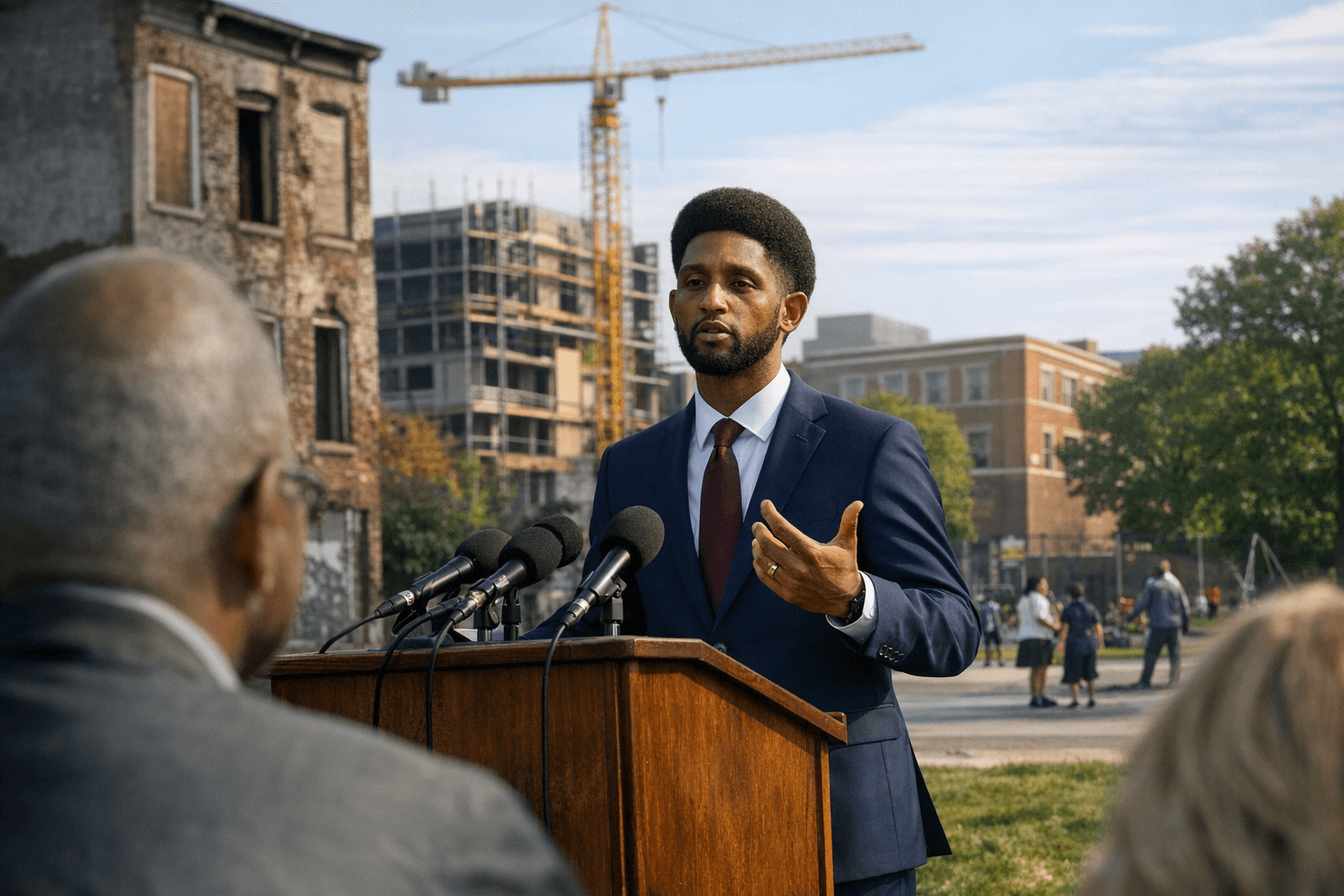
Mayor Brandon Scott proposed Baltimore's most ambitious capital investment in 20 years, putting $125 million in General Obligation borrowing behind affordable housing, school construction, and city parks in a Fiscal Year 2026 budget totaling $4.9 billion.
The proposal, submitted April 2, 2025, pegs the city's total recommended appropriation at $4.63 billion according to the Bureau of the Budget and Management Research, a 9.99% increase over the FY2025 adopted budget of $4.06 billion. The operating budget rises to $3.70 billion, up $220.8 million or 6.35%, while the capital budget surges to $932 million from $654.1 million the prior year, a 27.24% jump year-over-year.
The $125 million in GO borrowing marks a 56% increase from prior borrowing levels and drives what the city calls the largest capital budget investment in two decades. An additional $40 million in capital funding targets homeless shelters, homeownership incentives, and parks facilities, though fiscal analysts have flagged the added debt service obligations that accompany the broader borrowing strategy.
Scott framed the proposal against compounding external pressures. "This year's budget outlook is filled with both opportunities and challenges, exacerbated by uncertainty at the federal level and a significant state deficit being addressed in Annapolis," he said. The city's own analysis projects that approximately 1,000 Baltimore residents employed by the federal government could lose their positions, posing a tangible threat to the city's income tax revenues.
The budget fully funds Bmore Fast, Scott's streamlined permitting initiative, and adds $1.5 million in staffing for the $3.0 billion Vacants Initiative aimed at eliminating blighted vacant properties citywide. It also allocates $2.0 million to launch a new Mayor's Office of Art, Culture, & Entertainment to coordinate civic events and support Baltimore's arts ecosystem.
Budget Director Laura Larsen confirmed that no American Rescue Plan Act funds were drawn to close last year's books. Scott came into this cycle having resolved a $107 million structural deficit in FY2025 without employee furloughs or service cuts, a record his administration has cited prominently. That prior budget, unveiled against the backdrop of the Francis Scott Key Bridge collapse recovery, totaled $4.06 billion.
The FY2026 proposal builds on "Securing Baltimore's Future: A 10-Year Financial Plan for Baltimore," which Scott released in December 2025 as only the second long-range fiscal plan in the city's history, structured around core service delivery, infrastructure investment, and tax competitiveness. The budget now proceeds to the City Council and Board of Estimates for review before final adoption.
This article was produced by Prism’s automated news system from verified source data, official records, and press releases, then run through automated quality and moderation checks before publishing. The system is built and supervised by the people who set the standards it runs under. Read our full AI policy.
Did this article answer your question?