Baltimore Police Recruits Complete Training Milestones After Six Months of Preparation
Baltimore police recruits cleared pepper spray exposure, high-speed EVOC drills, and live scenarios after six months, adding to a class the department called one of its largest in years.
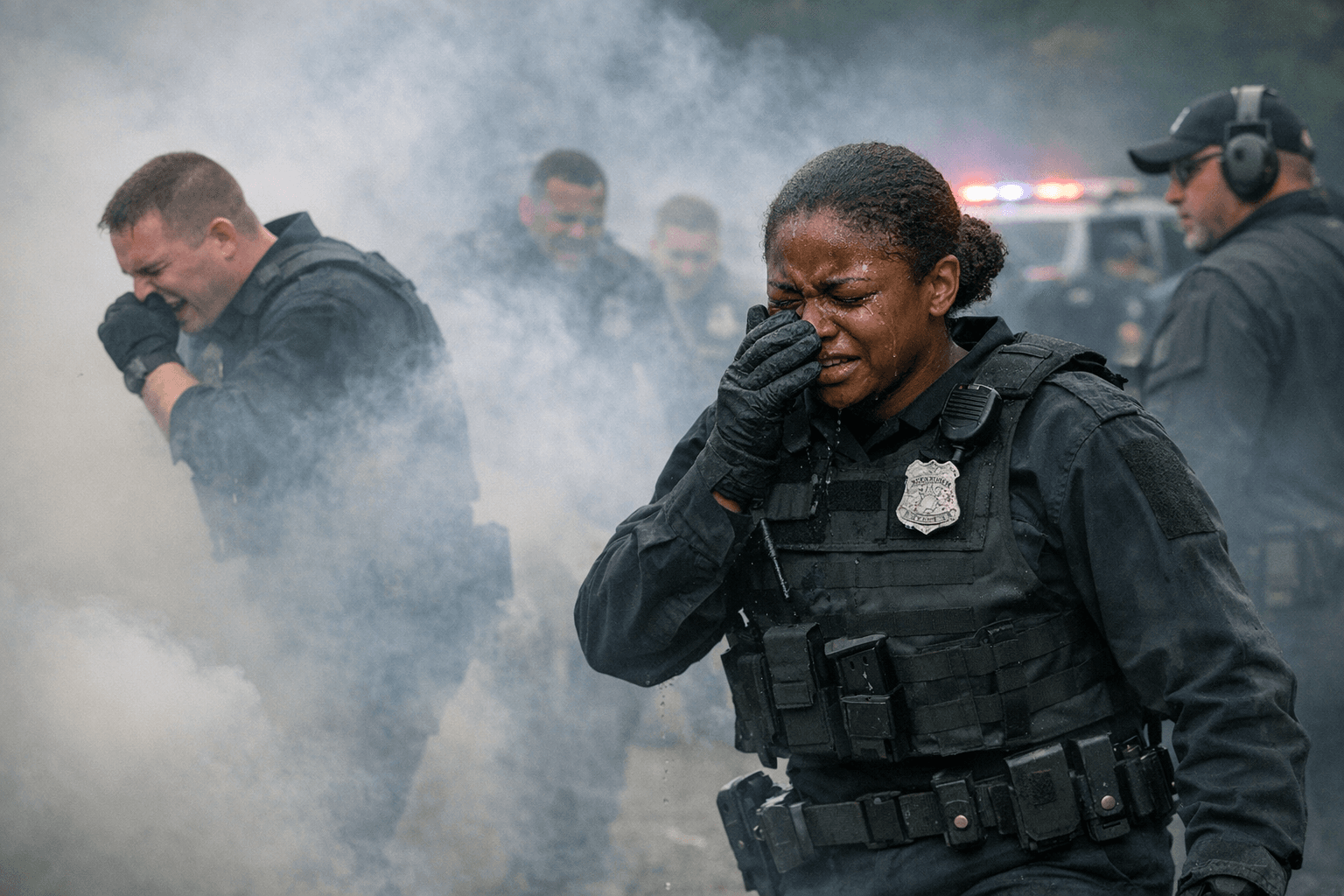
Six months of getting sprayed, chased, and tested ended Tuesday for the latest class of Baltimore Police recruits, who cleared the final gauntlet of hands-on milestones at the department's Education and Training Academy before heading to field assignments across the city's nine districts.
The training block that closed out their academy run included direct pepper spray exposure, certification on the Emergency Vehicle Operations Course, and a battery of scenario-based exercises designed to replicate real patrol conditions. Recruits who complete those benchmarks still face eight weeks of supervised field training before working independently, meaning the class won't carry solo patrol assignments until late spring.
BPD released a video documenting the class's progression from the first weeks of uncertainty through Tuesday's milestone clearances, a deliberate piece of public-facing content as the department navigates both a federal consent decree and a persistent staffing hole that a federal judge described in plain terms. In April 2023, U.S. District Judge James Bredar said "an insufficient number of officers is the single largest obstacle hindering successful reform." By August 2024, he warned the city could remain under the consent decree for years if hiring didn't stabilize.
The numbers have moved. In 2024, BPD brought on 160 sworn officers, a 37 percent increase from 2023. The department says 2025 launched one of its largest recruit classes in years. Whether those gains outpace attrition remains the harder question: the department has not publicly released class-by-class washout rates, and historical academy data has shown dropout figures exceeding 50 percent in some cohorts.
Scenario training and the six-month academy curriculum now incorporate EPIC peer intervention principles and ICAT de-escalation protocols, requirements that grew directly out of the 2016 Department of Justice report that triggered the consent decree. The 2026 in-service training materials obtained from BPD's public policy portal show the department is also deploying Axon VR simulations for behavioral health response scenarios, a technology the latest class will encounter once assigned to a district.
The measure BPD has yet to clearly benchmark publicly is whether this and recent classes translate to faster response times and improved clearance rates in the specific districts where the department is most understaffed, particularly in the Western and Southern districts that have historically carried the heaviest call volume per officer. Those numbers, when the department publishes them, will determine whether the six months these recruits just completed produces results that residents in those neighborhoods actually feel.
This article was produced by Prism’s automated news system from verified source data, official records, and press releases, then run through automated quality and moderation checks before publishing. The system is built and supervised by the people who set the standards it runs under. Read our full AI policy.
Did this article answer your question?