Baltimore Prosecutors, Defenders Clash Over Police Credibility List Access
Defense attorney Jeremy Eldridge found his murdered former client's name on Baltimore's police credibility list, exposing a fight over 300 names prosecutors kept secret.
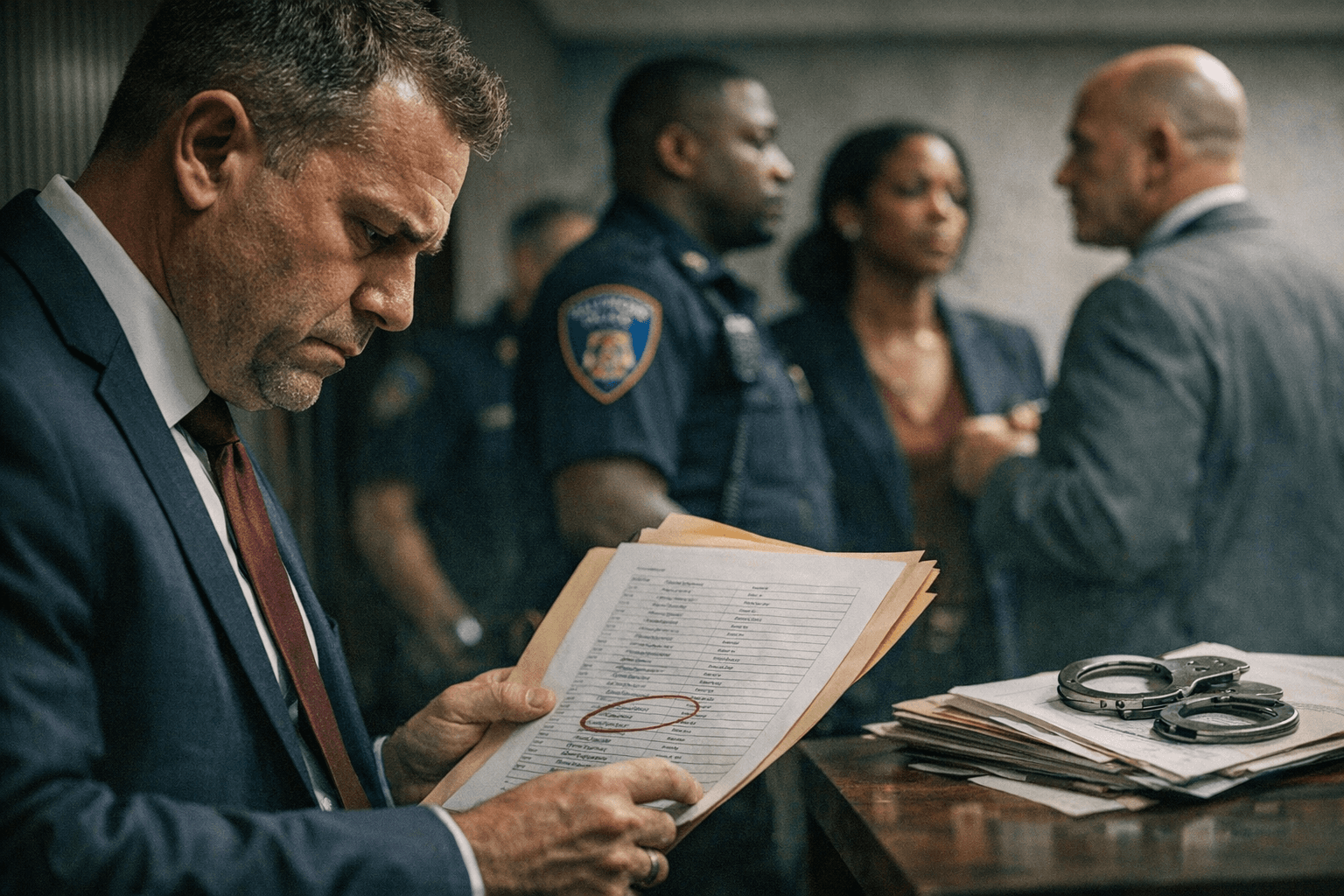
When defense attorney Jeremy Eldridge scanned the newly released Baltimore police credibility list, he found a name he recognized: Shawn Suitor, his former client, murdered in 2017. "My eyes bugged out because as Shawn Suitor's lawyer I was surprised to see him on the list. Obviously, he was murdered in 2017 so I don't know why he was on a Do Not Call list in 2022," Eldridge said.
That jarring discovery sits at the center of a broader transparency battle over the Baltimore City State's Attorney's Office's internal "Do Not Call" list, a 2019 document identifying more than 300 police officers whose credibility issues could, prosecutors have long been warned, jeopardize criminal cases. The list had been common knowledge in legal circles for years without ever becoming public.
The nonprofit Baltimore Action Legal Team (BALT) sued State's Attorney Marilyn Mosby under the Maryland Public Information Act to force disclosure. The Court of Special Appeals ruled the SAO had to release the document, rejecting Mosby's argument that it constituted a personnel record. Before losing, her office had tried to discourage BALT's requests by claiming compliance would require 438 hours of clerical and attorney time and cost more than $18,000.
The conflict did not end with the ruling. When the SAO released a list on October 29, 2021, it contained only 91 names, two-thirds of them retired officers whose past misdeeds were largely already public. BALT stated the release "is not the list that was litigated over and is insufficient to satisfy the SAO's obligations," and pledged to press for the full roster.
The practical stakes are direct: some officers on the list continue to be called as witnesses despite the internal discouragement, a practice BALT argues compromises cases from first arrest through trial. "The entire system relies on a police officer's word," BALT said in a statement. "There is no room for officers with integrity issues on the stand or on the street."
Mosby, who first referenced a list of 305 officers with "integrity issues" during a 2019 public forum tied to the Gun Trace Task Force scandal, later disputed the label entirely, saying the document was not a "credibility list" nor a "do not call" list. As long as the full roster stays hidden, that contradiction remains unresolved inside every Baltimore courtroom where a listed officer takes the stand.
This article was produced by Prism’s automated news system from verified source data, official records, and press releases, then run through automated quality and moderation checks before publishing. The system is built and supervised by the people who set the standards it runs under. Read our full AI policy.
Did this article answer your question?