Baltimore Renames Downtown Courthouse After Trailblazing Judge Hubbard
Baltimore officials formally dedicated the new district courthouse at 500 Calvert Street as the Mabel Houze Hubbard District Court during a November 25 ribbon cutting, honoring Maryland's first Black woman judge and her legacy. The renaming marks a visible commitment to accessibility, sustainability and consolidated public services that will affect how Baltimore residents interact with the justice system.
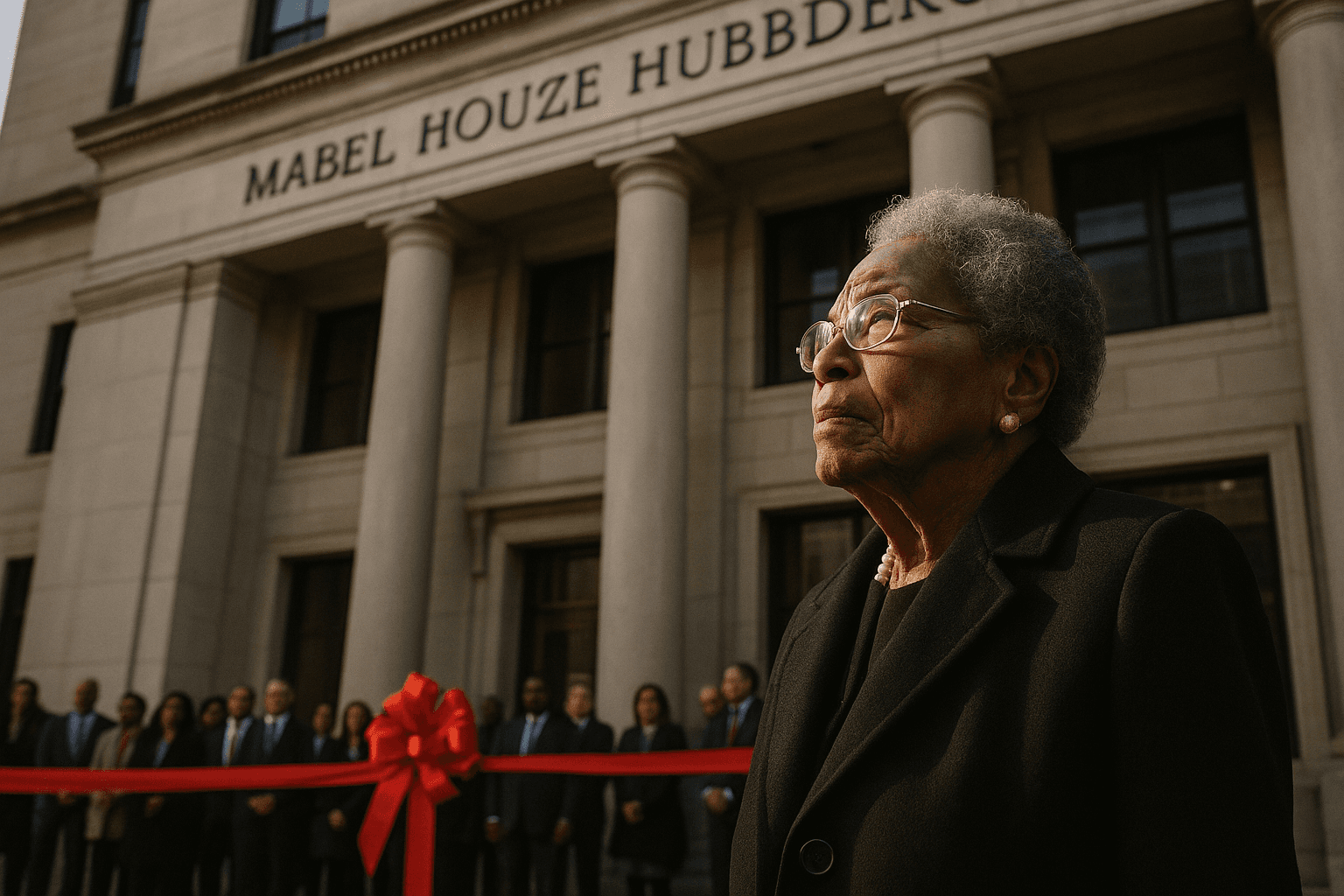
State and city leaders gathered on November 25 to dedicate the newly opened district courthouse at 500 Calvert Street as the Mabel Houze Hubbard District Court, a gesture that ties a modern public building to a milestone in Maryland judicial history. The five story, 168,000 square foot facility houses eight courtrooms, a detention area and multiple state and local agencies, bringing hearings and public services under one roof downtown.
Officials at the ceremony included Lieutenant Governor Aruna Miller and General Services Secretary Atif Chaudhry, and members of Judge Hubbard's family attended to mark the occasion. The Board of Public Works approved the facility's new name in October, and Governor Wes Moore framed the dedication as recognition of Hubbard's service, leadership and mentorship of Black women attorneys. Family members and speakers at the event described Hubbard as a barrier breaker whose presence on the bench reshaped opportunities in Maryland law.
Judge Mabel H. Hubbard was the first Black woman appointed to a bench in Maryland. She began serving as a master in chancery for the Supreme Bench for Baltimore City in 1978, a court now known as the Baltimore City Circuit Court, and later served on the Circuit Court until her retirement in 1999. The courthouse renaming places her legacy in a public and daily context for residents who come to Baltimore's courts for everything from traffic matters to family law.
Design and operations were central themes of the dedication. Officials emphasized the building's modern, accessible design, which aims to improve wayfinding and accommodate people with disabilities. The project also targets energy and carbon neutrality goals, part of a broader push to reduce operating costs and environmental impact for state facilities. For Baltimore residents this consolidation of services means a new focal point for legal and administrative needs, potentially shortening travel and wait times for individuals who previously navigated multiple locations.
The new courthouse will also serve as a symbolic reminder of progress in representation on the bench, anchoring discussions about mentorship, diversity and public service in a building named for a jurist who opened doors for Black women attorneys across Maryland. As the city adapts to the facility's arrival, officials said the court will begin serving the public in the coming weeks with the aim of ensuring smoother access to justice for Baltimoreans.
This article was produced by Prism’s automated news system from verified source data, official records, and press releases, then run through automated quality and moderation checks before publishing. The system is built and supervised by the people who set the standards it runs under. Read our full AI policy.
Did this article answer your question?