Baltimore Sees Historic Drop in Violent Crime in 2025
Baltimore Police Department year-end figures show homicides fell from 194 in 2024 to 133 in 2025, a decline of more than 30 percent, while nonfatal shootings dropped from 413 to 311, roughly a 25 percent decline. City leaders and community groups credited a mix of policing strategies and neighborhood-led efforts, but cautioned that sustaining progress will require ongoing investment, oversight, and community engagement.
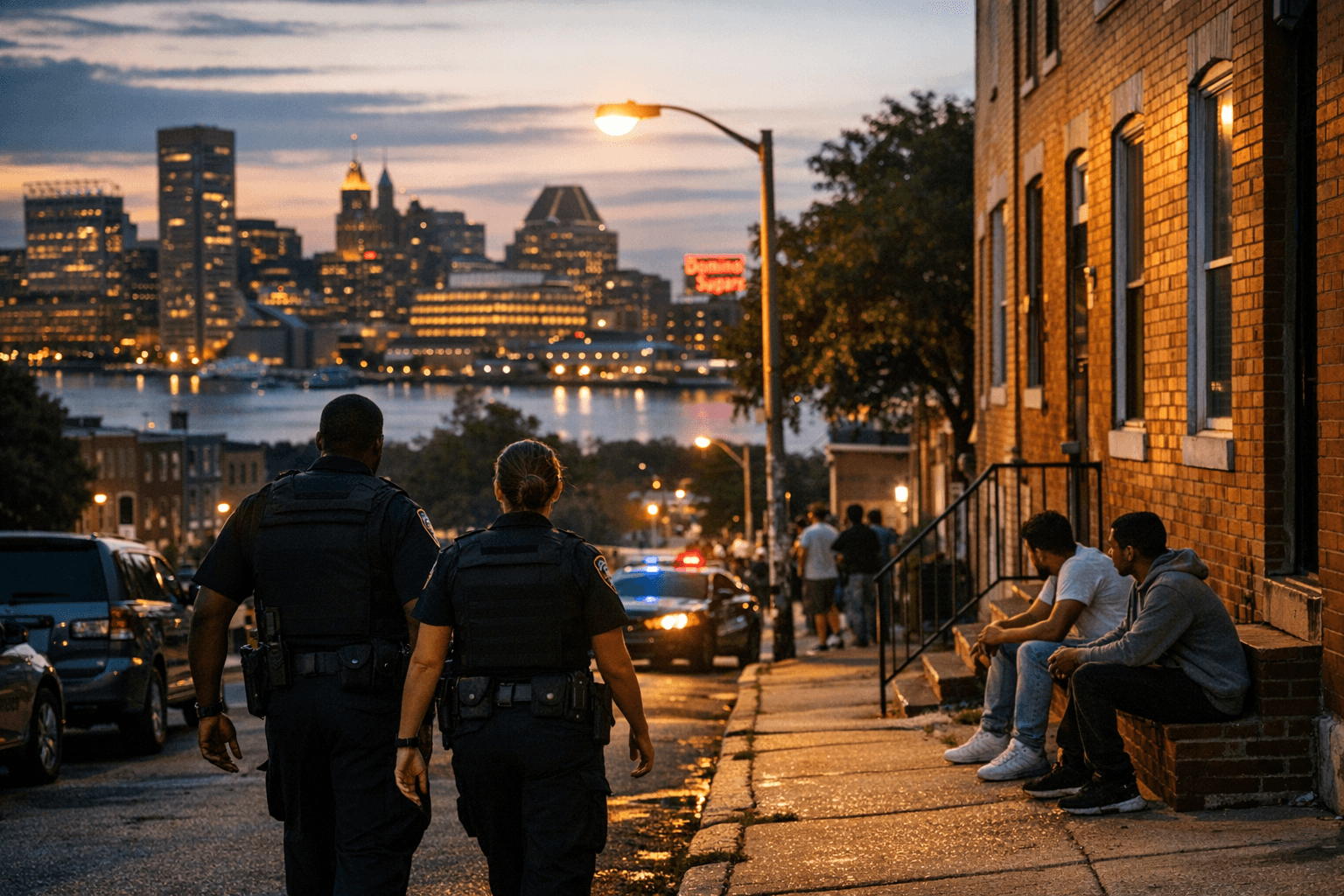
The Baltimore Police Department released a year-end data packet showing marked declines across major violent crime categories in 2025, offering the city its largest year-to-year drop in homicides in recent memory. The department reported 133 homicides in 2025, down from 194 in 2024. Nonfatal shootings fell to 311 from 413 the prior year. The data packet also flagged declines in carjackings and noted improvements in clearance rates for some crime categories.
Officials and community leaders portrayed the shift as significant for public safety and for residents weary of violence. The combination of targeted police operations, expanded violence interruption programs, and grassroots neighborhood initiatives were cited by local stakeholders as contributing factors. At the same time, city and community leaders emphasized that the reductions do not signal an endpoint; they warned that crime levels can fluctuate and that structural investments are required to preserve gains.
For Baltimore residents the immediate impact is tangible: fewer homicides and shootings means reduced trauma for families and neighborhoods, potential stabilization for small businesses and commercial corridors, and an altered calculus for city services such as schools and public transportation. Improvements in clearance rates can also affect public trust in law enforcement by increasing the likelihood that investigations lead to accountability. However, the data show uneven movement across categories, and officials acknowledged work remains in ensuring equitable safety improvements across all neighborhoods.
Policy questions now move to budget decisions, oversight, and program evaluation. City leaders face pressure to sustain funding for community-based violence prevention, youth services, and data-driven policing tools while maintaining civilian oversight mechanisms that measure effectiveness and protect civil liberties. For elected officials, the crime data will be a central issue in public hearings and in the political calendar, shaping voter expectations about safety, public investment, and institutional performance.
Institutionally, the data packet highlights the importance of transparent reporting and consistent metrics. Analysts caution that one year of improvement, however large, should be evaluated alongside longer-term trends, clearance-rate details, and demographic patterns to understand whether underlying drivers of violence have been altered. Sustained reductions will depend on coordinated strategies across policing, social services, housing, and employment programs.
As the city moves into 2026, the decline in violent crime provides an opening for policymakers and community leaders to codify what worked, demand measurable accountability for public dollars, and expand civic engagement so neighborhoods remain central to any durable public safety strategy.
This article was produced by Prism’s automated news system from verified source data, official records, and press releases, then run through automated quality and moderation checks before publishing. The system is built and supervised by the people who set the standards it runs under. Read our full AI policy.
Did this article answer your question?